Gum Changes During Perimenopause: What to Check
Bleeding or sore gums deserve a dental examination, even if the change began during perimenopause.
If your gums bleed or feel sore, arrange a dental examination rather than assuming perimenopause is the cause. 3 Check whether you’re brushing twice daily with fluoride toothpaste and cleaning between your teeth regularly. 5 A dry, sticky mouth is a separate clue worth mentioning, especially if it makes eating or speaking difficult. 1 Red, painful gums that peel or erode also need dental assessment. 4
Gum symptoms and dry mouth aren’t the same thing
Bleeding, soreness, redness, or swelling are gum changes. Dry mouth is a feeling of insufficient moisture: it may also make your tongue feel rough or make chewing, swallowing, tasting, or talking difficult. Dry mouth can raise the risk of tooth decay and mouth infections, but that doesn’t mean it explains bleeding gums. 1
The distinction is useful because the next step may differ. A dentist can examine your gums, while persistent dryness may also call for a review of your health history and medicines. Some medicines, including certain treatments for high blood pressure, depression, and bladder-control problems, can cause dry mouth. Don’t stop a prescribed medicine on your own; ask your dentist or prescriber whether it could be contributing. 12
Don’t put bleeding down to perimenopause
Oral-health research around menopause gives reason to pay attention to changes in your mouth, not a way to identify the cause of your own gum symptoms. Guidance summarized in a review of oral care in perimenopause and menopause recommends regular dental and periodontal examinations. If your gums have started bleeding or feeling sore, arrange an examination rather than waiting for the change to pass because of its timing. 3
Red, painful gums that peel or erode are another reason to be examined. That pattern can reflect an underlying oral condition and needs a different assessment from routine gum-care advice. 4
Check the care you can do today
- Brush both times. Brush with fluoride toothpaste last thing before bed and once more during the day. Fluoride helps protect teeth against decay; it doesn’t replace an examination for bleeding gums. 5
- Clean between teeth. Floss or use interdental brushes regularly, ideally every day. If soreness makes cleaning difficult, tell the dentist so you can get guidance suited to your gums. 54
- Notice whether dryness is part of it. A sticky mouth, rough tongue, mouth sores, or trouble chewing or speaking point toward dryness as an additional concern. A mouthwash made for dry mouth may ease that feeling, but it isn’t a substitute for assessing bleeding or sore gums. 1
- Bring up persistent dryness. A dentist or other health-care provider can examine your mouth and review your health history and medicines. If dry mouth comes with a painful, red, swollen, or bleeding mouth, seek a health assessment. 12
Daily cleaning and a dental examination do different jobs. Your routine gives you something useful to check now; an examination can establish what is happening at your gums instead of leaving you to guess whether the change is hormonal. 35
A gum-care check, then the next step
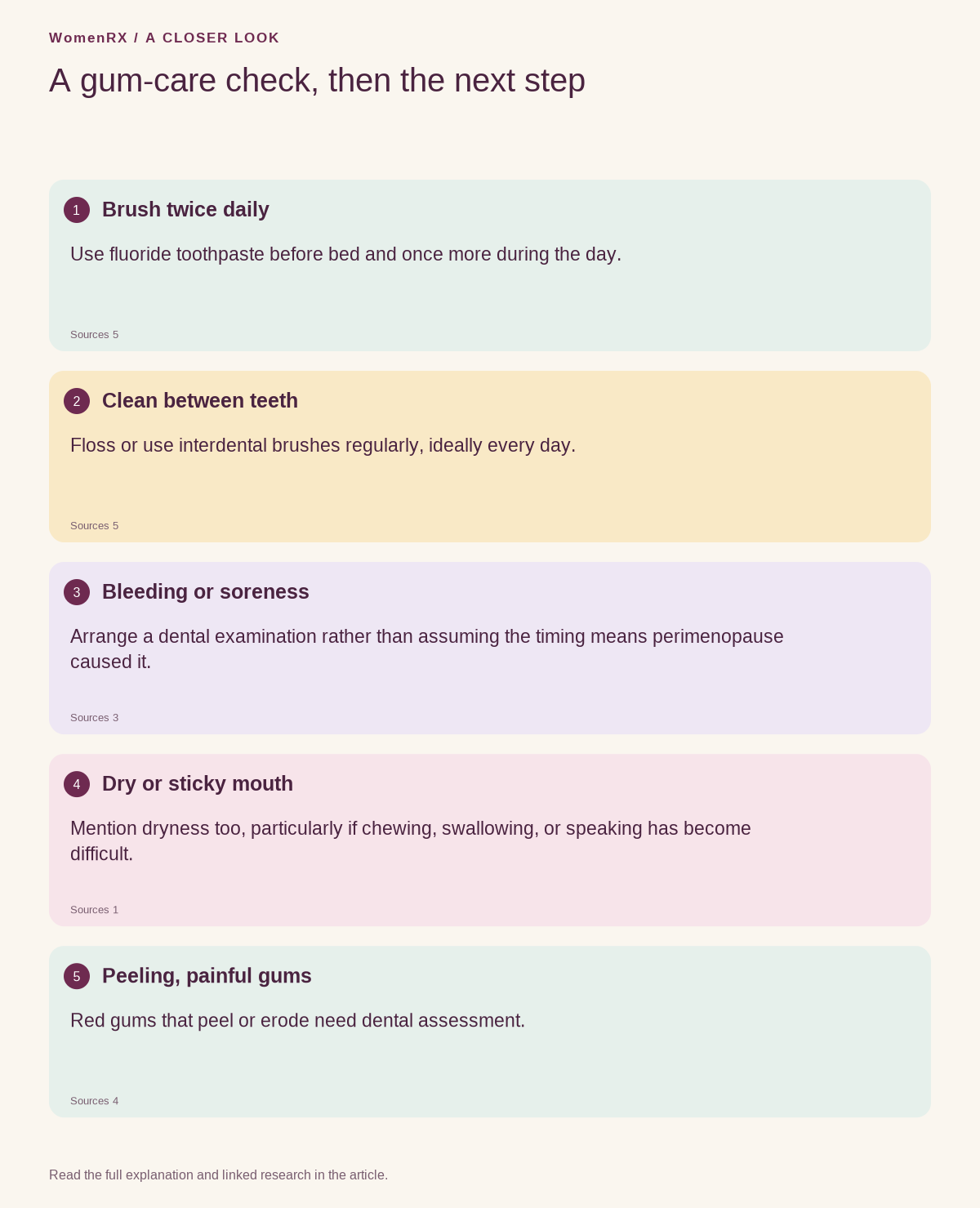
Brush twice daily: Use fluoride toothpaste before bed and once more during the day.5
Clean between teeth: Floss or use interdental brushes regularly, ideally every day.5
Bleeding or soreness: Arrange a dental examination rather than assuming the timing means perimenopause caused it.3
Dry or sticky mouth: Mention dryness too, particularly if chewing, swallowing, or speaking has become difficult.1
Peeling, painful gums: Red gums that peel or erode need dental assessment.4
Read the figure as text
Check your daily cleaning, then separate gum changes from dryness when deciding what needs assessment.- Brush twice daily: Use fluoride toothpaste before bed and once more during the day.5
- Clean between teeth: Floss or use interdental brushes regularly, ideally every day.5
- Bleeding or soreness: Arrange a dental examination rather than assuming the timing means perimenopause caused it.3
- Dry or sticky mouth: Mention dryness too, particularly if chewing, swallowing, or speaking has become difficult.1
- Peeling, painful gums: Red gums that peel or erode need dental assessment.4
Sources you can check
- Dry Mouth: MedlinePlusAccessed 2026-09-25Return to first citation
- Dry mouth - NHSAccessed 2026-09-25Return to first citation
- Oral Health Care Among Women in Perimenopause or Menopause: An Integrative Review.Thomas N, Peters K, Reilly KO, Sousa MS, George A. · Journal of midwifery & women's health · 2025Return to first citation
- Desquamative Gingivitis: A Narrative Review of Practical Diagnostic Approach for General Dental Practitioners.Anitha K, Shanthi V, Ebenezer M, Harshini G, Maheswaran T, Ilayaraja V. · Cureus · 2026Return to first citation
- Common questions about chlorhexidine - NHSAccessed 2026-09-25Return to first citation