Heart Palpitations: What They Feel Like and When to Seek Care
A flutter or racing heartbeat describes a sensation, not a diagnosis, so the pattern and accompanying symptoms matter.
Palpitations can feel like racing, fluttering, pounding, or skipped beats in your chest, neck, or throat. They may last seconds, minutes, or longer, but the sensation alone can’t confirm an abnormal rhythm. Seek emergency assessment if palpitations won’t stop or come with chest pain, feeling faint, or fainting. Recurring episodes deserve medical review. 1 2
A flutter, thump, or sudden racing heartbeat can be unsettling. Palpitations describe how your heartbeat feels; they don’t confirm whether your heart rhythm is abnormal. An ECG or heart-rhythm monitoring may help evaluate what’s happening. 2
What palpitations can feel like
You might notice a racing or very fast heartbeat, fluttering, pounding, or a sense that your heart skipped a beat. You may feel it in your chest, neck, or throat. An episode can last seconds, minutes, or longer, and the heartbeat may seem regular or irregular. 1 2
Those details help describe the experience, but they can’t diagnose its cause. Stress and anxiety may contribute to palpitations or make you more aware of your heartbeat. They can also coexist with a heart-related cause. 3
When to seek urgent assessment
Seek emergency medical assessment if palpitations are happening now and won’t stop, or if they come with chest pain, feeling faint, or fainting. If chest pain, feeling faint, or fainting happened during an episode but has now stopped, seek prompt urgent assessment rather than assuming the episode was harmless. 1
Breathlessness is another symptom to mention when describing an episode. If palpitations keep returning, become more frequent, or last longer than a few minutes, arrange medical evaluation even if you feel well between episodes. 1 3
Menopause can be context, not a diagnosis
Palpitations are sometimes reported around menopause, and they can also occur during pregnancy. Neither life stage, by itself, identifies the cause or rules out a heart rhythm problem. Palpitations in pregnancy warrant investigation because possible causes include both cardiac and non-cardiac conditions. 1 4
Other possible contributors include caffeine, alcohol, nicotine, recreational drugs, iron-deficiency anemia, an overactive thyroid, and heart rhythm or other heart conditions. More than one factor may be relevant, so a new or changing pattern shouldn’t be attributed to menopause alone. 1
Keep a useful record, not a self-diagnosis
If an episode happens and you’re safe to do so, make a short note soon afterward. You don’t need to determine what rhythm you had. Focus on details that can help a clinician understand the pattern:
- Timing: When did it start and stop? Was the change sudden or gradual? How often has it happened?
- Sensation and pattern: Did it feel fast, fluttering, pounding, or like skipped beats? Did it seem regular or irregular? If you checked your pulse, record what you noticed without treating it as a diagnosis.
- What was happening beforehand: Note activity and possible triggers, such as caffeine, alcohol, nicotine, or stress.
- Other symptoms: Record chest discomfort, feeling faint or fainting, breathlessness, or anything else that happened alongside the palpitations.
- Relevant context: Note pregnancy or perimenopause if applicable, health conditions, and medicines or substances you use. 1 3 4
A clinician may ask about timing and pattern, accompanying symptoms, personal and family history, medicines, and substances. An ECG checks the heart’s electrical signals. If an episode isn’t captured during that test, ambulatory heart-rhythm monitoring may be used to look for rhythm changes over time. 1 2 3
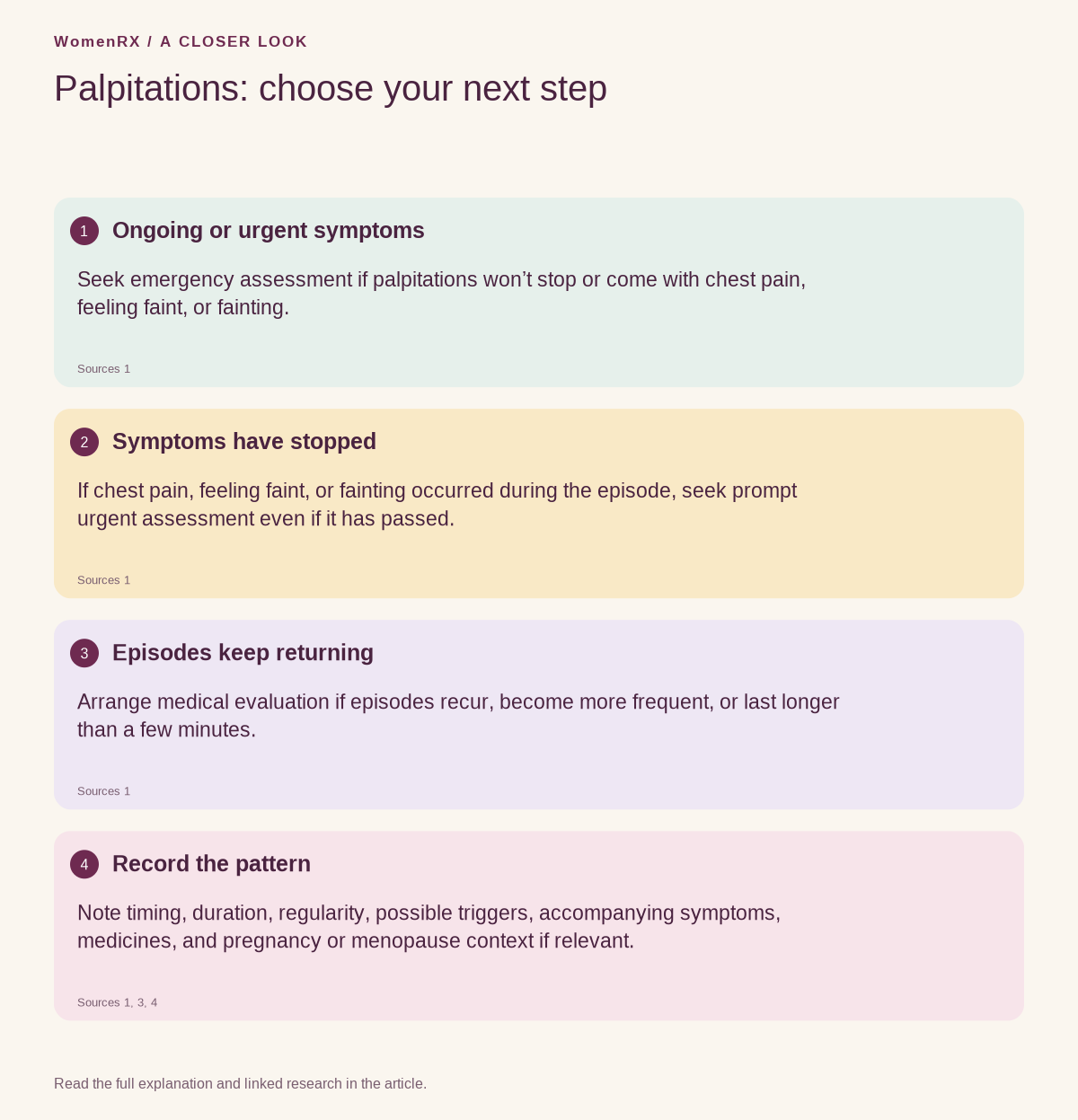
Palpitations: choose your next step
Ongoing or urgent symptoms: Seek emergency assessment if palpitations won’t stop or come with chest pain, feeling faint, or fainting.1
Symptoms have stopped: If chest pain, feeling faint, or fainting occurred during the episode, seek prompt urgent assessment even if it has passed.1
Episodes keep returning: Arrange medical evaluation if episodes recur, become more frequent, or last longer than a few minutes.1
Record the pattern: Note timing, duration, regularity, possible triggers, accompanying symptoms, medicines, and pregnancy or menopause context if relevant.134
Read the figure as text
Use symptoms and the episode pattern to guide what to do next. Menopause or pregnancy context alone does not identify the cause.- Ongoing or urgent symptoms: Seek emergency assessment if palpitations won’t stop or come with chest pain, feeling faint, or fainting.1
- Symptoms have stopped: If chest pain, feeling faint, or fainting occurred during the episode, seek prompt urgent assessment even if it has passed.1
- Episodes keep returning: Arrange medical evaluation if episodes recur, become more frequent, or last longer than a few minutes.1
- Record the pattern: Note timing, duration, regularity, possible triggers, accompanying symptoms, medicines, and pregnancy or menopause context if relevant.134
More questions, answered
Can I tell from my pulse whether I have an arrhythmia?
A pulse check may help you describe whether your heartbeat seemed regular or irregular, but it can’t confirm the cause. An ECG or heart-rhythm monitoring may be used to evaluate the rhythm. 2 3
Sources you can check
- Heart palpitations - NHSAccessed 2026-09-25Return to first citation
- Cardiovascular Signs and Symptoms: Palpitations and Monitoring.Greenberg J, Laurie A, Greenberg J. · FP essentials · 2026Return to first citation
- Palpitations: A Practical Approach.Ribero-Vargas D, Jaramillo-Alvarez JC, Gandara-Ricardo J. · Cureus · 2025Return to first citation
- Clinical approach to palpitations in pregnancy.Saeed F, Gunganah K, Herrey AS. · Clinical medicine (London, England) · 2025Return to first citation