Headaches on GLP-1 Treatment: What to Track and When to Act
A headache can happen during GLP-1 treatment, but its timing and accompanying symptoms matter more than assuming the medication is the cause.
Headache has been reported with GLP-1 medicines, but that alone doesn’t show the medicine caused yours. 6 Note when it starts and any treatment changes. Record missed meals 2, fluids and nausea or diarrhea 4, glucose readings if you monitor them 1, and menstrual timing 3. Let your health care provider know about a sudden, severe headache. Get medical help right away if a headache comes with confusion, fever, a stiff neck, or loss of consciousness. 2
Start with the pattern, not an assumption
Headache has been reported as a possible GLP-1 treatment side effect. A headache that begins during treatment could be related, but timing alone can’t establish the cause. 6 7
Other clues matter. A skipped meal, poor sleep, stress, or alcohol can contribute to some common headaches. If you have diabetes and use insulin or certain other glucose-lowering medicines, low blood sugar is a health concern to manage according to your existing diabetes plan. A headache alone can’t tell you whether your blood sugar is low. 1 2
What to record when one starts
A short log can help you and your prescriber see whether headaches follow a repeatable pattern. 3 Write down:
- Timing: When the pain began, how long it lasted, how severe it felt, and whether it returned.
- Treatment changes: The GLP-1 medicine you take and any recent start or change in treatment. Don’t change or stop it based on the log alone.
- Food and fluids: Whether you missed a meal, ate less than usual, or had trouble drinking. Record nausea, vomiting, or diarrhea too. Liraglutide’s prescribing information warns that these gastrointestinal effects can lead to dehydration and, in some cases, kidney injury. 4
- Other possible clues: Sleep, stress, alcohol, and, if relevant to you, where you are in your menstrual cycle. Headaches can be associated with periods or menopause. 2 3
- Other symptoms and glucose: Note symptoms that occurred with the headache. If you have diabetes and already monitor blood glucose, record the reading and follow the plan you were given for low readings. Low glucose is a concern for people taking insulin or certain other diabetes medicines, but a glucose reading is context, not proof of what caused a headache. 1 6
Use the clues to decide what needs checking, not to name a cause. Missed meals, poor sleep, stress, or alcohol can fit a tension-headache context. 2 If you take insulin or certain other diabetes medicines and ate less than usual, check your glucose if you monitor it and follow your diabetes plan for a low reading. The headache itself cannot establish low glucose. 1 With liraglutide, nausea, vomiting, or diarrhea raises a fluid-loss concern, especially if you cannot keep fluids down; it does not identify the headache’s cause. 4 If headaches recur around your period, note whether they are severe and whether the pattern repeats. Periods can be a hormonal headache context, and severe headaches can sometimes be migraines, but those clues do not establish menstrual migraine. 3 Contact your prescriber if headaches keep returning, worsen, or do not improve, even if they follow a treatment change. 3
When to get help
Let your health care provider know if you have a sudden, severe headache. Get medical help right away for a headache after a blow to the head or with a stiff neck, fever, confusion, loss of consciousness, or eye or ear pain. 2
Contact your prescriber promptly if headaches keep returning, worsen, or don’t improve, or if vomiting or diarrhea makes it hard to keep fluids down. 3 4 With liraglutide, persistent gastrointestinal symptoms deserve attention because of the risk of fluid loss and kidney injury. 4 Don’t adjust your GLP-1 medicine or any diabetes medicine without advice from the person managing your treatment.
If you have diabetes and are concerned about your glucose, check it if that’s part of your usual care and follow your existing diabetes plan. Severe low glucose can cause serious complications, including loss of consciousness. 1
What the evidence can and can’t tell you
Headache is a reported adverse effect of GLP-1 medicines, but that doesn’t establish the cause of an individual headache or whether women face a different risk. 6 7 A 2025 analysis of Facebook posts found mentions of headache in posts referring to GLP-1 medicines, including tirzepatide. Because the study counted social-media mentions rather than confirmed diagnoses among people taking a medicine, it can’t tell you how often treatment causes headache. 5
For practical purposes, track the pattern and associated symptoms, but treat red flags as a separate question. A new headache during treatment is worth noticing; it isn’t automatically a routine side effect.
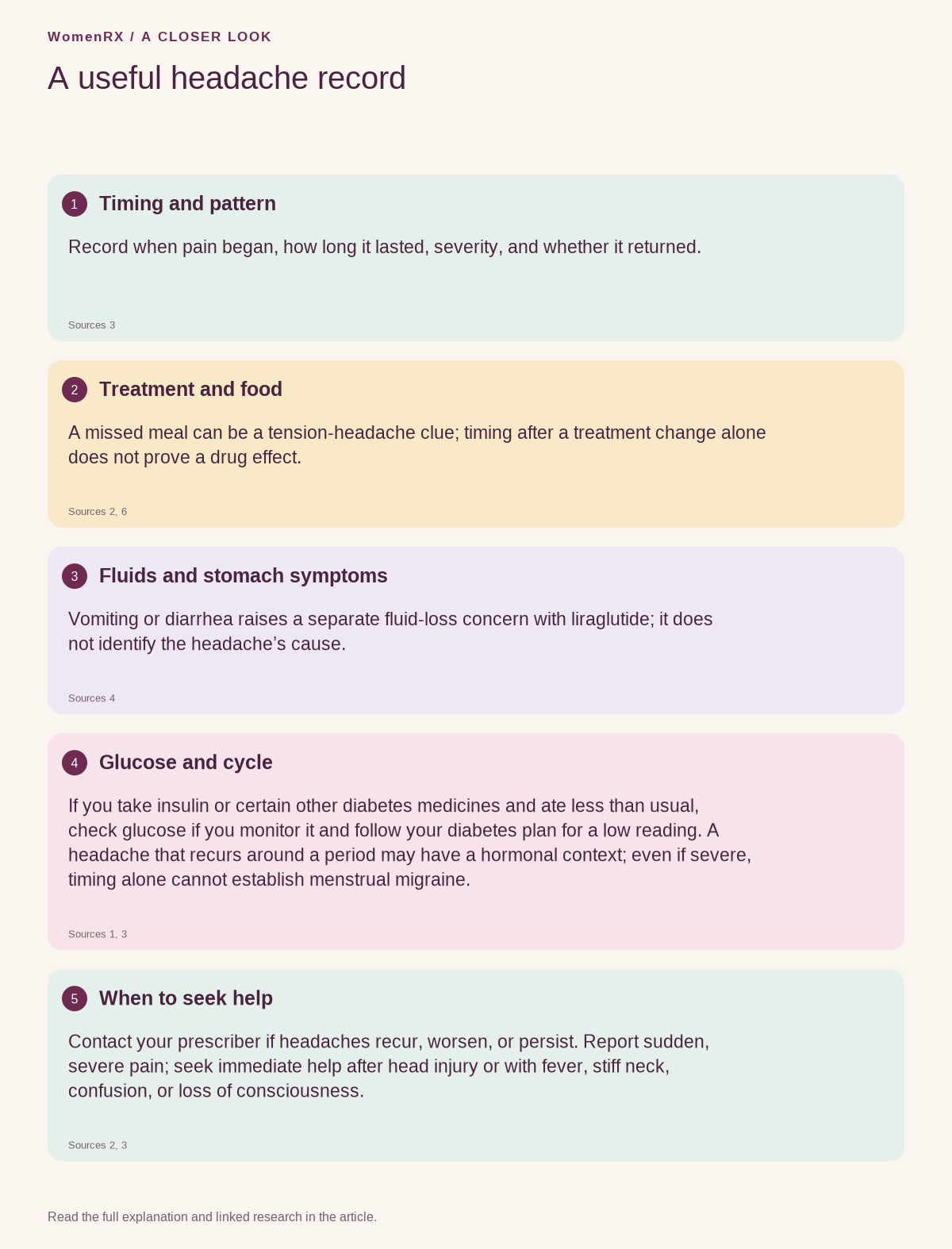
A useful headache record
Timing and pattern: Record when pain began, how long it lasted, severity, and whether it returned.3
Treatment and food: A missed meal can be a tension-headache clue; timing after a treatment change alone does not prove a drug effect.26
Fluids and stomach symptoms: Vomiting or diarrhea raises a separate fluid-loss concern with liraglutide; it does not identify the headache’s cause.4
Glucose and cycle: If you take insulin or certain other diabetes medicines and ate less than usual, check glucose if you monitor it and follow your diabetes plan for a low reading. A headache that recurs around a period may have a hormonal context; even if severe, timing alone cannot establish menstrual migraine.13
When to seek help: Contact your prescriber if headaches recur, worsen, or persist. Report sudden, severe pain; seek immediate help after head injury or with fever, stiff neck, confusion, or loss of consciousness.23
Read the figure as text
Capture the timing and context of a headache without treating the log as a diagnosis.- Timing and pattern: Record when pain began, how long it lasted, severity, and whether it returned.3
- Treatment and food: A missed meal can be a tension-headache clue; timing after a treatment change alone does not prove a drug effect.26
- Fluids and stomach symptoms: Vomiting or diarrhea raises a separate fluid-loss concern with liraglutide; it does not identify the headache’s cause.4
- Glucose and cycle: If you take insulin or certain other diabetes medicines and ate less than usual, check glucose if you monitor it and follow your diabetes plan for a low reading. A headache that recurs around a period may have a hormonal context; even if severe, timing alone cannot establish menstrual migraine.13
- When to seek help: Contact your prescriber if headaches recur, worsen, or persist. Report sudden, severe pain; seek immediate help after head injury or with fever, stiff neck, confusion, or loss of consciousness.23
More questions, answered
Could low blood sugar be causing my headache?
A headache alone can’t tell you whether your blood glucose is low. If you have diabetes and take insulin or certain other glucose-lowering medicines, low glucose is a concern to manage under your existing diabetes plan. If you monitor your blood sugar and missed a meal, record the reading and follow your diabetes plan rather than using the headache alone to judge your glucose. 1 6
Should I stop my GLP-1 medicine if I get a headache?
Don’t change or stop it based on a headache log alone. Note the timing and other symptoms, then contact your prescriber if headaches persist, worsen, or concern you. Let your health care provider know about a sudden, severe headache. A headache after a head injury or with urgent warning signs needs medical help right away. 2 3
Sources you can check
- Hypoglycemia: MedlinePlusAccessed 2026-09-25Return to first citation
- Headache | MedlinePlusAccessed 2026-09-25Return to first citation
- Headaches - NHSAccessed 2026-09-25Return to first citation
- SAXENDA (LIRAGLUTIDE) INJECTION, SOLUTION [NOVO NORDISK PHARMACEUTICAL INDUSTRIES, LP] | US prescribing information and patient instructionsAccessed 2026-09-25Return to first citation
- Harnessing Facebook to Investigate Real-World Mentions of Adverse Events of Glucagon-Like Peptide-1 Receptor Agonist (GLP-1 RA) Medications: Observational Study of Facebook Posts From 2022 to 2024.Alibilli AS, Jain V, Mane H, Yue X, Ratzki-Leewing A, Merchant JS, Criss S, Nguyen QC, McCoy RG, Nguyen TT. · JMIR infodemiology · 2025Return to first citation
- Adverse Effects of GLP-1 Receptor Agonists.Filippatos TD, Panagiotopoulou TV, Elisaf MS. · The review of diabetic studies : RDS · 2014Return to first citation
- The pharmacologic basis for clinical differences among GLP-1 receptor agonists and DPP-4 inhibitors.Morales J. · Postgraduate medicine · 2011Return to first citation