Bloating on GLP-1 Treatment: What to Track and When to Get Advice
A brief log of meals, bowel changes, dose timing, and other symptoms can help show whether bloating is settling or needs clinical review.
Bloating can happen during GLP-1 treatment, but it isn’t automatically harmless or caused by the medication. One randomized trial found bloating more often with efpeglenatide than placebo, but didn’t report a rate or sex-specific results. Note when the feeling starts, whether your abdomen looks larger, bowel changes, meals, and any dose change. Persistent or severe abdominal pain needs prompt medical attention. 3 2
Start by naming what you feel
Bloating usually means a feeling of fullness or uncomfortable pressure; your abdomen may also feel or look bigger than usual. That’s not quite the same as abdominal pain, constipation, or visible distension. They can happen together, but noting each separately makes the pattern clearer. 1
Bloating has been reported more often with efpeglenatide than placebo in a randomized trial involving people with type 2 diabetes who also had cardiovascular disease or kidney disease and another cardiovascular risk factor. The abstract didn’t give bloating rates, and it doesn’t tell us whether women and men experience it differently. This finding is specific to that medicine and study group, not a measure of how often bloating occurs with every GLP-1 medicine. 3
Why timing and bowel changes matter
GLP-1 medicines can slow stomach emptying. That may contribute to a sensation of prolonged fullness, but it can’t establish the cause of your particular bloating. Constipation may occur alongside bloating, so noting bowel changes can help make the pattern clearer. 4 1
Look for a change after starting treatment or changing a dose, but don’t assume timing proves the medicine caused it. A simple log can help your prescriber consider the possibilities without asking you to track every detail of your day.
A short log that’s useful, not burdensome
For a few days when symptoms are noticeable, jot down:
- When it starts and eases: Include how it relates to meals and, if relevant, your injection or dose change.
- What you mean by bloating: Fullness or pressure, visible abdominal swelling, or pain? Rate the discomfort in your own words.
- Bowel changes: Note constipation, diarrhea, vomiting, or whether your bowel habits seem unchanged.
- Other context: Record foods or meals that seem connected, and where you are in your menstrual cycle if you notice a recurring pattern.
You don’t need to prove a food or hormone is responsible. Some people feel bloated around their period, so a repeating cycle pattern is useful context, not an explanation to assume. 1
Bring the log to the clinician managing your medication, especially if symptoms are frequent, persistent, worsening, or began after a dose change.
Know which symptoms change the next step
Get prompt medical advice if bloating comes with abdominal pain, vomiting, diarrhea or constipation, fever, or a new lump or swelling in your abdomen. 1
Persistent or severe abdominal pain, sometimes spreading to the back, is a specific warning in liraglutide prescribing information because it can signal pancreatitis; nausea or vomiting may or may not occur. Seek urgent assessment rather than treating that pattern as routine bloating. 2
If a swollen abdomen comes with sudden, severe pain, blood in your vomit, or severe difficulty breathing, seek emergency help. 1
If bloating keeps returning or doesn’t go away, arrange a clinical review even if it isn’t severe. Ongoing symptoms deserve assessment rather than being written off as an expected treatment effect. 1
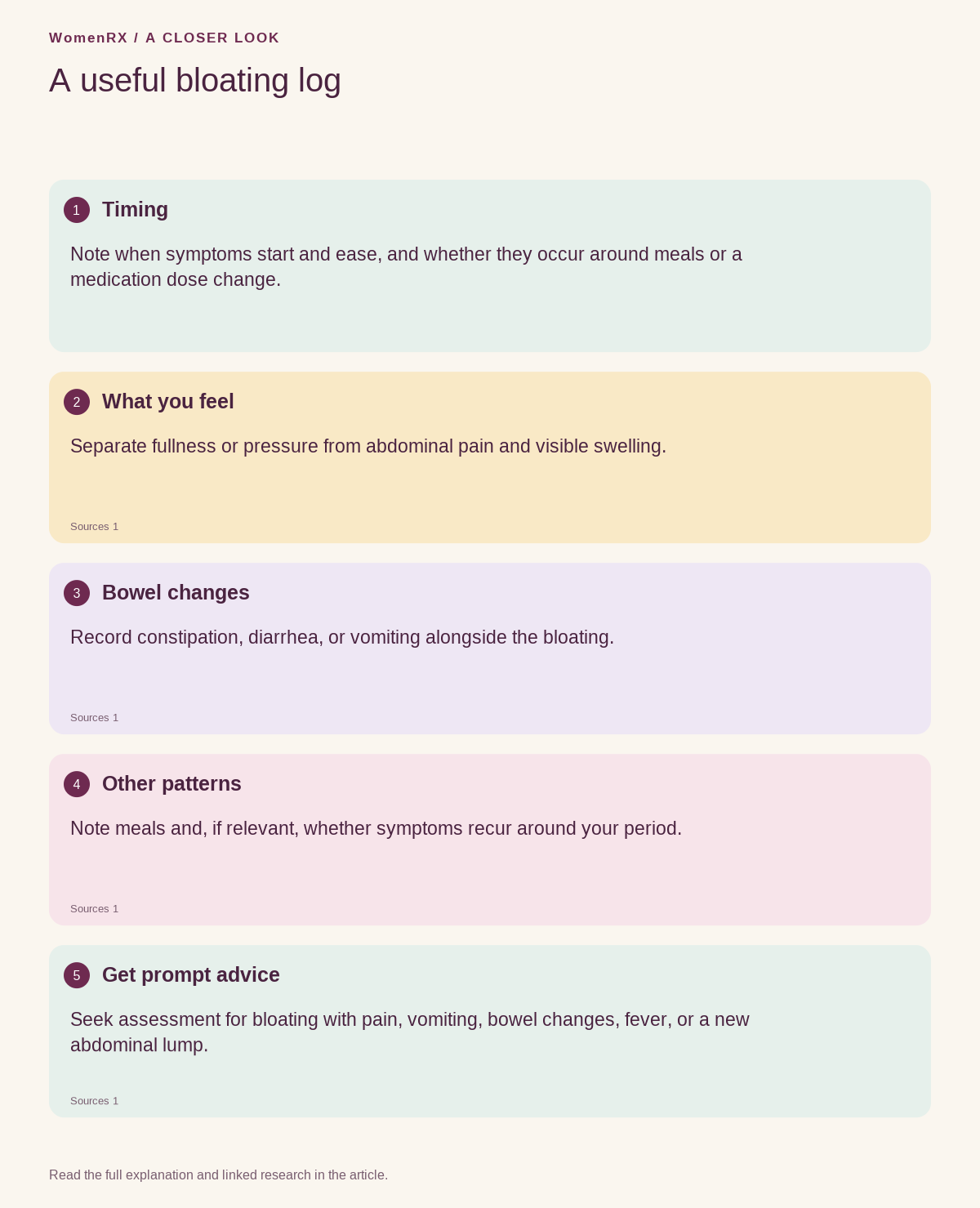
A useful bloating log
Timing: Note when symptoms start and ease, and whether they occur around meals or a medication dose change.
What you feel: Separate fullness or pressure from abdominal pain and visible swelling.1
Bowel changes: Record constipation, diarrhea, or vomiting alongside the bloating.1
Other patterns: Note meals and, if relevant, whether symptoms recur around your period.1
Get prompt advice: Seek assessment for bloating with pain, vomiting, bowel changes, fever, or a new abdominal lump.1
Read the figure as text
Record a few details when symptoms occur. The pattern can help distinguish fullness from pain or bowel changes without assuming the cause.- Timing: Note when symptoms start and ease, and whether they occur around meals or a medication dose change.
- What you feel: Separate fullness or pressure from abdominal pain and visible swelling.1
- Bowel changes: Record constipation, diarrhea, or vomiting alongside the bloating.1
- Other patterns: Note meals and, if relevant, whether symptoms recur around your period.1
- Get prompt advice: Seek assessment for bloating with pain, vomiting, bowel changes, fever, or a new abdominal lump.1
More questions, answered
Can bloating be related to my menstrual cycle?
It can: some people feel bloated around their period. If you notice a repeat pattern, include cycle timing in your log, but don’t assume that explains new, persistent, or painful symptoms. 1
Sources you can check
- Bloating - NHSAccessed 2026-09-25Return to first citation
- SAXENDA (LIRAGLUTIDE) INJECTION, SOLUTION [NOVO NORDISK PHARMACEUTICAL INDUSTRIES, LP] | US prescribing information and patient instructionsAccessed 2026-09-25Return to first citation
- Cardiovascular and Renal Outcomes with Efpeglenatide in Type 2 Diabetes.Gerstein HC, Sattar N, Rosenstock J, Ramasundarahettige C, Pratley R, Lopes RD, Lam CSP, Khurmi NS, Heenan L, Del Prato S, Dyal L, Branch K, AMPLITUDE-O Trial Investigators. · The New England journal of medicine · 2021Return to first citation
- Weight Loss AgentsHoofnagle JH. · 2012Return to first citation