Hair Thinning in Midlife: What the Pattern Can Tell You
A widening part, extra shedding, and a distinct bald patch point to different questions, even when they appear around menopause.
Start with what’s changing: a part that keeps widening can suggest female pattern hair loss, while noticeably more hair coming out may point toward shedding after an illness or other stressor. A sudden, well-defined patch needs a different assessment. Perimenopause or postmenopause provides context, but your age alone can’t identify the cause. 43
Noticing more scalp in a photo or more hair in the shower can be unsettling. The most useful first distinction isn’t whether the change began around menopause. It’s whether your hair looks thinner in a particular area, whether more strands are coming out across your scalp, or whether you have a distinct area of loss. Those patterns can overlap, so treat them as clues rather than a diagnosis. 45
A widening part that develops over time
For women, a widening part or overall thinning is often the first noticeable sign of hereditary female pattern hair loss. Compare what you see now with an older photo taken in similar lighting, if you have one. For example, a part that has become steadily more visible raises a different question from a sudden increase in loose hair after an illness. Family history is worth mentioning, though you don’t need a known family history to have your hair assessed. 41
Female pattern hair loss can continue without treatment. Treatment may slow loss and may help regrowth, with earlier treatment tending to work better. Minoxidil is one option used for female pattern hair loss, but that doesn’t make it the right answer for every kind of thinning. Establishing the cause comes first. 42
More hair coming out across the scalp
If the striking change is extra hair on your brush, clothing, or shower drain, think about what else has happened in your life and health. Illness, childbirth, and other stressors can be associated with excessive shedding. Medicines, thyroid problems, and inadequate nutrition are among other possible contributors to hair loss. These are possibilities to investigate, not conclusions you can draw from the shower drain. 41
The pace helps tell the story. For example, if you noticed a marked increase in shedding after an illness, say when the illness happened and when the shedding became noticeable. If instead you’ve been noticing a wider part across successive photos, say that. Counting loose hairs alone won’t tell you the cause: some daily shedding is normal, and a clinician may need to examine your hair and scalp to work out what has changed. 15
Shedding and pattern loss can also happen together. The American Academy of Dermatology gives the example of shedding after childbirth revealing less obvious early hereditary loss. That’s one reason a recent stressor doesn’t necessarily explain every change you see. 5
A distinct patch is a different clue
A sudden, well-defined area of missing hair can be a sign of alopecia areata, in which the immune system attacks hair follicles. It can affect the scalp and sometimes other areas, including eyebrows or eyelashes. A patch shouldn’t be assumed to be menopausal thinning or treated as though it were female pattern hair loss. 34
Also mention scalp pain or inflammation. Some causes of hair loss need treatment to prevent further loss; the dermatologist’s assessment may differ from the approach to ordinary shedding or pattern thinning. 54
Where menopause fits, and what an assessment can sort out
Hair growth can slow with age. If you first noticed thinning during perimenopause or postmenopause, that timing alone doesn’t establish that changing menopause hormones caused your hair loss. A clinician can consider the visible pattern alongside recent illness or stress, medicines, nutrition, family history, and any other changes in your health. 415
An assessment starts with looking at your scalp and hair and asking about the history of the change. Depending on what that suggests, a dermatologist may use a gentle hair-pull examination or consider blood tests or a scalp biopsy if a disease, deficiency, hormone imbalance, or infection is suspected. Not everyone needs every test. 5
The treatment conversation then becomes more useful: is this pattern loss that might benefit from minoxidil, shedding linked to a stressor that may settle, or another condition needing its own treatment? If the loss is worrying you or affecting how you feel, that’s reason enough to bring it up rather than waiting to see how much hair you lose. 245
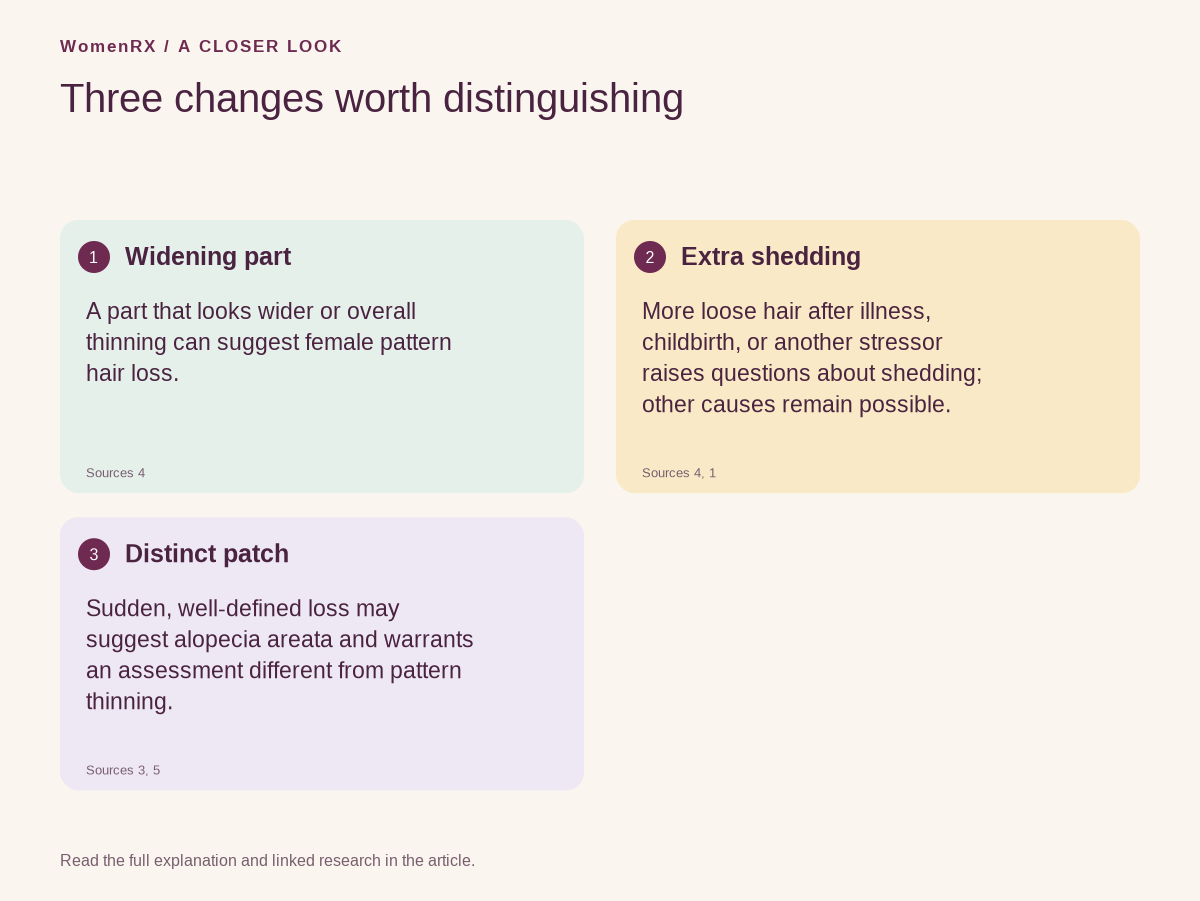
Three changes worth distinguishing
Widening part: A part that looks wider or overall thinning can suggest female pattern hair loss.4
Extra shedding: More loose hair after illness, childbirth, or another stressor raises questions about shedding; other causes remain possible.41
Distinct patch: Sudden, well-defined loss may suggest alopecia areata and warrants an assessment different from pattern thinning.35
Read the figure as text
Look at where hair is changing and whether the main change is thinning, extra shedding, or a distinct patch.- Widening part: A part that looks wider or overall thinning can suggest female pattern hair loss.4
- Extra shedding: More loose hair after illness, childbirth, or another stressor raises questions about shedding; other causes remain possible.41
- Distinct patch: Sudden, well-defined loss may suggest alopecia areata and warrants an assessment different from pattern thinning.35
Sources you can check
- Hair Loss | Alopecia | Alopecia Areata | MedlinePlusAccessed 2026-09-25Return to first citation
- Hair loss - NHSAccessed 2026-09-25Return to first citation
- Stem cell-based therapies for alopecia areata: a narrative review.Fan A, Liu M, Li J. · Stem cell research & therapy · 2026Return to first citation
- Hair loss: Who gets and causesAccessed 2026-09-25Return to first citation
- Hair loss: Diagnosis and treatmentAccessed 2026-09-25Return to first citation