Hair Shedding During GLP-1 Weight Loss: When to Check Iron
Weight loss and iron deficiency can each be linked with hair loss, but shedding alone can’t tell you which, if either, is involved.
Weight loss and iron deficiency are both recognized possible causes of temporary hair loss, but shedding while taking a GLP-1 medicine doesn’t prove you’re low in iron. Iron testing may be worth discussing if you have heavy periods, limited iron in your diet, pregnancy or breastfeeding, or other signs of deficiency. Don’t start iron automatically: excess supplements can cause harm. 1 2 3
Two possible causes, not one diagnosis
Hair shedding during weight loss can be unsettling. Weight loss is recognized as a possible cause of temporary hair loss, and iron deficiency is another possible cause. Seeing shedding while taking a GLP-1 medicine doesn’t, by itself, show that the medicine caused iron deficiency or that low iron is the reason for your hair loss. 1
These are separate questions: Has a change in weight or eating been a trigger? And are your iron stores low? More than one factor may need consideration, and the appearance of shedding alone can’t answer the iron question. A clinician can examine your hair and consider your history before deciding whether testing makes sense. 1
When iron testing may be relevant
Iron is more worth discussing when your history points to a reason your stores could be low. Heavy periods can increase the chance of low iron. So can a diet that doesn’t provide enough iron; iron needs and absorption also vary with life stage and food choices. 2 3
It may help to explain what has changed during weight loss. For example, tell your clinician if your meals have become much smaller, your food choices have narrowed, or you now eat little or no meat. Those details don’t establish a deficiency, but they can help put your iron intake in context. Plant foods and fortified grains can provide iron too, though iron from plants is generally less readily absorbed than iron from meat and seafood. 2
Pregnancy and breastfeeding have their own iron requirements, so mention either if it applies. Heavy menstrual bleeding is relevant during cycling years. After menopause, the menstrual part of that history changes, but hair shedding still shouldn’t automatically be blamed on iron. Age and life stage affect iron needs, and the rest of your health and diet matter too. 2 3
What testing can clarify
If your clinician thinks iron deficiency is plausible, ask whether checking ferritin and a blood count or hemoglobin would help. Ferritin reflects stored iron. Iron depletion can show up as low ferritin before hemoglobin falls, so a hemoglobin result alone may not show early depletion. 2
That distinction matters: anemia is not the only reason to assess iron stores. A clinician can interpret results alongside your symptoms, menstrual history, diet, pregnancy or breastfeeding status, and other relevant health details. A low result can prompt a discussion about why iron is low as well as whether treatment is appropriate. Iron deficiency can have more than one cause, including blood loss or inadequate intake. 2 3
Why a supplement isn’t a shortcut
Iron isn’t a general hair-growth supplement. Taking it without a reason to think you need it may expose you to side effects without addressing the cause of shedding. Supplemental iron can cause nausea, constipation, stomach pain, and other digestive effects; too much can be dangerous. 2 3
If testing does show low iron, the next step is a plan based on the result and the reason for it, not a guess based on hair loss. If iron is not low, taking more is unlikely to answer why your hair is shedding. Either way, don’t let the hair symptom alone decide whether you need iron.
You can raise the question plainly: “Could weight change or iron deficiency be contributing, and would ferritin and a blood count help check?” Share when shedding began, what changed in your weight or eating, whether you have heavy periods, and whether pregnancy or breastfeeding applies. If you’re worried about the hair loss, getting its cause assessed is a reasonable next move. 1 2 3
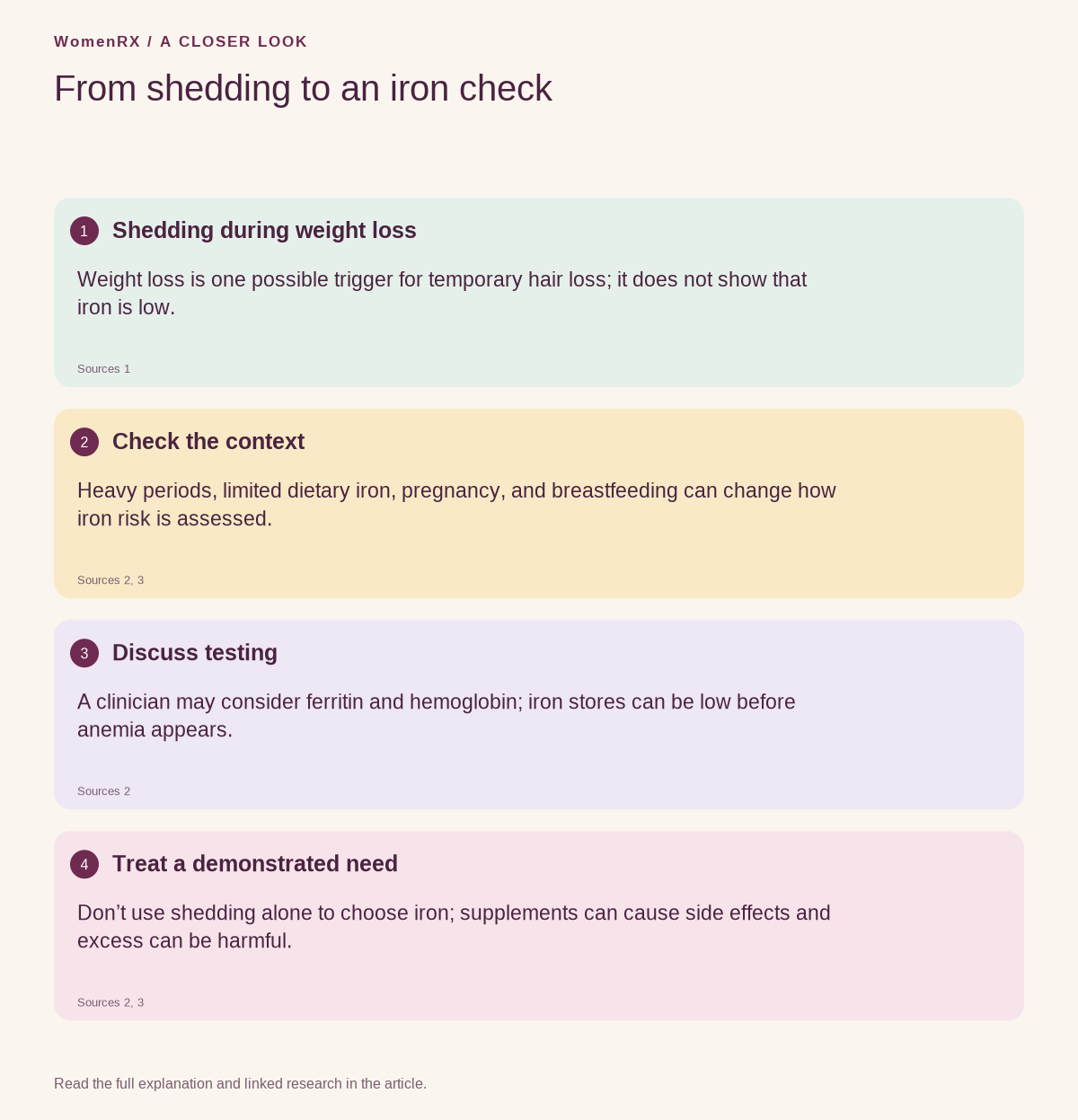
From shedding to an iron check
Shedding during weight loss: Weight loss is one possible trigger for temporary hair loss; it does not show that iron is low.1
Check the context: Heavy periods, limited dietary iron, pregnancy, and breastfeeding can change how iron risk is assessed.23
Discuss testing: A clinician may consider ferritin and hemoglobin; iron stores can be low before anemia appears.2
Treat a demonstrated need: Don’t use shedding alone to choose iron; supplements can cause side effects and excess can be harmful.23
Read the figure as text
Hair shedding has more than one possible explanation. Use the relevant history to guide a clinician-led assessment rather than starting iron by default.- Shedding during weight loss: Weight loss is one possible trigger for temporary hair loss; it does not show that iron is low.1
- Check the context: Heavy periods, limited dietary iron, pregnancy, and breastfeeding can change how iron risk is assessed.23
- Discuss testing: A clinician may consider ferritin and hemoglobin; iron stores can be low before anemia appears.2
- Treat a demonstrated need: Don’t use shedding alone to choose iron; supplements can cause side effects and excess can be harmful.23
More questions, answered
Can normal hemoglobin mean my iron stores are still low?
Yes. Iron stores can become depleted, with ferritin falling, before hemoglobin declines. A clinician can decide whether ferritin testing is useful even if anemia hasn’t been shown. 2
Should I take iron just in case?
It’s better not to start it automatically. Iron supplements can cause digestive side effects, and too much iron can be harmful. Whether you need it depends on your iron status and the reason for any deficiency. 2 3
Sources you can check
- Hair loss - NHSAccessed 2026-09-25Return to first citation
- Iron - Health Professional Fact SheetAccessed 2026-09-25Return to first citation
- Iron: MedlinePlusAccessed 2026-09-25Return to first citation