Green Tea: A Caffeinated Drink, Not a Weight-Loss Fix
Brewed green tea offers modest, variable caffeine; extracts range from minimally processed leaves to highly concentrated products, with product-dependent exposure and little reason to expect meaningful weight loss.
A typical brewed cup of green tea has about 45 mg of caffeine in one NIH reference; MedlinePlus lists 14-60 mg for an 8-ounce cup. A USDA estimate for 1 cup (245 g) of plain brewed tea is just 2.5 calories, with 0.5 g protein and no fiber. Weight-loss evidence suggests, at most, a small effect; extracts have separate safety concerns. 1 2 4
A cup and an extract aren’t interchangeable
Brewed green tea is a caffeinated drink. One NIH reference gives a typical cup about 45 mg of caffeine; MedlinePlus lists 14-60 mg for an 8-ounce cup of tea. The difference is a useful reminder that the amount can vary. If you’re counting caffeine, include tea alongside coffee, soda, energy drinks, and any medicines or supplements that contain caffeine. 1 2
Green tea extract is a supplement, not simply a stronger cup. Extracts range from minimally processed tea leaves to manufactured concentrates of particular ingredients, including EGCG, a green tea catechin. A product’s caffeine and catechin amounts can differ from brewed tea, so check the specific label rather than assuming it matches a cup. 1
What’s in a plain brewed cup?
For a simple nutrition reference, one cup of plain brewed green tea means 245 grams of prepared tea. The USDA SR Legacy record estimates that serving at 2.5 calories, with 0.5 gram of protein and no carbohydrate, fat, or fiber. That makes it a light drink, not a meaningful source of protein or fiber. These are reference estimates, not a measurement of every brand or a sweetened tea. 4
| Plain green tea, brewed | Portion | Energy | Protein | Carbohydrate | Fat | Fiber |
|---|---|---|---|---|---|---|
| Prepared, plain | 1 cup (245 g) | 2.5 kcal | 0.5 g | 0 g | 0 g | 0 g |
The nutrition figures describe the tea itself. Additions such as sweeteners or milk aren’t included in this plain-tea estimate. 4
What the weight-loss evidence says
Green tea’s caffeine and catechins have been studied for possible effects on energy use and fat oxidation. Those mechanisms haven’t translated into a reliable, meaningful weight-loss benefit. In a review of 14 randomized trials involving 1,562 people with overweight or obesity, green tea preparations were associated with an average of 0.95 kg more weight loss than placebo over 12-13 weeks. But in the six studies conducted outside Japan, the difference wasn’t statistically significant. The trials tested preparations, not a consistent everyday cup of brewed tea. 1
That distinction matters if you’re considering a supplement to change your weight. The overall findings suggest any effect is small and unlikely to be clinically meaningful; they don’t show that drinking green tea reliably causes weight loss. 1
There is also a specific finding in postmenopausal women: in a 12-month trial of 121 women with overweight or obesity, a decaffeinated green tea extract had no overall effect on body weight, BMI, or waist circumference. That one study doesn’t settle every question about green tea or every life stage, but it doesn’t support a special weight-loss effect for women after menopause. 1
Why extracts deserve more caution
The NIH fact sheet reports no adverse effects from green tea as a beverage. Extracts have a different safety profile: reported effects include nausea, constipation, abdominal discomfort, and increased blood pressure, and green tea extract has been linked to liver injury. In a study of 1,021 postmenopausal women, an extract taken for 12 months was associated with increased liver enzymes compared with placebo; some participants had moderate or more serious liver-function abnormalities. This is a reason not to treat a concentrated supplement as equivalent to ordinary tea. 1
A practical caffeine check
For most people, MedlinePlus says up to 400 mg of caffeine a day is not harmful, but individual sensitivity varies. That figure is a general reference, not a goal or a pregnancy recommendation. If tea leaves you feeling restless or shaky, consider a smaller amount or decaffeinated tea. If you notice that a late cup interferes with your sleep, try having it earlier or switching to decaf and see what works for you. 2
During pregnancy, caffeine crosses the placenta. MedlinePlus advises checking whether you should limit or avoid caffeine, so include green tea in the conversation rather than counting it as caffeine-free. Green tea extracts are supplements, and pregnancy guidance advises checking with a provider before using herbs or supplements. 2 3
Medication questions depend on the product and the medicine. MedlinePlus flags caffeine as a possible concern with stimulants, some antibiotics, asthma medicines, and heart medicines. The NIH supplement reference also notes that green tea may interact with chemotherapy drugs. If any of these apply to you, ask your prescriber or pharmacist about the particular drink or extract you use; don’t assume a supplement and brewed tea carry the same exposure. 1 2
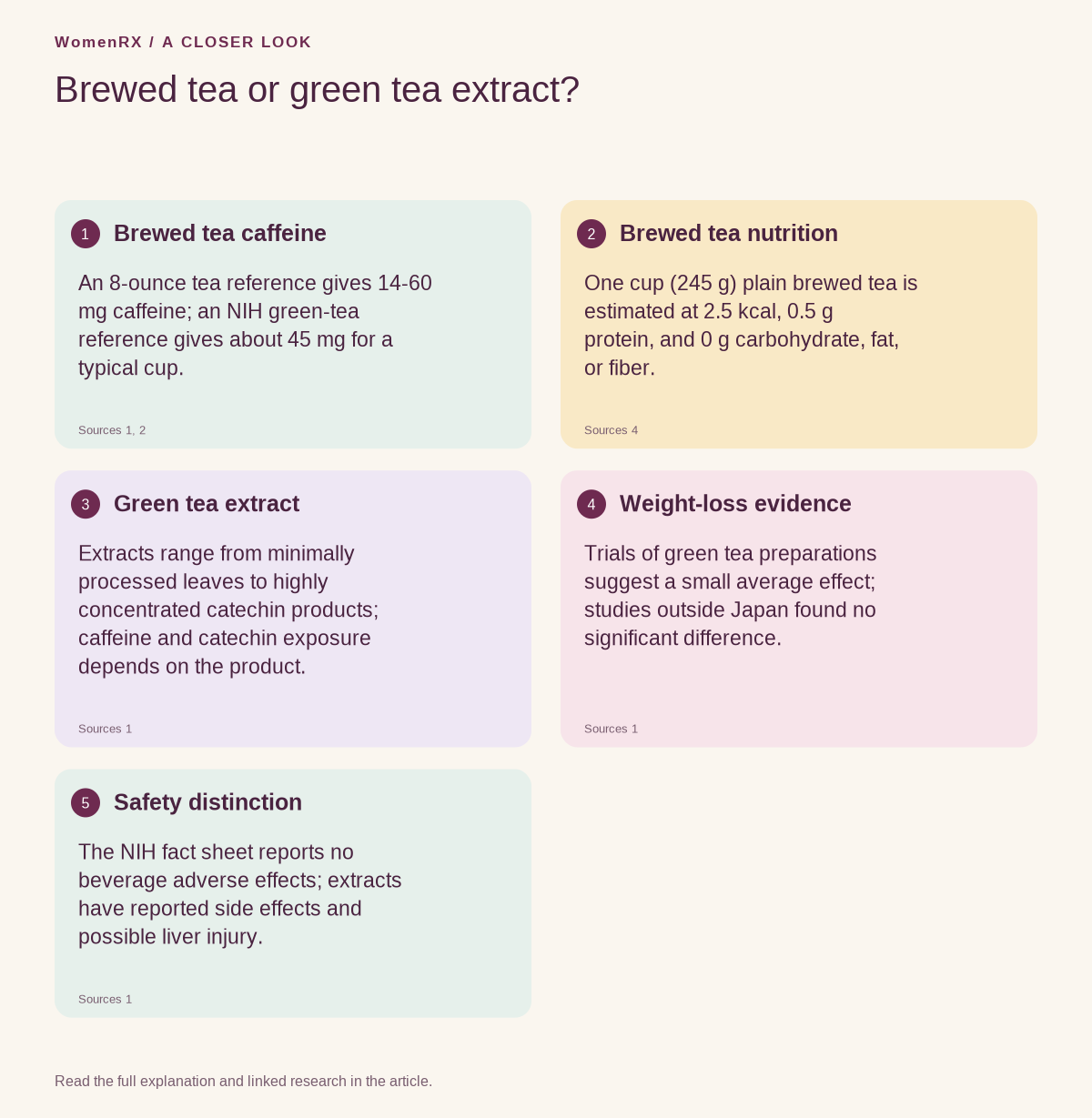
Brewed tea or green tea extract?
Brewed tea caffeine: An 8-ounce tea reference gives 14-60 mg caffeine; an NIH green-tea reference gives about 45 mg for a typical cup.12
Brewed tea nutrition: One cup (245 g) plain brewed tea is estimated at 2.5 kcal, 0.5 g protein, and 0 g carbohydrate, fat, or fiber.4
Green tea extract: Extracts range from minimally processed leaves to highly concentrated catechin products; caffeine and catechin exposure depends on the product.1
Weight-loss evidence: Trials of green tea preparations suggest a small average effect; studies outside Japan found no significant difference.1
Safety distinction: The NIH fact sheet reports no beverage adverse effects; extracts have reported side effects and possible liver injury.1
Read the figure as text
Compare a plain cup’s caffeine and nutrition with what concentrated extracts mean for weight-loss evidence and safety.- Brewed tea caffeine: An 8-ounce tea reference gives 14-60 mg caffeine; an NIH green-tea reference gives about 45 mg for a typical cup.12
- Brewed tea nutrition: One cup (245 g) plain brewed tea is estimated at 2.5 kcal, 0.5 g protein, and 0 g carbohydrate, fat, or fiber.4
- Green tea extract: Extracts range from minimally processed leaves to highly concentrated catechin products; caffeine and catechin exposure depends on the product.1
- Weight-loss evidence: Trials of green tea preparations suggest a small average effect; studies outside Japan found no significant difference.1
- Safety distinction: The NIH fact sheet reports no beverage adverse effects; extracts have reported side effects and possible liver injury.1
More questions, answered
Does green tea count toward my daily caffeine?
Yes. Brewed green tea contains caffeine, and the amount varies. Count it with caffeine from other drinks, foods, medicines, and supplements. 1 2
Is green tea extract safer because it comes from tea?
Not necessarily. Green tea extracts vary, and some can be highly concentrated. Their caffeine and catechin exposure depends on the product; reported risks include possible liver injury. Ordinary brewed tea and extracts shouldn’t be treated as interchangeable. 1
Sources you can check
- Dietary Supplements for Weight Loss - Health Professional Fact SheetAccessed 2026-09-25Return to first citation
- Caffeine: MedlinePlusAccessed 2026-09-25Return to first citation
- Pregnancy and Medicines | MedlinePlusAccessed 2026-09-25Return to first citation
- USDA SR Legacy: Beverages, tea, green, brewed, regular (FDC 171917)Accessed 2026-09-25Return to first citation