Frozen Shoulder: When Stiffness Needs an Assessment
A gradually painful, stiff shoulder can fit frozen shoulder, but other shoulder problems can feel similar and an exam helps tell them apart.
Frozen shoulder often causes shoulder pain, sometimes worse at night, alongside stiffness that makes the arm difficult to move. If the pain and stiffness persist or make movement very difficult, arrange an assessment; pain alone can’t confirm the diagnosis. Seek more urgent care for sudden or very severe pain, an injury, inability to move the arm, or feeling feverish or unwell. 12
The pattern matters more than pain alone
Frozen shoulder, also called adhesive capsulitis, involves inflammation of tissue around the shoulder joint. The typical pattern is pain together with stiffness that makes it difficult to move the shoulder. Pain may be worse at night and disturb sleep. Symptoms can last for months, sometimes longer, so a long course by itself doesn’t tell you what’s causing the problem. 1
Stiffness is a useful clue, but it isn’t a diagnosis. Shoulder pain and limited movement can also occur with arthritis, tendon or bursa problems, or shoulder instability. For example, pain that’s worse when you use your arm can occur with tendonitis, bursitis, or impingement. Numbness, tingling, weakness, or clicking can point to a different problem, such as instability. These patterns can guide an assessment, but they can’t identify the cause on their own. 2
When to arrange an assessment
Make an appointment if shoulder pain and stiffness aren’t going away, or if pain is making it hard to move your arm. An assessment can help distinguish frozen shoulder from other causes and determine whether tests are useful. The clinician may examine your shoulder and, depending on what they find, order imaging such as an X-ray. 12
That can matter because similar symptoms don’t always call for the same approach. A clinician can consider how the pain began, how movement is affected, and whether another shoulder problem better fits. If frozen shoulder seems likely, gentle movement may be part of care; forcing a painful shoulder isn’t the same as a guided exercise plan. Follow exercises recommended for your situation. 12
Get more urgent medical care if the pain is sudden or very severe, you can’t move your arm, the pain started after an injury or accident, or you feel feverish or generally unwell. Those symptoms can accompany problems other than frozen shoulder, including injuries that need prompt assessment. 2
What menopause does, and doesn’t, tell you
Frozen shoulder is reported more often in women, with higher incidence described among women around ages 40 to 60. That age range overlaps with the years when many women experience perimenopause and menopause, but an age overlap does not establish that menopause directly causes frozen shoulder. 3
So, being in midlife may make frozen shoulder a possibility, but it doesn’t confirm the cause of your shoulder symptoms. The pattern of pain and stiffness, the examination, and consideration of other shoulder problems are more useful for deciding what’s going on. Evidence about the condition’s contributing factors is not definitive: a review found varied study designs and rated its overall certainty very low. 3
While you’re waiting
If you can move your shoulder, keep movement gentle and avoid movements that clearly worsen the pain. A clinician or physical therapist can recommend exercises based on how painful and stiff your shoulder is. If movement becomes very difficult, symptoms persist, or any urgent warning signs appear, don’t rely on home exercises to determine the cause. 12
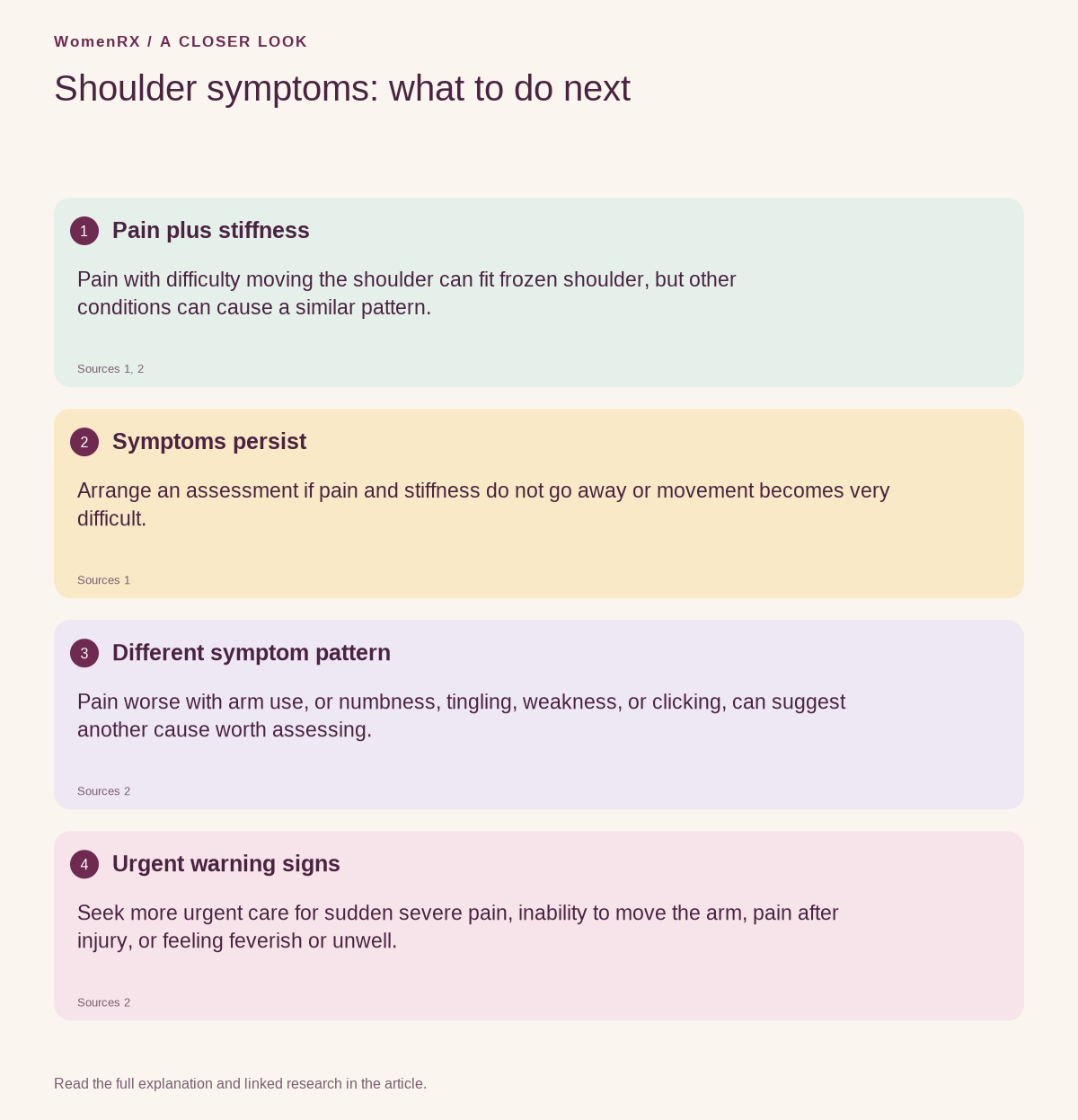
Shoulder symptoms: what to do next
Pain plus stiffness: Pain with difficulty moving the shoulder can fit frozen shoulder, but other conditions can cause a similar pattern.12
Symptoms persist: Arrange an assessment if pain and stiffness do not go away or movement becomes very difficult.1
Different symptom pattern: Pain worse with arm use, or numbness, tingling, weakness, or clicking, can suggest another cause worth assessing.2
Urgent warning signs: Seek more urgent care for sudden severe pain, inability to move the arm, pain after injury, or feeling feverish or unwell.2
Read the figure as text
Use the symptom pattern to choose a sensible next step. This flow can guide care-seeking, but it cannot diagnose the cause.- Pain plus stiffness: Pain with difficulty moving the shoulder can fit frozen shoulder, but other conditions can cause a similar pattern.12
- Symptoms persist: Arrange an assessment if pain and stiffness do not go away or movement becomes very difficult.1
- Different symptom pattern: Pain worse with arm use, or numbness, tingling, weakness, or clicking, can suggest another cause worth assessing.2
- Urgent warning signs: Seek more urgent care for sudden severe pain, inability to move the arm, pain after injury, or feeling feverish or unwell.2
More questions, answered
Does frozen shoulder mean my shoulder won’t recover?
Frozen shoulder can take months or sometimes years to improve, but pain and stiffness usually go away eventually. The course varies, and an assessment can help check whether another cause needs a different approach. 1
Can I tell frozen shoulder from tendonitis at home?
Not reliably. Pain that’s worse when using the arm can occur with tendonitis or bursitis, while persistent pain and stiffness can fit frozen shoulder or arthritis. These patterns are clues, not a home diagnosis. 2
Sources you can check
- Frozen shoulder - NHSAccessed 2026-09-25Return to first citation
- Shoulder pain - NHSAccessed 2026-09-25Return to first citation
- Rehabilitation of Frozen Shoulder: A Systematic Review and Meta-Analysis of Multifactorial Interventions.Hamed-Hamed D, Pérez Montilla JJ, Brindisino F, Struyf F, Navarro-Ledesma S. · Pain research & management · 2026Return to first citation