Frozen Shoulder in Midlife: What Helps and What’s Unclear
Pain with growing stiffness may fit frozen shoulder, but midlife timing alone doesn’t mean menopause caused it.
Frozen shoulder typically brings both pain and stiffness that make the shoulder difficult to move; pain may also disturb sleep. Pain alone isn’t enough to identify it, since other shoulder conditions can hurt too. An assessment can help sort out the cause. Treatment may combine pain relief, gentle movement, a steroid injection, and physiotherapy, depending on your symptoms. 1 3
Is it pain, stiffness, or both?
Frozen shoulder, also called adhesive capsulitis, usually involves two problems together: shoulder pain and stiffness that makes movement difficult. The pain can be worse at night and interrupt sleep. 1
That distinction is worth noticing. For example, you might stop reaching for something because the movement hurts, or you might feel that your shoulder simply won’t move as far as you expect. Pain and stiffness can overlap, so this isn’t a home test. It’s a clearer way to describe what’s happening when you seek an assessment.
Not every painful shoulder is frozen shoulder. A study of women with shoulder pain identified adhesive capsulitis alongside other diagnoses, including shoulder synovitis, rotator cuff disorders, and arthritis. If pain and loss of movement are persisting, getting the shoulder assessed matters more than deciding from symptoms alone which label fits. 3
Does perimenopause explain it?
The timing can feel convincing if your shoulder begins to hurt during the menopause transition. But timing isn’t the same as cause.
In a study of women who already had shoulder pain, adhesive capsulitis was diagnosed in 35.4% of 197 perimenopausal participants and 31.8% of 113 premenopausal participants. That difference was not statistically significant. Those percentages describe this group of women with shoulder pain, not the chance that any woman in perimenopause will develop frozen shoulder. The reported results don’t establish an estrogen mechanism or show that hormone therapy would prevent or treat the condition. 3
Match the treatment to the problem it’s addressing
Frozen shoulder care can involve pain relief, gentle shoulder exercises, a steroid injection, or physiotherapy. These approaches may be combined according to how painful and stiff your shoulder is. Physiotherapy focuses on helping you regain movement; pain relief may make the shoulder more manageable while you work on that goal. 1
The useful balance is gentle movement without forcing painful exercise. Avoid movements that aggravate the pain, but don’t assume that a strenuous workout will loosen the shoulder faster. The NHS cautions that strenuous exercises you make up yourself can make pain worse. If you’re given exercises, ask what level of discomfort to expect and what to do if an exercise increases your pain. 1
At an assessment, a few specific questions can make the options easier to compare:
- “Does this seem like shoulder stiffness, or is pain mainly stopping me from moving?”
- “What other shoulder condition could explain my symptoms?”
- “Is this treatment meant to ease pain, help movement return, or both?”
- “If movement isn’t improving, when should we reassess the plan?”
What recovery may look like
Frozen shoulder can take months or years to get better, though the pain and stiffness usually go away eventually. That range can’t predict your own recovery. If you’ve finished physiotherapy and are still in pain, return to the clinician or physiotherapist treating your shoulder to discuss whether the plan needs to change. 1
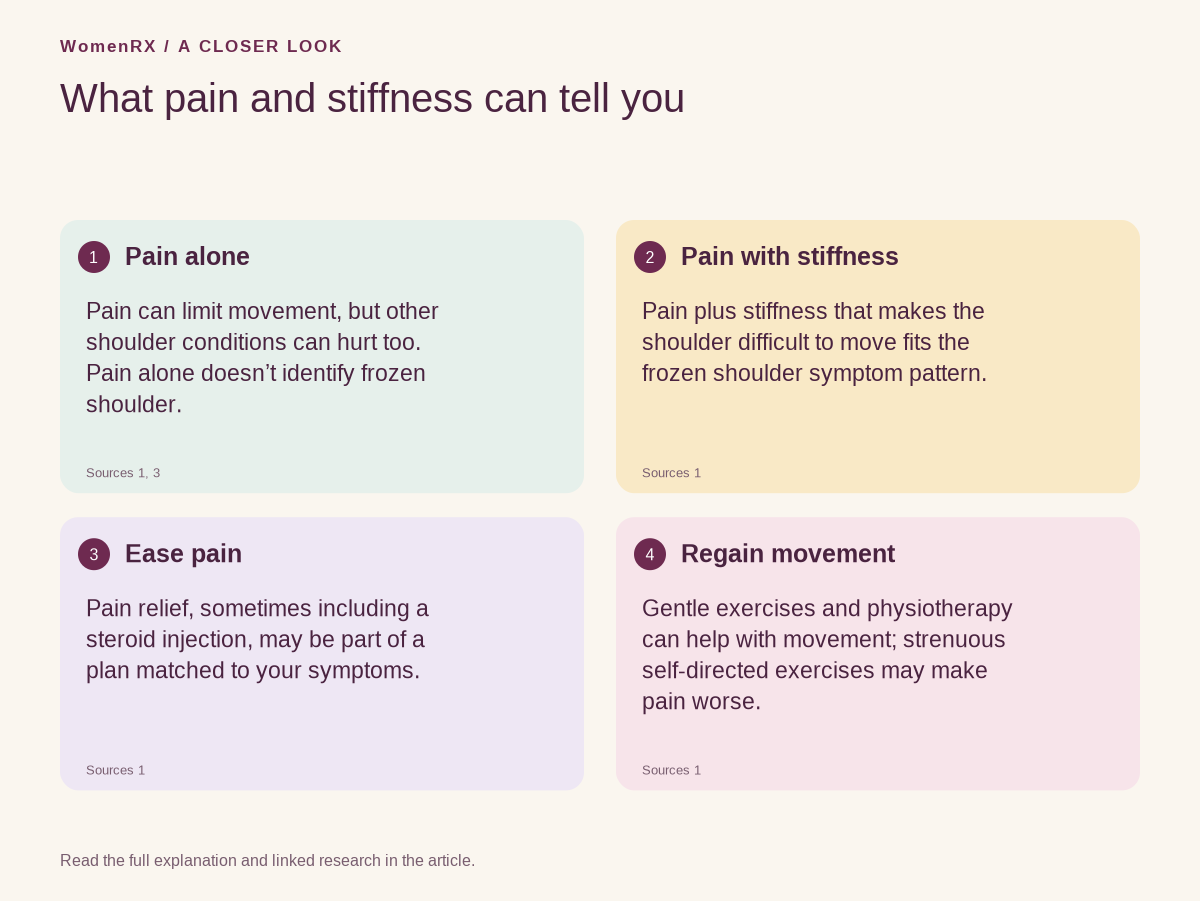
What pain and stiffness can tell you
Pain alone: Pain can limit movement, but other shoulder conditions can hurt too. Pain alone doesn’t identify frozen shoulder.13
Pain with stiffness: Pain plus stiffness that makes the shoulder difficult to move fits the frozen shoulder symptom pattern.1
Ease pain: Pain relief, sometimes including a steroid injection, may be part of a plan matched to your symptoms.1
Regain movement: Gentle exercises and physiotherapy can help with movement; strenuous self-directed exercises may make pain worse.1
Read the figure as text
Use these distinctions to describe your shoulder and understand what different treatments are meant to address.- Pain alone: Pain can limit movement, but other shoulder conditions can hurt too. Pain alone doesn’t identify frozen shoulder.13
- Pain with stiffness: Pain plus stiffness that makes the shoulder difficult to move fits the frozen shoulder symptom pattern.1
- Ease pain: Pain relief, sometimes including a steroid injection, may be part of a plan matched to your symptoms.1
- Regain movement: Gentle exercises and physiotherapy can help with movement; strenuous self-directed exercises may make pain worse.1
More questions, answered
Should I use hormone therapy for frozen shoulder?
The study comparing shoulder diagnoses in perimenopausal and premenopausal women doesn’t establish that hormone therapy prevents or treats frozen shoulder. The 2022 North American Menopause Society position statement discusses hormone therapy for menopause-related symptoms and bone loss, not as a frozen shoulder treatment. 3 2
Sources you can check
- Frozen shoulder - NHSAccessed 2026-09-25Return to first citation
- The 2022 hormone therapy position statement of The North American Menopause Society.“The 2022 Hormone Therapy Position Statement of The North American Menopause Society” Advisory Panel. · Menopause (New York, N.Y.) · 2022Return to first citation
- Perimenopausal arthralgia in the shoulder.Yoon S, Lee DH, Bang J. · Menopause (New York, N.Y.) · 2018Return to first citation