Frozen Shoulder Around Menopause: Risk, Symptoms, and Recovery
Frozen shoulder can last months or years, but one study of people with shoulder pain did not find it more common in perimenopause than before menopause.
Frozen shoulder causes shoulder pain and stiffness as tissue around the joint becomes inflamed, tightens, and shrinks. It can take months or sometimes years to improve. A study of people with shoulder pain found no significant difference in frozen-shoulder diagnoses between perimenopausal and premenopausal groups, so it doesn’t establish menopause as a cause or a personal risk estimate. 1 3
What frozen shoulder feels like, and why it lasts
Frozen shoulder, also called adhesive capsulitis, typically brings both pain and stiffness. Pain may be worse at night, while stiffness can make ordinary movements difficult. The tissue around the shoulder joint becomes inflamed, then tightens and shrinks, restricting movement. 1
There isn’t a dependable recovery countdown. Symptoms can last for months and sometimes years, although pain and stiffness usually improve eventually. The available guidance describes this broad course, not a fixed sequence of stages or a timetable that applies to every person. 1
Gentle movement and exercises recommended for your shoulder can help; physiotherapy may help restore movement. Strenuous exercises you choose on your own can make pain worse, so pushing through pain isn’t a reliable shortcut. 1
What the menopause research does, and doesn’t, show
A study compared 197 perimenopausal and 113 premenopausal participants who had shoulder pain. Adhesive capsulitis was diagnosed in 35.4% of the perimenopausal group and 31.8% of the premenopausal group. The difference wasn’t statistically significant. 3
Those percentages describe people in the study who already had shoulder arthralgia, not the chance of developing frozen shoulder among all women in either life stage. The study therefore doesn’t show that perimenopause raises frozen-shoulder risk, and it can’t tell you why one person’s shoulder hurts.
It also found a different diagnosis, shoulder synovitis, more often in the perimenopausal group than the premenopausal group. That’s a useful reminder that shoulder pain around midlife isn’t automatically frozen shoulder; other shoulder conditions can cause pain too. 3 Pain with stiffness that persists can also occur with arthritis, while pain that worsens with arm use may point to tendonitis, bursitis, or impingement. 2
When to get the shoulder assessed
Arrange a medical assessment if shoulder pain and stiffness aren’t going away, are worsening, or make it very difficult to move your arm. An assessment can help distinguish frozen shoulder from other causes rather than attributing the problem to menopause. 1 2
Seek urgent medical help for sudden, very severe pain, inability to move the arm, pain that began after an injury, or shoulder pain accompanied by feeling feverish or unwell. These symptoms can need prompt evaluation rather than a wait-and-see approach. 2
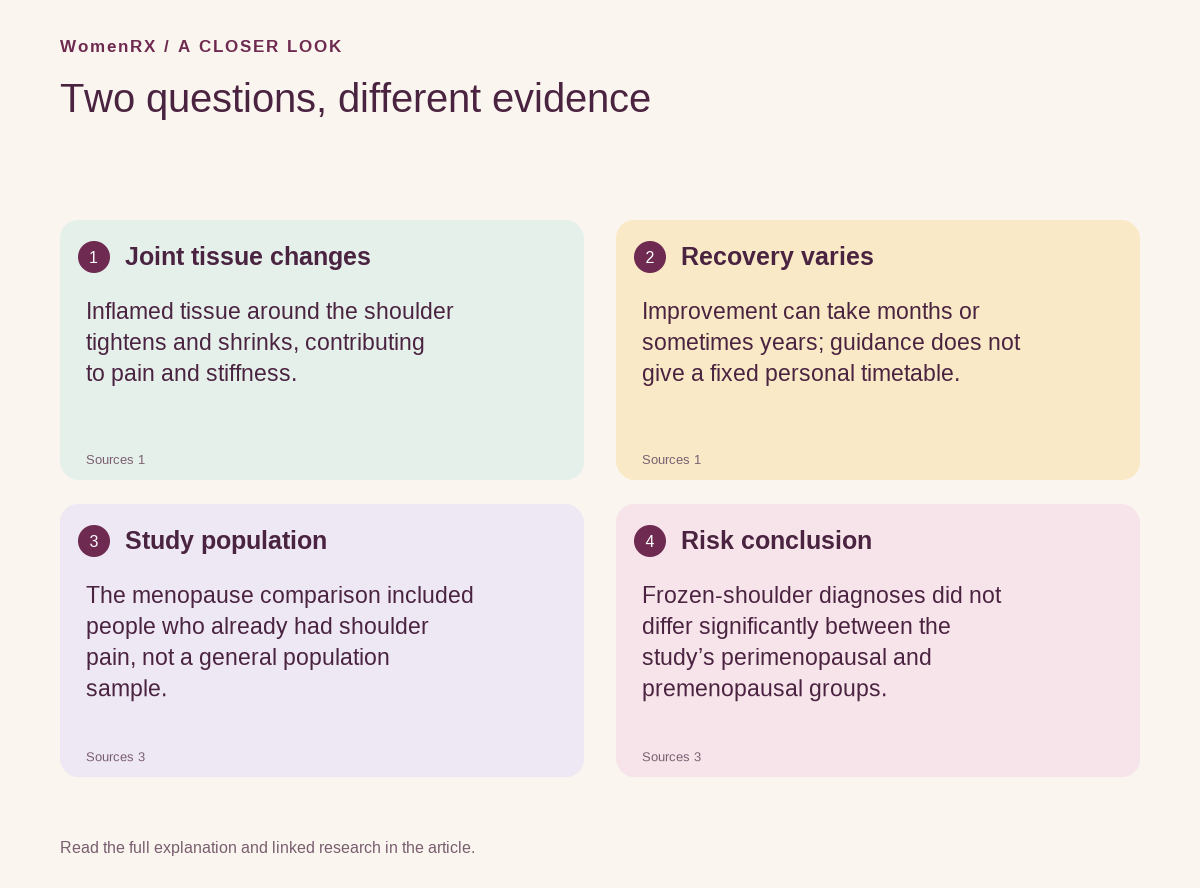
Two questions, different evidence
Joint tissue changes: Inflamed tissue around the shoulder tightens and shrinks, contributing to pain and stiffness.1
Recovery varies: Improvement can take months or sometimes years; guidance does not give a fixed personal timetable.1
Study population: The menopause comparison included people who already had shoulder pain, not a general population sample.3
Risk conclusion: Frozen-shoulder diagnoses did not differ significantly between the study’s perimenopausal and premenopausal groups.3
Read the figure as text
Frozen shoulder has a broad recovery course. The menopause study addresses diagnoses among people already experiencing shoulder pain, not risk across all women.- Joint tissue changes: Inflamed tissue around the shoulder tightens and shrinks, contributing to pain and stiffness.1
- Recovery varies: Improvement can take months or sometimes years; guidance does not give a fixed personal timetable.1
- Study population: The menopause comparison included people who already had shoulder pain, not a general population sample.3
- Risk conclusion: Frozen-shoulder diagnoses did not differ significantly between the study’s perimenopausal and premenopausal groups.3
More questions, answered
Does this study show that menopause causes frozen shoulder?
No. It compared diagnoses in two groups of people who already had shoulder pain, and the difference in adhesive-capsulitis prevalence wasn’t statistically significant. It cannot establish that menopause causes frozen shoulder or estimate risk for all women. 3
Can shoulder pain around menopause be something other than frozen shoulder?
Yes. In the perimenopausal group in one shoulder-pain study, synovitis was another diagnosis and was more common than in the premenopausal group. Tendonitis, bursitis, impingement, and arthritis can also cause shoulder symptoms. 3 2
Sources you can check
- Frozen shoulder - NHSAccessed 2026-09-25Return to first citation
- Shoulder pain - NHSAccessed 2026-09-25Return to first citation
- Perimenopausal arthralgia in the shoulder.Yoon S, Lee DH, Bang J. · Menopause (New York, N.Y.) · 2018Return to first citation