Foods for Water Retention: What to Change and What to Check
Start with the sodium in everyday meals, while paying attention to the pattern of swelling.
For an everyday food change, compare sodium in foods you already eat: soups, sauces, canned foods and snacks are useful places to start. Plain produce, unsalted nuts and lower-sodium options can help reduce intake. 13 But new or persistent swelling needs an explanation; food is not a treatment for every cause of fluid retention. 14
Make the question more specific
“Water retention” can mean puffy ankles, tight rings or a changing number on the scale. A bloated abdomen can have a different explanation, including gas or constipation. 1 Before shopping for a food that promises to “flush” water, name what is actually happening and where.
Salt-heavy meals can contribute to swelling, but so can prolonged sitting or standing, pregnancy and some medicines. Heart, kidney or liver problems, blood clots and infection are among other causes. That is why the pattern matters as much as the menu. 14
Four food choices worth comparing
Sodium draws water into the bloodstream. Most dietary sodium in the U.S. comes from packaged and prepared foods, so putting away the salt shaker is only one possible change. 13
| If this is a regular food | A practical comparison |
|---|---|
| Canned soup or ready-made sauce | Compare sodium for the amount you actually use. |
| Canned beans or vegetables | Look for lower-sodium or no-salt-added versions; rinse where appropriate. |
| Seasoned frozen vegetables | Compare them with plain frozen vegetables you season yourself. |
| Salted nuts or snack mixes | Try an unsalted version if you enjoy it. |
These are ways to reduce sodium, not foods proven to clear every kind of swelling. Herbs, spices and no-salt seasoning blends can help keep meals interesting while you make the change. 13
Pick one repeat purchase first. A soup you eat four times a week may be a more useful place to compare labels than an ingredient you use once a month. This keeps the task small enough to carry into your next grocery order.
Read the serving size before the headline
The Nutrition Facts panel usually describes one serving. If your bowl contains two servings, double the sodium figure. FDA's general label guide calls 5% Daily Value or less low and 20% or more high per serving. 13
“Reduced sodium” means at least 25% less than the regular product, so a reduction does not automatically make the food low in sodium. “Low sodium” means 140 mg or less per serving. “No salt added” does not necessarily mean sodium-free. 13
The label's general Daily Value is less than 2,300 mg. If you have already been given a personal sodium or fluid plan for a diagnosed condition, use that plan instead of adopting a new target from a food article. 13
What about potassium-rich foods and salt substitutes?
Potassium-containing salt substitutes are not a universal solution. Kidney disease and some medicines can make excessive potassium a concern. NIH specifically identifies potassium-sparing diuretics and medicines affecting the renin-angiotensin system among situations needing care. 12
That is a reason to check an ingredient list and your medicine list, not to assume ordinary foods need to be cut out. If you have a potassium restriction, ask how a proposed substitute fits it before replacing your usual salt.
When food changes are not the next step
Arrange assessment if swelling in both legs persists after a few days of home care or worsens. Unexplained swelling on one side, or swelling that is sudden, severe, painful, red or hot, needs urgent attention. Swelling with chest pain or breathlessness needs emergency care. 14
During pregnancy, gradually increasing swelling can be common. A sudden increase, especially in the face, hands or feet, or severe headache, vision changes or severe pain below the ribs, needs immediate contact with your maternity team. Do not wait to see whether a lower-sodium dinner fixes it. 15
For an ordinary food decision, keep it simple: compare the same portion, choose a version you enjoy and keep the rest of the meal workable. For an unexplained symptom, getting the cause checked is the more useful action.
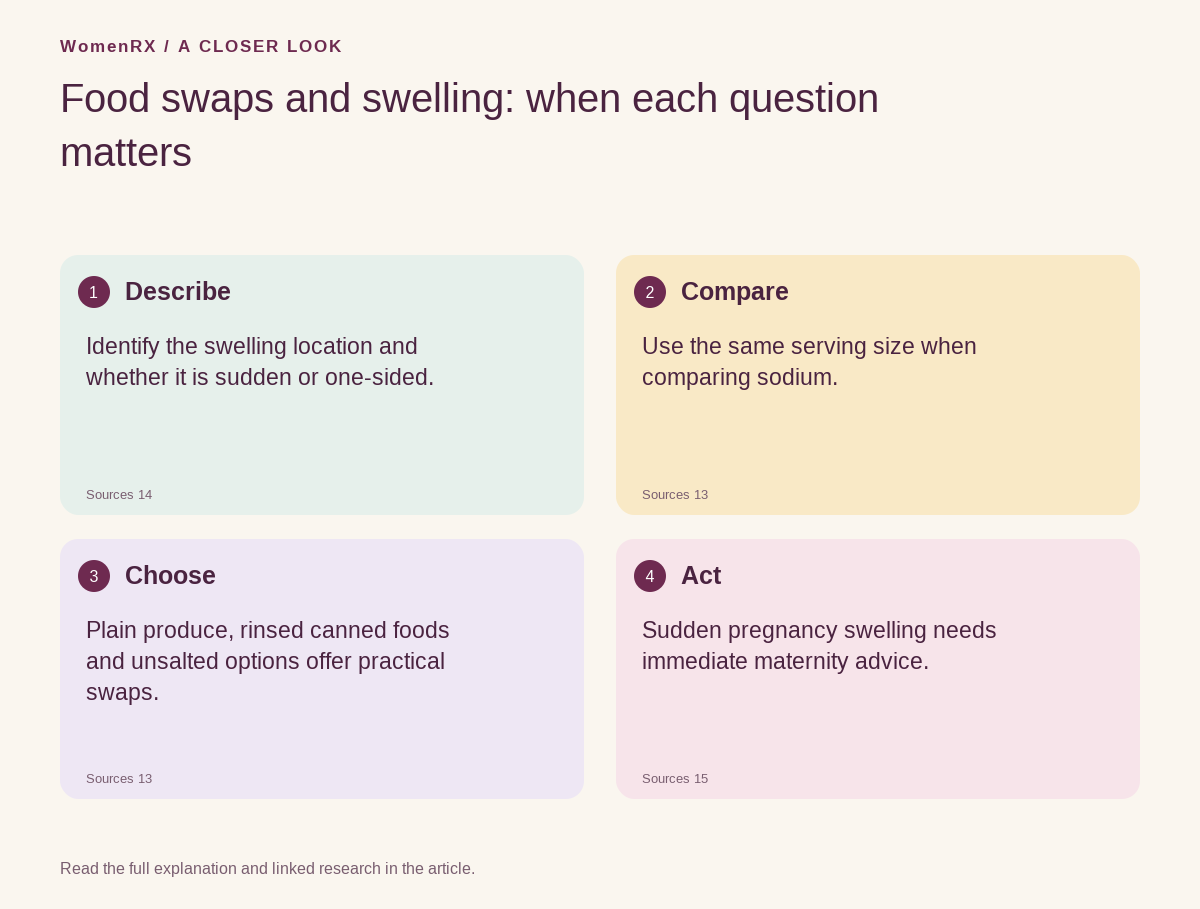
Food swaps and swelling: when each question matters
Describe: Identify the swelling location and whether it is sudden or one-sided.14
Compare: Use the same serving size when comparing sodium.13
Choose: Plain produce, rinsed canned foods and unsalted options offer practical swaps.13
Act: Sudden pregnancy swelling needs immediate maternity advice.15
Read the figure as text
Start with the sodium in everyday meals, while paying attention to the pattern of swelling.Sources you can check
- Bloating - NHSAccessed 2026-09-25Return to first citation
- Potassium - Health Professional Fact SheetAccessed 2026-09-25Return to first citation
- FDA: Sodium in Your DietAccessed 2026-09-26Return to first citation
- NHS: Swollen Ankles, Feet and LegsAccessed 2026-09-26Return to first citation
- NHS: Swollen Ankles, Feet and Fingers in PregnancyAccessed 2026-09-26Return to first citation