Food Choices That Support Metabolic Health
A steady, flexible eating pattern can support metabolic health, but no single food or diet is established here as a way to reverse insulin resistance or treat PCOS.
Insulin resistance means the body doesn’t respond to insulin as well as it should, which can contribute to higher blood glucose. It can be relevant in PCOS, but the two aren’t the same condition. A practical starting point is a heart-healthy pattern that includes vegetables, fruit, whole grains and lean meats, rather than relying on a “blood-sugar-fixing” food or restrictive rules. 1 2
Start with the meaning, not a food list
Insulin helps move glucose from the blood into cells for energy. With insulin resistance, the body doesn’t use insulin properly, and blood glucose can rise. It’s a metabolic issue, not a sign that you chose the wrong meal or lack willpower.
PCOS is one context where insulin resistance may matter, but PCOS is a broader condition with reproductive and metabolic features, and experiences vary. Having PCOS and having insulin resistance aren’t interchangeable labels. Insulin resistance and related metabolic risks also come up outside PCOS. 1 2 3
Build a pattern you can repeat
The useful question isn’t “Which food fixes insulin resistance?” It’s “What eating pattern can support my overall metabolic health and work in my actual life?” MedlinePlus describes a heart-healthy eating plan that limits saturated and trans fats and includes a variety of nutritious foods, such as fruits, vegetables, whole grains and lean meats. That’s a pattern, not a special PCOS menu. 2
For example, you might pair a whole-grain food with vegetables and lean meat at a meal, or add fruit to a meal or snack you already enjoy. These are examples of applying the broader pattern, not proven prescriptions for changing insulin resistance. You don’t need to treat one food as a cure or eliminate an entire food group based on this guidance.
A flexible approach is more useful than an all-or-nothing rule. If a restrictive plan feels hard to sustain, conflicts with your preferences or leaves you unsure what to eat, it may not be the right fit. The PCOS guideline describes the condition as heterogeneous, with metabolic as well as reproductive and psychological features, and emphasizes considering personal characteristics, preferences, culture and values in care. 3
Keep food separate from treatment
Eating well can be part of managing health, but it shouldn’t be presented as a replacement for prescribed care. MedlinePlus lists healthy foods among possible PCOS management approaches and also describes medicines that may be used for symptoms or insulin resistance. Which options make sense depends on the issue being treated; a diet alone shouldn’t be assumed to manage every part of PCOS. 1
Be cautious with claims that a particular ingredient, supplement or meal plan reverses insulin resistance or treats PCOS. The information summarized here supports a general heart-healthy eating pattern; it doesn’t establish a specific food as a treatment. It also doesn’t identify one best diet for every woman with PCOS.
Ask what the label means for your health
“Insulin resistance” and “metabolic syndrome” aren’t identical terms. Metabolic syndrome refers to a group of risk factors, and its assessment can include a physical exam and blood tests. 2 If someone has raised insulin resistance or PCOS, a useful next step is to clarify what finding they’re referring to and which metabolic risks or health outcomes they’re monitoring. That keeps the conversation focused on your actual health picture, not a food trend.
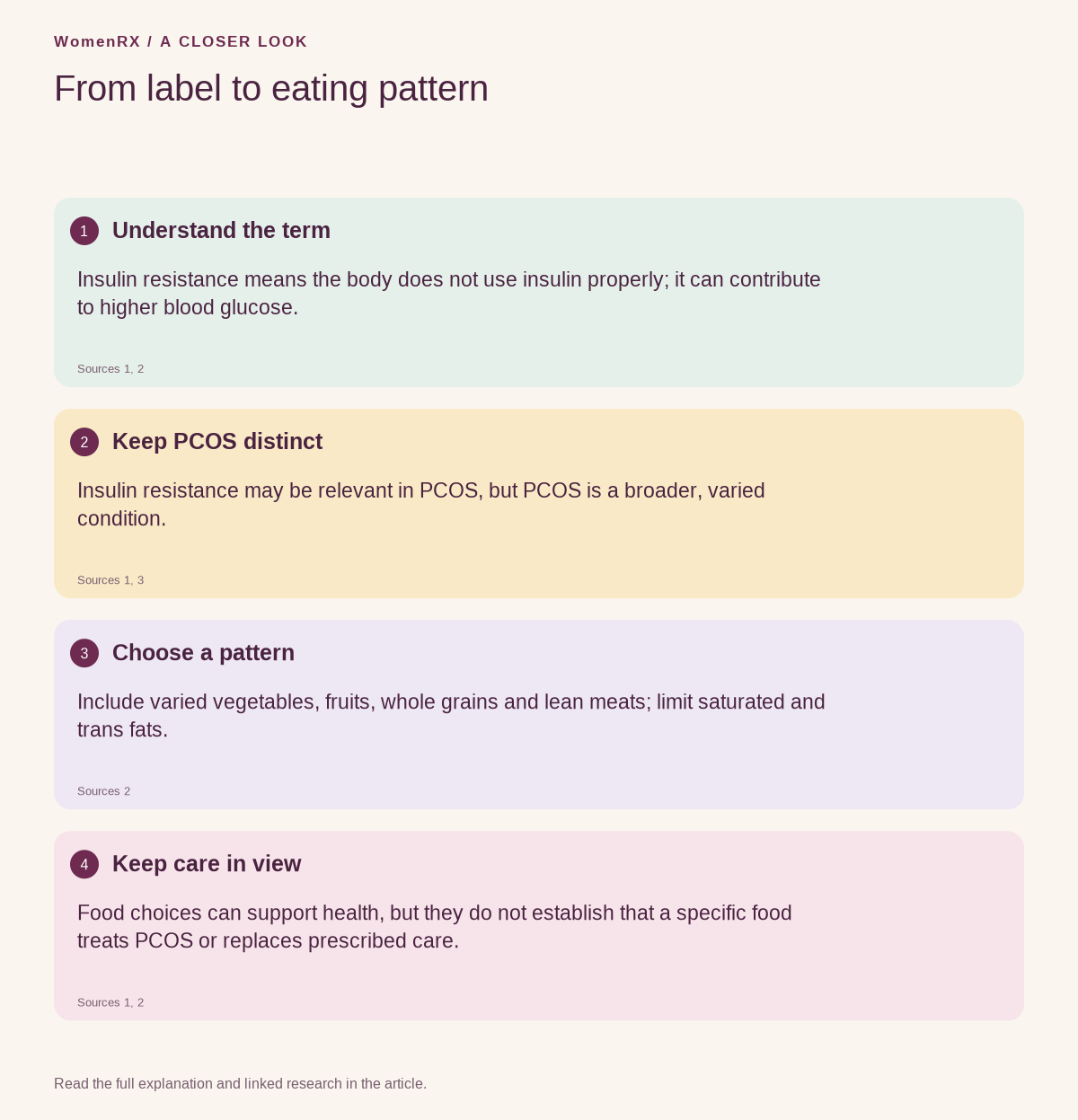
From label to eating pattern
Understand the term: Insulin resistance means the body does not use insulin properly; it can contribute to higher blood glucose.12
Keep PCOS distinct: Insulin resistance may be relevant in PCOS, but PCOS is a broader, varied condition.13
Choose a pattern: Include varied vegetables, fruits, whole grains and lean meats; limit saturated and trans fats.2
Keep care in view: Food choices can support health, but they do not establish that a specific food treats PCOS or replaces prescribed care.12
Read the figure as text
Separate the health term from the food decision: understand what insulin resistance means, then use a general pattern without treating any one food as a cure.- Understand the term: Insulin resistance means the body does not use insulin properly; it can contribute to higher blood glucose.12
- Keep PCOS distinct: Insulin resistance may be relevant in PCOS, but PCOS is a broader, varied condition.13
- Choose a pattern: Include varied vegetables, fruits, whole grains and lean meats; limit saturated and trans fats.2
- Keep care in view: Food choices can support health, but they do not establish that a specific food treats PCOS or replaces prescribed care.12
More questions, answered
Does insulin resistance mean I have PCOS?
No. Insulin resistance can be one factor associated with PCOS, but PCOS is a broader condition, and insulin resistance also occurs outside PCOS. 1 2
Is there one best diet for PCOS?
The guidance cited here supports a heart-healthy pattern, not a single proven PCOS diet. The international PCOS guideline also emphasizes individual preferences, culture and values when considering care. 2 3
Sources you can check
- PCOS | Polycystic Ovary Syndrome | MedlinePlusAccessed 2026-09-25Return to first citation
- Metabolic Syndrome | MedlinePlusAccessed 2026-09-25Return to first citation
- Recommendations from the 2023 International Evidence-based Guideline for the Assessment and Management of Polycystic Ovary Syndrome†.Teede HJ, Tay CT, Laven J, Dokras A, Moran LJ, Piltonen TT, Costello MF, Boivin J, Redman LM, Boyle JA, Norman RJ, Mousa A, Joham AE, International PCOS Network. · Human reproduction (Oxford, England) · 2023Return to first citation