Flexitarian Eating Without the Nutrient Guesswork
You can make more meals plant-based while keeping the animal foods you enjoy, as long as the foods you swap in do the same nutritional work.
Flexitarian eating means making plants a bigger part of your meals without a rule that you must give up meat, fish, eggs, or dairy. Start by swapping in beans, lentils, tofu, nuts, or other protein-containing foods, not just removing the animal food. As your animal-food intake falls, pay closer attention to iron and vitamin B12, especially if you have heavy periods or are pregnant.1234
Keep the meal; change its center
You don't need a separate menu or a fixed number of meatless days. Start with a meal you already like and change one part of it. For example, make a chili with beans in place of some or all of the meat, add lentils to a familiar pasta sauce, or put tofu and vegetables in a stir-fry. On another day, you might keep the fish, egg, or yogurt. The useful question is whether the new meal still has a substantial protein source, rather than whether it qualifies as perfectly plant-based.12
Protein comes from animal foods and from foods such as beans, nuts, and certain grains. Most plant proteins don't supply all essential amino acids on their own, so eat a variety of plant protein foods across the day. Protein needs also differ with age, health, and activity; there's no single flexitarian protein target.2
Give plant-based iron a little help
Beans, lentils, tofu, nuts, and fortified grains can contribute iron. But iron from plant foods, called nonheme iron, is generally less readily absorbed than the heme iron in meat and seafood. Vitamin C helps your body absorb nonheme iron.3
That makes a lentil bowl with raw peppers, or beans with tomatoes, a practical pairing: the lentils or beans provide iron, while the peppers or tomatoes provide vitamin C. These are meal ideas, not a guarantee that one meal meets your iron needs. If you still eat meat, poultry, or seafood, those foods can also improve absorption of nonheme iron eaten with them.36
Iron deserves a closer look if your periods are heavy, because blood loss can contribute to low iron. Pregnancy raises iron needs, too. Neither situation means you're deficient, and changing dinner alone may not address iron lost through heavy bleeding. If heavy periods come with persistent fatigue or shortness of breath, ask about an iron evaluation rather than assuming a supplement is the answer. Too much supplemental iron can cause harm.34
Notice when B12 needs a deliberate source
Vitamin B12 is naturally found in animal foods, including fish, meat, eggs, and dairy. Plant foods don't naturally supply it; some breakfast cereals and nutritional yeasts have B12 added, so check the label rather than assuming they contain it.1
If you still regularly eat B12-containing animal foods, those may remain part of your plan. If you eat very little or none, identify reliable fortified foods or discuss a B12 supplement rather than counting on beans, vegetables, or unfortified plant-based substitutes. Vegetarian and vegan diets carry a higher risk of B12 deficiency when this nutrient isn't accounted for.1 During pregnancy and breastfeeding, B12 adequacy matters for both mother and baby, making a dependable source especially worth sorting out if you avoid animal foods.1
Check what else left the plate
Swaps change more than the headline ingredient. If dairy used to be a regular part of your meals and you replace it with a plant-based alternative, compare labels rather than assuming the replacement supplies the same nutrients. Calcium can be a concern in more restrictive plant-based diets without appropriate fortified foods or other sources.5 Likewise, a meatless dinner made only of vegetables and pasta may need beans, tofu, nuts, or another protein-containing food to replace what the meat contributed.2
A simple way to ease in is to repeat one satisfying swap before adding another. You can make a bean-based lunch more often while leaving the rest of your meals alone, then see which other changes fit your tastes and routine. Eating more plant foods doesn't require removing animal foods, and the nutritional details depend on what you actually eat, not on the flexitarian label.
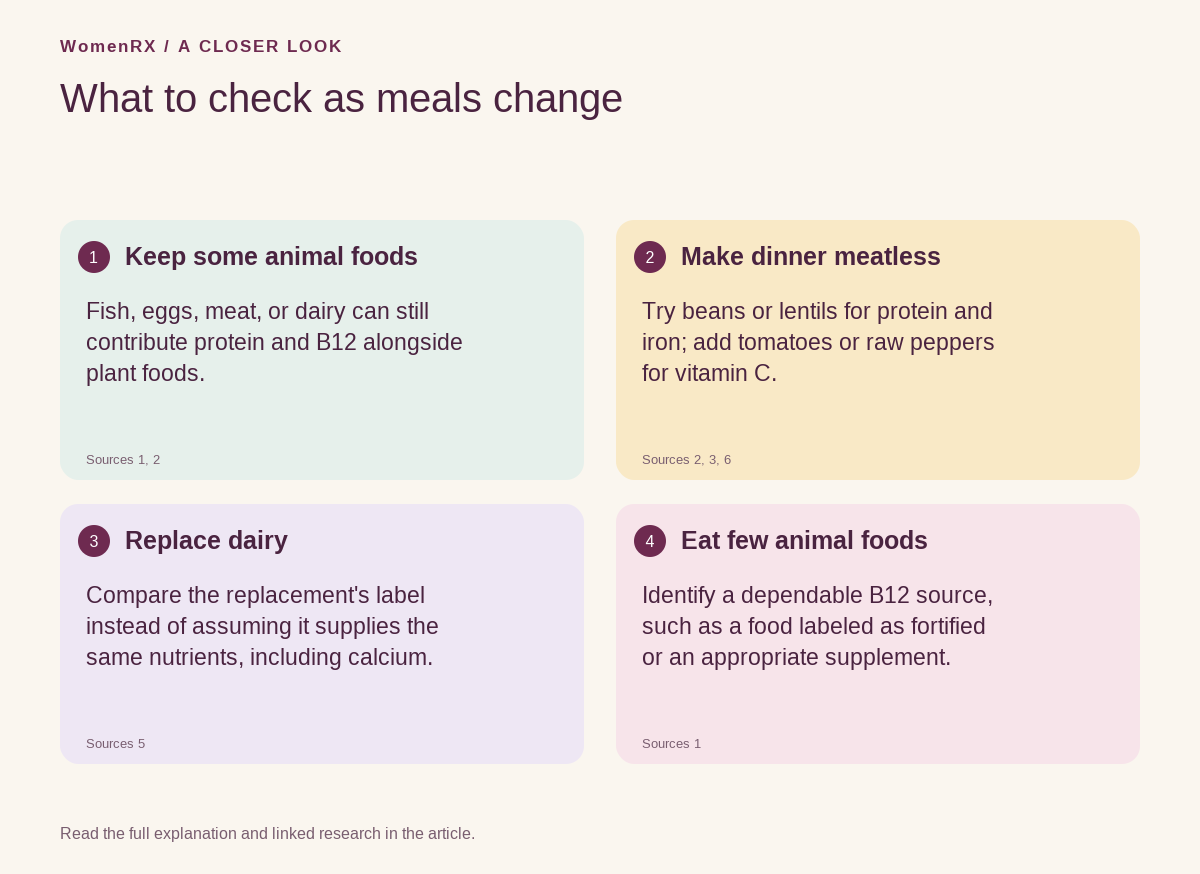
What to check as meals change
Keep some animal foods: Fish, eggs, meat, or dairy can still contribute protein and B12 alongside plant foods.12
Make dinner meatless: Try beans or lentils for protein and iron; add tomatoes or raw peppers for vitamin C.236
Replace dairy: Compare the replacement's label instead of assuming it supplies the same nutrients, including calcium.5
Eat few animal foods: Identify a dependable B12 source, such as a food labeled as fortified or an appropriate supplement.1
Read the figure as text
The more animal foods you replace, the more useful it is to check what their replacements contribute.- Keep some animal foods: Fish, eggs, meat, or dairy can still contribute protein and B12 alongside plant foods.12
- Make dinner meatless: Try beans or lentils for protein and iron; add tomatoes or raw peppers for vitamin C.236
- Replace dairy: Compare the replacement's label instead of assuming it supplies the same nutrients, including calcium.5
- Eat few animal foods: Identify a dependable B12 source, such as a food labeled as fortified or an appropriate supplement.1
More questions, answered
Do I need iron or B12 supplements to eat flexitarian?
Not automatically. B12 can come from animal foods or reliably fortified foods, while iron comes from both animal and plant foods. Whether you need a supplement depends on your intake and circumstances, including heavy bleeding or pregnancy. Avoid starting iron simply because you've added meatless meals: high supplemental intakes can cause side effects and harm.134
Sources you can check
- Vitamin B12 - Health Professional Fact SheetAccessed 2026-09-25Return to first citation
- Dietary Proteins: MedlinePlusAccessed 2026-09-25Return to first citation
- Iron - Health Professional Fact SheetAccessed 2026-09-25Return to first citation
- Iron: MedlinePlusAccessed 2026-09-25Return to first citation
- Risk of Osteoporosis and Anemia in Plant-Based Diets: A Systematic Review of Nutritional Deficiencies and Clinical Implications.Akinwumi FE, Akinyemi AO, Akangbe B, Odeniran OM, Sehkar J, Olajimbiti CO, Ajayi OH. · Cureus · 2025Return to first citation
- Vitamin C - Health Professional Fact SheetAccessed 2026-09-25Return to first citation