Fezolinetant and Weight: What Trial Results Can Tell You
Weight change isn’t among the common adverse reactions listed in a key trial table, but that alone can’t tell you what caused a change for you.
The U.S. prescribing information’s table of adverse reactions reported in at least 2% of participants and more often with fezolinetant than placebo does not list weight change. That’s not the same as a study showing weight stayed the same: the reported trial findings don’t establish weight gain, weight loss, or weight neutrality. If you notice a change, its timing and other changes in your life can help frame a discussion. 1
What the trial table can tell you
In a 52-week placebo-controlled trial, the U.S. prescribing information lists adverse reactions that occurred in at least 2% of women taking fezolinetant and more often than with placebo. Weight change isn’t among the reactions on that list. This is a useful distinction, but the table is not proof that no one’s weight changed or that fezolinetant has no effect on weight. 1
A pooled analysis of three 52-week trials reports participants’ weight and BMI at the start of the studies. Those baseline measurements describe where the groups began; by themselves, they don’t tell you how an individual participant’s weight changed afterward. 3
So it would go beyond these findings to call fezolinetant a cause of weight gain, a cause of weight loss, or a weight-neutral treatment. The results support a narrower statement: weight change is not listed as a common adverse reaction in that prescribing-information table.
A scale reading needs context
Body weight includes muscle, bone, fat, and water. Diet and other factors can affect it, and a scale alone can’t explain what changed or why. 2
For a woman in midlife, a weight change may happen around the same time as starting a medicine, but timing alone doesn’t establish the cause. The trial findings don’t tell you what explains a particular person’s change.
Make the sequence easier to see
If you’re concerned, you could make a brief record using information you already have. Note when you started fezolinetant, when you first noticed a change, any weight readings you already take, and other changes around the same time, such as a new medicine or a shift in appetite or routine. This isn’t a diagnostic tool. It’s a way to lay out the sequence so you can discuss it without assuming what caused it.
You don’t need to track more often than feels useful. The goal is simply to make it easier to describe whether the change began before or after treatment and whether anything else changed around then.
When to bring it up
If you’re gaining or losing weight without trying, especially if the change is sudden or unexpected, MedlinePlus advises talking with a health care provider. 2 You can share the timing and ask whether the pattern calls for reviewing your medicines or considering another explanation.
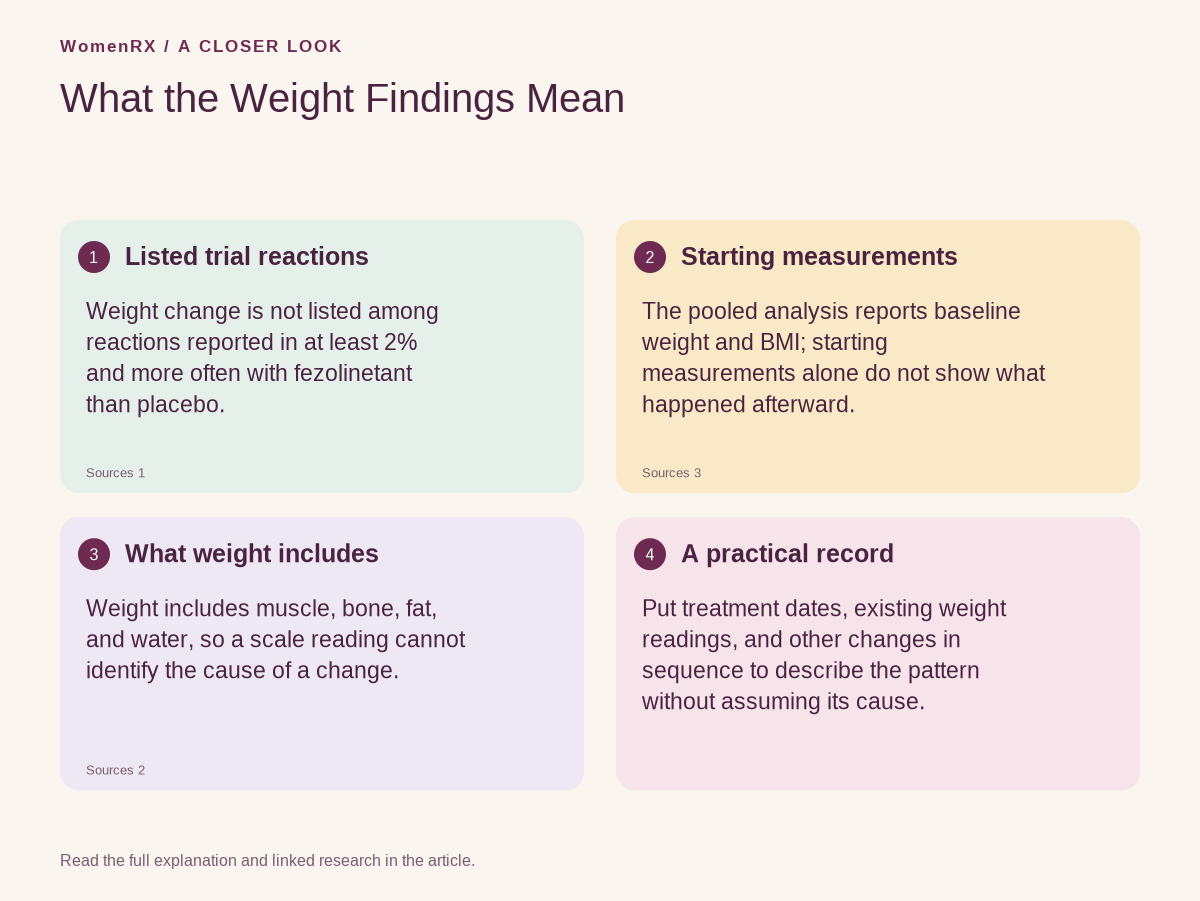
What the Weight Findings Mean
Listed trial reactions: Weight change is not listed among reactions reported in at least 2% and more often with fezolinetant than placebo.1
Starting measurements: The pooled analysis reports baseline weight and BMI; starting measurements alone do not show what happened afterward.3
What weight includes: Weight includes muscle, bone, fat, and water, so a scale reading cannot identify the cause of a change.2
A practical record: Put treatment dates, existing weight readings, and other changes in sequence to describe the pattern without assuming its cause.
Read the figure as text
These distinctions show what a list of common adverse reactions can tell you, and what it cannot establish about weight over time.- Listed trial reactions: Weight change is not listed among reactions reported in at least 2% and more often with fezolinetant than placebo.1
- Starting measurements: The pooled analysis reports baseline weight and BMI; starting measurements alone do not show what happened afterward.3
- What weight includes: Weight includes muscle, bone, fat, and water, so a scale reading cannot identify the cause of a change.2
- A practical record: Put treatment dates, existing weight readings, and other changes in sequence to describe the pattern without assuming its cause.
Sources you can check
- VEOZAH (FEZOLINETANT) TABLET, FILM COATED [ASTELLAS PHARMA US, INC.] | US prescribing information and patient instructionsAccessed 2026-09-25Return to first citation
- Body Weight: MedlinePlusAccessed 2026-09-25Return to first citation
- Safety of Fezolinetant for Treatment of Moderate to Severe Vasomotor Symptoms Due to Menopause: Pooled Analysis of Three Randomized Phase 3 Studies.Kagan R, Cano A, Nappi RE, English ML, Mancuso S, Wu X, Ottery FD. · Advances in therapy · 2025Return to first citation