Farro Nutrition: Protein, Fiber, and the Portion That Counts
The dry serving on the bag and the cooked grain in your bowl are different measurements.
Farro is wheat, so it contains gluten. For one concrete portion, Bob's Red Mill Organic Pearled Farro lists 6 grams of protein, 5 grams of fiber and 190 calories per 52 grams dry. The cooked portion will weigh more after absorbing water. Start with the dry amount when using that label to estimate your bowl. 11314
Read the serving before comparing grains
Farro can add variety to a grain bowl or side dish, but its nutrition is easy to misread. A quarter cup on a dry-grain label does not describe a quarter cup scooped from the cooked pot. Bob's Red Mill confirms that its serving sizes refer to the uncooked product. 14
Here is a specific label example, checked September 26, 2026:
| Bob's Red Mill Organic Pearled Farro | Per 52 g dry |
|---|---|
| Calories | 190 |
| Protein | 6 g |
| Carbohydrate | 38 g |
| Fat | 1 g |
| Fiber | 5 g |
| Iron | 2 mg |
These values belong to this product and portion. Use the label on your own bag if it differs. 13
Make the cooked portion easier to track
For a practical estimate, decide how many dry servings you are cooking and divide the finished batch into the same number of portions. Water changes the cooked weight and volume, so weighing only the cooked scoop and applying the dry values gram for gram would confuse two different measurements. 14
Write the number of portions on the storage container. When assembling a bowl, account separately for oil, cheese, nuts, dressing or other additions. This makes your estimate about the meal you actually prepared, rather than the grain alone.
It also makes comparisons fairer. Put dry-grain labels beside other dry-grain labels, or compare defined cooked portions with other defined cooked portions. Check whether added ingredients are included before deciding that one grain has more protein or fewer calories. A larger scoop and a different water content can otherwise look like a nutritional advantage.
Think of farro as one component
You might use farro as the grain in a meal you already enjoy, then build around your usual vegetables and protein foods. It does not need to replace every other grain in your kitchen. Choose it because you like using it, and compare the whole meal when nutrition is your priority.
Fiber supports digestion and helps prevent constipation. If you are increasing fiber across your diet, build up gradually: a sudden increase can bring gas, bloating or cramps. 2
Wheat matters more than the ancient-grain label
Farro is not a gluten-free alternative. Celiac disease involves an immune response to gluten, including the gluten in wheat. Wheat allergy is a different condition, but the wheat ingredient matters there too. 110
Do not treat laboratory differences between farro varieties as permission to try one with celiac disease. A study exposing cells from four people with celiac disease to grain proteins examined immune responses; it did not establish that eating those varieties was safe. 10
For the everyday nutrition question, keep the decision simple: check the ingredient, use the correct portion basis, and choose a grain that fits the way you eat.
Farro: three details to keep together
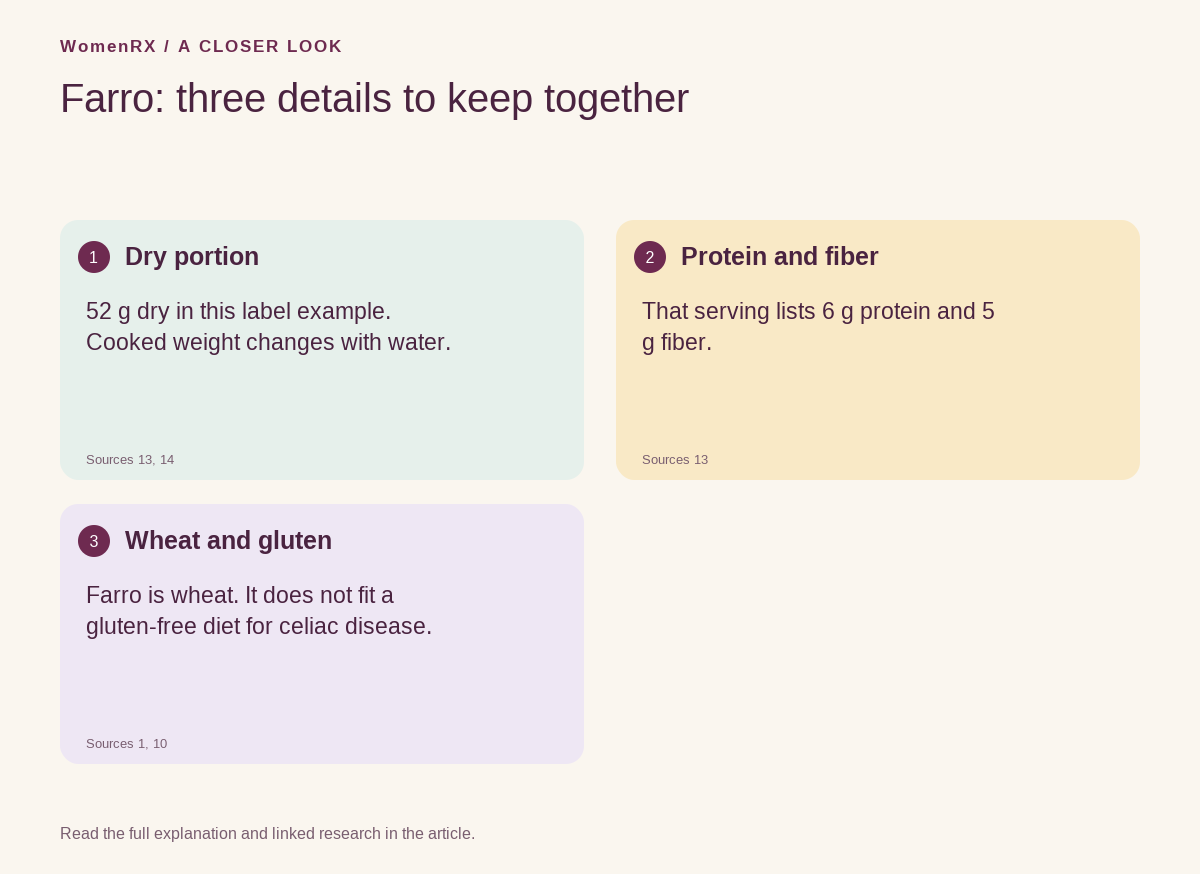
Dry portion: 52 g dry in this label example. Cooked weight changes with water.1314
Protein and fiber: That serving lists 6 g protein and 5 g fiber.13
Wheat and gluten: Farro is wheat. It does not fit a gluten-free diet for celiac disease.110
Read the figure as text
A useful comparison starts with the exact grain and portion.Sources you can check
- Celiac Disease | MedlinePlusAccessed 2026-09-25Return to first citation
- Dietary Fiber: MedlinePlusAccessed 2026-09-25Return to first citation
- T-cell response to different cultivars of farro wheat, Triticum turgidum ssp. dicoccum, in celiac disease patients.Vincentini O, Borrelli O, Silano M, Gazza L, Pogna N, Luchetti R, De Vincenzi M. · Clinical nutrition (Edinburgh, Scotland) · 2009Return to first citation
- Bob's Red Mill Organic Farro: product labelAccessed 2026-09-26Return to first citation
- Bob's Red Mill: dry versus cooked serving sizesAccessed 2026-09-26Return to first citation