Asparagus Nutrition: Folate, Fiber, and Easy Preparation
A cup of raw asparagus contributes fiber and a modest amount of protein, while four boiled spears provide a useful serving of folate.
One cup of raw asparagus (134 g) has an estimated 26.8 calories, 2.8 g of fiber, 2.9 g of protein, 5.2 g of carbohydrate, and 0.2 g of fat. 3 Four boiled spears provide 89 micrograms of dietary folate equivalents (DFE), or 22% of the Daily Value. 2 Steam, roast, sauté, or shave asparagus raw to suit the meal.
Asparagus nutrition at a glance
Asparagus is a vegetable that adds fiber and several grams of protein per cup, but it isn’t a high-protein food. USDA reference values for 1 cup raw asparagus (134 g) are estimates, not measurements of every bunch you buy. Raw and cooked portions are not interchangeable, so use the figures below for the preparation and portion shown. 3
| Preparation and portion | Energy | Protein | Fiber | Carbohydrate | Fat |
|---|---|---|---|---|---|
| Raw, 1 cup (134 g) | 26.8 kcal | 2.9 g | 2.8 g | 5.2 g | 0.2 g |
For a separate folate reference, four boiled spears provide 89 micrograms DFE, or 22% of the Daily Value. 2 That’s a different preparation and serving from the raw-cup nutrition profile, so the two figures shouldn’t be combined as though they describe one portion.
Fiber comes from plant foods, including vegetables. In general, dietary fiber adds bulk and helps with digestion and preventing constipation; that describes fiber’s role overall, not a special treatment effect from asparagus. 1
Folate and women’s life stages
Folate needs vary by life stage. The recommended allowance listed by the NIH Office of Dietary Supplements is 400 micrograms DFE daily for adults age 19 and older, 600 during pregnancy, and 500 during lactation. Asparagus can contribute food folate, but it is one part of what you eat over the day. 2
Folate is naturally present in foods, while folic acid is the form used in supplements and added to some fortified foods. DFE accounts for differences in how the body uses these forms. Folic acid has an established role in preventing neural tube defects; the folate in asparagus is a food contribution, not a substitute for guidance about folic acid during pregnancy planning. 2
These nutrition figures describe the vegetable, not a benefit unique to women. The life-stage distinction is that recommended folate intake changes during pregnancy and lactation. 2
Pick a preparation by texture and meal
For a tender side, steam the spears. Roast them when you want browned edges, or sauté them for a quick skillet addition. If you prefer crunch, shave or slice the spears thinly and add them raw to a salad. Rinse first and trim the dry, firm ends; cook until the texture suits you.
Asparagus can sit alongside grains or a main dish, or be folded into pasta. If you’re trying to increase fiber across your meals, include other plant foods too. Increase fiber gradually if you’re adding more than usual, since doing so too quickly can cause gas, bloating, or cramps. 1
Choose asparagus for its flavor and the nutrients it contributes, then let the rest of the meal add variety. Its protein amount can contribute to a meal, but it doesn’t make asparagus a stand-alone protein source.
Asparagus: Portion to Plate
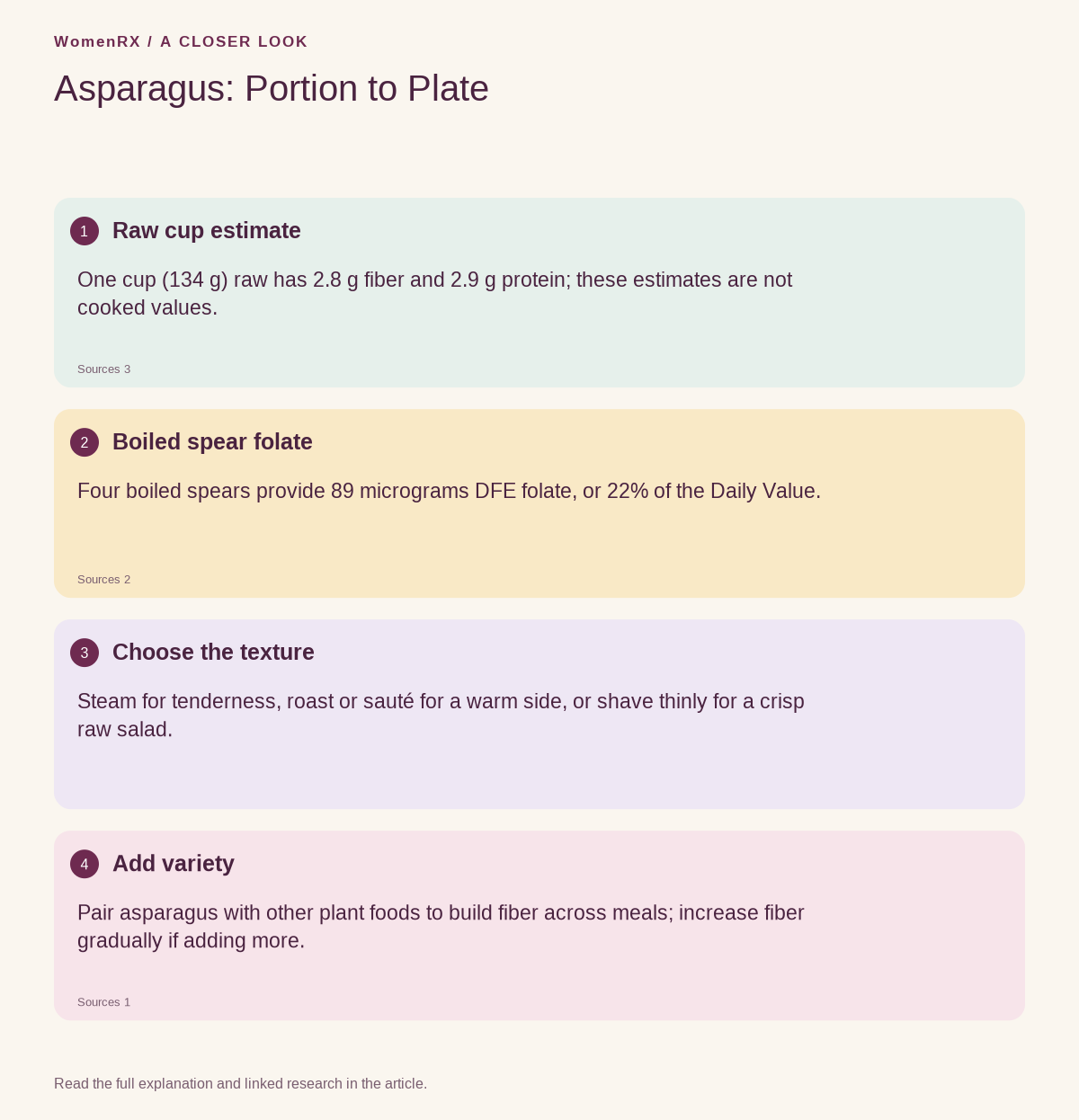
Raw cup estimate: One cup (134 g) raw has 2.8 g fiber and 2.9 g protein; these estimates are not cooked values.3
Boiled spear folate: Four boiled spears provide 89 micrograms DFE folate, or 22% of the Daily Value.2
Choose the texture: Steam for tenderness, roast or sauté for a warm side, or shave thinly for a crisp raw salad.
Add variety: Pair asparagus with other plant foods to build fiber across meals; increase fiber gradually if adding more.1
Read the figure as text
Use the portion and preparation alongside each nutrition figure, then choose a cooking style that fits the meal.- Raw cup estimate: One cup (134 g) raw has 2.8 g fiber and 2.9 g protein; these estimates are not cooked values.3
- Boiled spear folate: Four boiled spears provide 89 micrograms DFE folate, or 22% of the Daily Value.2
- Choose the texture: Steam for tenderness, roast or sauté for a warm side, or shave thinly for a crisp raw salad.
- Add variety: Pair asparagus with other plant foods to build fiber across meals; increase fiber gradually if adding more.1
Sources you can check
- Dietary Fiber: MedlinePlusAccessed 2026-09-25Return to first citation
- Folate - Health Professional Fact SheetAccessed 2026-09-25Return to first citation
- USDA SR Legacy: Asparagus, raw (FDC 168389)Accessed 2026-09-25Return to first citation