Exercise for Back Pain: Finding a Reasonable Starting Point
For common back pain, staying gently active is usually a more useful starting point than searching for one perfect exercise.
There isn’t one best exercise for every kind of back pain. For common back pain, keep up with daily activities as you’re able and try a manageable option such as walking, swimming, yoga, Pilates, or gentle back exercises. Choose what feels doable, and stop an exercise if your pain gets worse. Severe pain, pain after an injury, or pain that isn’t improving deserves medical assessment. 1 2
Start with movement you can manage
When your back hurts, it’s understandable to want a specific exercise that will fix it. But back pain has different causes, and guidance for common back pain does not identify one activity as best for everyone. A practical starting point is to keep moving through ordinary daily activities as you’re able, rather than staying in bed for long periods. 1 2
If you want a more deliberate activity, walking, swimming, yoga, and Pilates are all options that may help ease back pain. You don’t need to treat the list as a ranking or try every option. Pick something that fits your life and that you can do without making the pain worse. The available guidance doesn’t establish that one of these activities works better than the others for every person or cause of back pain. 2
Choose by fit, not by a “best” label
Daily activities or walking may be the easiest place to begin if you want to stay active without joining a class or following a formal program. Guidance for common back pain recommends continuing daily activities where possible, and lists walking among activities that may help. 2
Swimming, yoga, or Pilates may suit you better if those activities are accessible and feel manageable. They’re also listed as possible ways to ease back pain, but that doesn’t mean they’re right for everyone or proven to be superior to walking. 2
Back exercises and stretches give you something more specific to try. NHS guidance recommends back exercises and stretches, but says to stop if they make your pain worse and seek advice. A Pilates review found mostly favorable results across trials involving several adult health conditions, including low back pain. Because it covered multiple conditions and varied study quality, it doesn’t establish a particular Pilates routine as the best choice for your back. 2 5
A useful comparison is how each option fits your current situation: Is it accessible? Does it feel manageable? Can you continue without your pain worsening? Those are practical ways to choose among the options, not a validated test or a promise that an activity will treat the cause.
When general guidance may not fit
General advice about staying active is not a personalized plan for pain caused by a diagnosed condition or a particular injury. If you’ve been given condition-specific instructions, follow those rather than assuming a general exercise list applies. Seek medical assessment for severe back pain or pain following an injury. If pain is not improving, arrange an assessment; published guidance differs on the specific timeframe it gives for seeking care. 1 2
Pregnancy-related and postpartum pain also deserve some care with generalizing. General back-pain advice doesn’t establish a pregnancy-specific exercise routine. After birth, MedlinePlus advises following your clinician’s instructions about how much activity, including walking, is appropriate in the first weeks. A systematic review of postpartum low-back and pelvic-girdle pain found that evidence for exercise and several other approaches was inconclusive or unclear, so it doesn’t support a single postpartum exercise recommendation. 3 4
That distinction matters: “exercise can help some back pain” is not the same as “this exercise is right for your cause of pain, pregnancy, or recovery after birth.” If one of those situations applies, get guidance specific to it before treating a general activity list as your plan.
A simple way to decide what to try
Start with an activity you can do comfortably and consistently, such as continuing daily tasks or trying a walk. If you’d rather follow a routine, try a gentle back exercise or a familiar class such as Pilates, yoga, or swimming. Stop a specific exercise if it worsens your pain. If pain is severe, follows an injury, or is not improving, shift from experimenting with exercises to getting assessed. 1 2
The useful goal isn’t to push through pain or find a perfect movement. It’s to stay as active as you reasonably can while recognizing when general advice is no longer enough.
Choose a back-pain activity
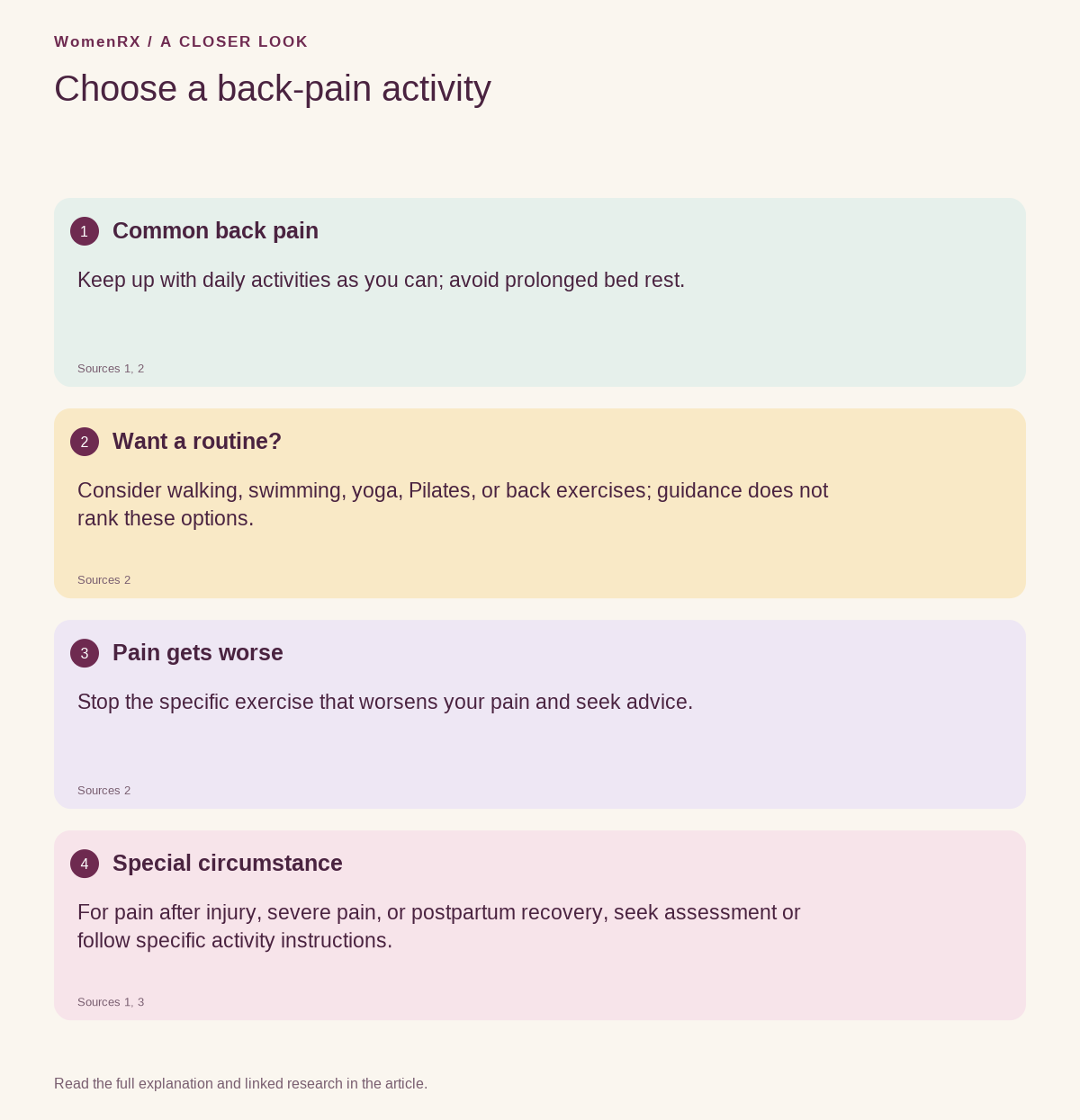
Common back pain: Keep up with daily activities as you can; avoid prolonged bed rest.12
Want a routine?: Consider walking, swimming, yoga, Pilates, or back exercises; guidance does not rank these options.2
Pain gets worse: Stop the specific exercise that worsens your pain and seek advice.2
Special circumstance: For pain after injury, severe pain, or postpartum recovery, seek assessment or follow specific activity instructions.13
Read the figure as text
A simple route from manageable movement to condition-specific assessment, without treating one exercise as best for everyone.- Common back pain: Keep up with daily activities as you can; avoid prolonged bed rest.12
- Want a routine?: Consider walking, swimming, yoga, Pilates, or back exercises; guidance does not rank these options.2
- Pain gets worse: Stop the specific exercise that worsens your pain and seek advice.2
- Special circumstance: For pain after injury, severe pain, or postpartum recovery, seek assessment or follow specific activity instructions.13
More questions, answered
Should I rest in bed until my back feels better?
Avoid staying in bed for long periods. MedlinePlus says bed rest beyond a day or two can make back pain worse, and NHS guidance recommends staying active and continuing daily activities where possible. 1 2
Is Pilates the best exercise for back pain?
Research doesn’t establish Pilates as the best option. Pilates is one activity that may help, and a review found mostly favorable results across trials in several conditions, but it did not identify a single best routine for every person with back pain. 2 5
Sources you can check
- Back PainAccessed 2026-09-25Return to first citation
- Back pain - NHSAccessed 2026-09-25Return to first citation
- Postpartum Care: MedlinePlusAccessed 2026-09-25Return to first citation
- Chiropractic Care of Adults With Postpartum-Related Low Back, Pelvic Girdle, or Combination Pain: A Systematic Review.Weis CA, Pohlman K, Draper C, da Silva-Oolup S, Stuber K, Hawk C. · Journal of manipulative and physiological therapeutics · 2020Return to first citation
- Is Pilates an effective rehabilitation tool? A systematic review.Byrnes K, Wu PJ, Whillier S. · Journal of bodywork and movement therapies · 2018Return to first citation