Estrogen and Bone Health: What Menopause Evidence Means for Prevention
Estrogen loss can speed bone loss after menopause, but fracture prevention depends on more than estrogen or a bone-density result.
As estrogen falls around menopause, bone breakdown can outpace replacement, contributing to bone loss. Hormone therapy can prevent bone loss and has been shown to prevent fractures, but whether it fits depends on factors such as age, time since menopause, and individual health risks. A prevention plan also considers bone density, fracture history, and estimated future fracture risk. 3 4 5
Why estrogen matters to bone
Bone is living tissue. Your body continually breaks down old bone and replaces it with new bone. Estrogen helps regulate that remodeling. After menopause, lower ovarian estrogen can shift the balance toward more bone being broken down than rebuilt, contributing to loss of bone strength and a higher risk of osteoporosis and fracture. 1 4 5
That connection doesn’t mean an estrogen level tells you how likely you are to break a bone. Bone density changes with age, and fracture risk is assessed using more than one piece of information. 1 5
A scan is one part of fracture risk
A bone-density scan measures bone mineral density (BMD). It can help identify low bone density or osteoporosis and contribute to an assessment of fracture risk. But the result is best interpreted alongside your fracture history and other risk factors, not as a stand-alone forecast. 1 5
A prior fracture is part of the overall picture. A review of menopause and bone health describes combining fracture history, BMD, and estimated 10-year fracture probability to classify risk and guide prevention or treatment. This is why a result that doesn’t meet the definition of osteoporosis may still need to be considered in context. 5
A useful question is: “How does my scan result fit with my age, any previous fractures, and my overall fracture risk?” That shifts the conversation from a single number to the decision it can help inform.
Where hormone therapy fits
Menopausal hormone therapy can prevent bone loss and has been shown to prevent fractures. The North American Menopause Society’s 2022 position statement says the benefit-risk balance is favorable for women younger than 60 or within 10 years of menopause onset who have no contraindications when therapy is considered for bothersome vasomotor symptoms, such as hot flashes, and prevention of bone loss. 3
That isn’t a blanket recommendation to start hormone therapy for bone health. The same statement says the balance appears less favorable when therapy is started after age 60 or more than 10 years after menopause begins, because the absolute risks of coronary heart disease, stroke, blood clots in veins, and dementia are greater. Risks also vary with the type and route of therapy, dose, duration, timing, and whether a progestogen is used. 3
So the decision isn’t simply “Is my estrogen low?” It’s whether hormone therapy suits your health and menopause-related needs, considering its benefits and risks. If you’re weighing it for bone protection, your age, time since menopause, fracture history, and BMD all help put that choice in context. 3 5
Prevention and treatment depend on risk
Bone-friendly habits are part of prevention whether or not you use hormone therapy. MedlinePlus lists getting enough calcium and vitamin D in your diet and regular physical activity, including weight-bearing activities such as walking, tennis, and dancing, among steps that can help lower fracture risk. 2
If your fracture risk is higher, lifestyle measures may not be the whole plan. Risk classification based on fracture history, BMD, and estimated future fracture probability helps guide whether medication belongs in a prevention or treatment plan. The specific choice depends on the overall assessment, rather than estrogen or BMD alone. 5
The practical distinction is that hormone therapy is one possible part of a bone-health plan, while fracture prevention is a broader decision. A scan and hormone history can help, but they don’t replace an assessment of your risk as a whole.
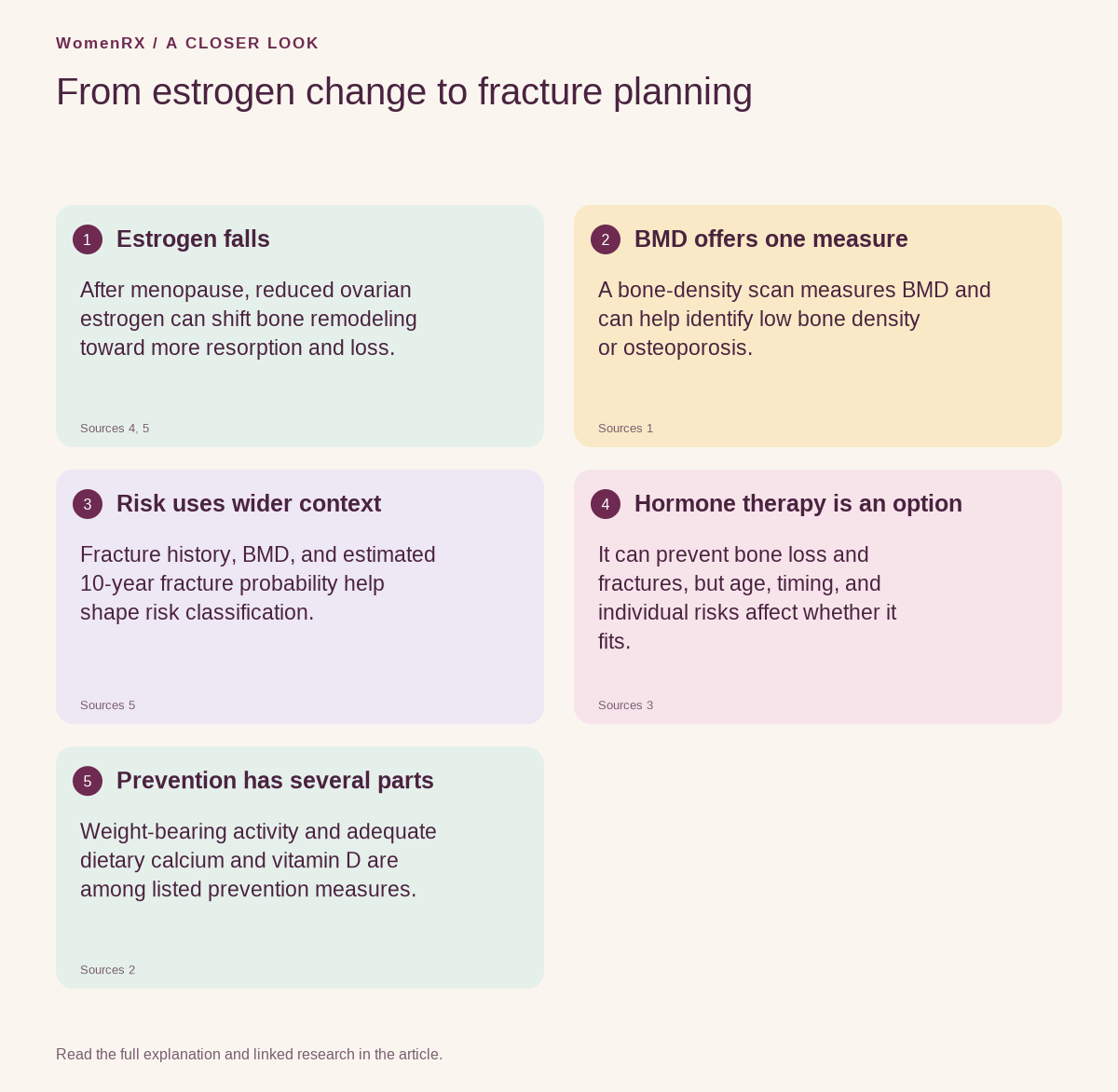
From estrogen change to fracture planning
Estrogen falls: After menopause, reduced ovarian estrogen can shift bone remodeling toward more resorption and loss.45
BMD offers one measure: A bone-density scan measures BMD and can help identify low bone density or osteoporosis.1
Risk uses wider context: Fracture history, BMD, and estimated 10-year fracture probability help shape risk classification.5
Hormone therapy is an option: It can prevent bone loss and fractures, but age, timing, and individual risks affect whether it fits.3
Prevention has several parts: Weight-bearing activity and adequate dietary calcium and vitamin D are among listed prevention measures.2
Read the figure as text
This pathway separates the effect of estrogen on bone from the broader assessment used to plan fracture prevention.- Estrogen falls: After menopause, reduced ovarian estrogen can shift bone remodeling toward more resorption and loss.45
- BMD offers one measure: A bone-density scan measures BMD and can help identify low bone density or osteoporosis.1
- Risk uses wider context: Fracture history, BMD, and estimated 10-year fracture probability help shape risk classification.5
- Hormone therapy is an option: It can prevent bone loss and fractures, but age, timing, and individual risks affect whether it fits.3
- Prevention has several parts: Weight-bearing activity and adequate dietary calcium and vitamin D are among listed prevention measures.2
More questions, answered
Does a bone-density result below the osteoporosis range mean my fracture risk is low?
Not necessarily. BMD helps assess risk, but fracture history and estimated future fracture probability are also part of risk classification. Ask how your result fits with those other factors. 1 5
Is hormone therapy the only way to support bone health after menopause?
No. Regular physical activity, including weight-bearing activity, and getting enough calcium and vitamin D in your diet are among the listed prevention steps. When risk is higher, medication decisions can also be part of the plan. 2 5
Sources you can check
- Bone Density | Bone Mineral Density | BMD | MedlinePlusAccessed 2026-09-25Return to first citation
- Fracture | MedlinePlusAccessed 2026-09-25Return to first citation
- The 2022 hormone therapy position statement of The North American Menopause Society.“The 2022 Hormone Therapy Position Statement of The North American Menopause Society” Advisory Panel. · Menopause (New York, N.Y.) · 2022Return to first citation
- Impact of menopause hormone therapy, exercise, and their combination on bone mineral density and mental wellbeing in menopausal women: a scoping review.Platt O, Bateman J, Bakour S. · Frontiers in reproductive health · 2025Return to first citation
- Bone health and menopause: Osteoporosis prevention and treatment.de Villiers TJ. · Best practice & research. Clinical endocrinology & metabolism · 2024Return to first citation