Energy Dips After Meals: What Your Notes Can Show
A tired spell after eating is a real symptom, but it cannot tell you by itself whether your blood glucose changed.
A post-meal slump can be worth noticing, but feeling tired does not show whether your blood glucose rose or fell. 5 For a short time, record when you ate, when the dip began, what was in the meal, and what else was going on, such as poor sleep. A fatigue diary can help reveal patterns across the day. 2 Those patterns cannot diagnose a glucose condition. 5
A slump is a symptom, not a glucose reading
Feeling tired after a meal tells you about your experience, not what your blood glucose is doing. In a small study of 40 non-diabetic people with symptoms attributed to hypoglycemia, the researchers noted that such symptoms can occur with or without a glucose decline. The study does not establish why a particular person feels tired after eating, or show that a meal-related slump means blood sugar is low. 5
That distinction matters because fatigue has many possible contributors. Sleep, stress, pregnancy, lifestyle habits, and medical conditions can all play a part; caring for a new baby can also disrupt sleep and add stress. A meal may seem like the obvious cause simply because the dip happens afterward, but timing alone does not prove cause. 1 2
Make a brief record before changing your diet
For a short stretch, note the details that help distinguish a repeatable pattern from a one-off tired afternoon. You do not need to count calories or label foods as “good” or “bad.” A few plain observations are enough:
- Meal and time: Note when you ate and the main foods or drinks. Include broad details, such as whether the meal included fruit, vegetables, grains, beans, dairy, nuts, or another protein source. These details can help describe a meal; they do not identify a proven cause of fatigue.
- When the dip started: Record the approximate time and what “tired” meant for you: sleepy, low energy, foggy, or struggling to concentrate. Note whether it eased, continued, or returned.
- Other context: Jot down sleep, stress, activity, and any other symptoms you noticed. Fatigue diaries can help reveal patterns across the day, and questions about sleep and daily activities are part of evaluating persistent fatigue. 2
- Whether it repeats: Look for a similar sequence across more than one occasion. One episode, or one food appearing in the notes, does not establish a trigger.
The goal is a clearer description, not a self-diagnosis. If you notice a pattern, share the observations rather than starting a restrictive diet on your own.
Use meal details as clues, not rules
You can note whether a meal included a source of dietary fiber, such as whole grains, fruit, or vegetables, and a source of protein, such as beans, nuts, dairy, meat, or certain grains. Fiber supports digestion and fullness; protein is needed to build and maintain body tissues. Those are useful facts about foods, but adding either nutrient should not be treated as a proven fix for a post-meal energy dip. 3 4
A year-long follow-up study offers a limited reason to consider individualized eating patterns with support: 40 non-diabetic people with symptoms consistent with hypoglycemia received dietary counseling, and symptom severity decreased after the interventions. The study reported comparable outcomes for its low-glycemic-index and Mediterranean diet education. It was a small study, and it does not show that a particular ingredient caused the improvement or that the same approach suits everyone. 5
So, if your notes point to a repeated pattern, the useful next step is to discuss the pattern and the full context, not to assume sugar or another single food is responsible. Avoid broad food restrictions based on a slump alone; the notes cannot establish its cause.
When to get help with recurring fatigue
Bring recurrent or severe episodes to a clinician, especially if the fatigue is affecting daily life or has continued for weeks without a clear explanation. Fatigue can have several causes, and evaluation may include questions about sleep and daily routines and, when appropriate, tests for conditions such as anemia, diabetes, or thyroid problems. 1 2
If you are pregnant or recently gave birth, include that context when discussing fatigue or considering dietary changes. Pregnancy-related hormonal changes and the sleep disruption and stress that can come with caring for a new baby may be relevant. 1 2
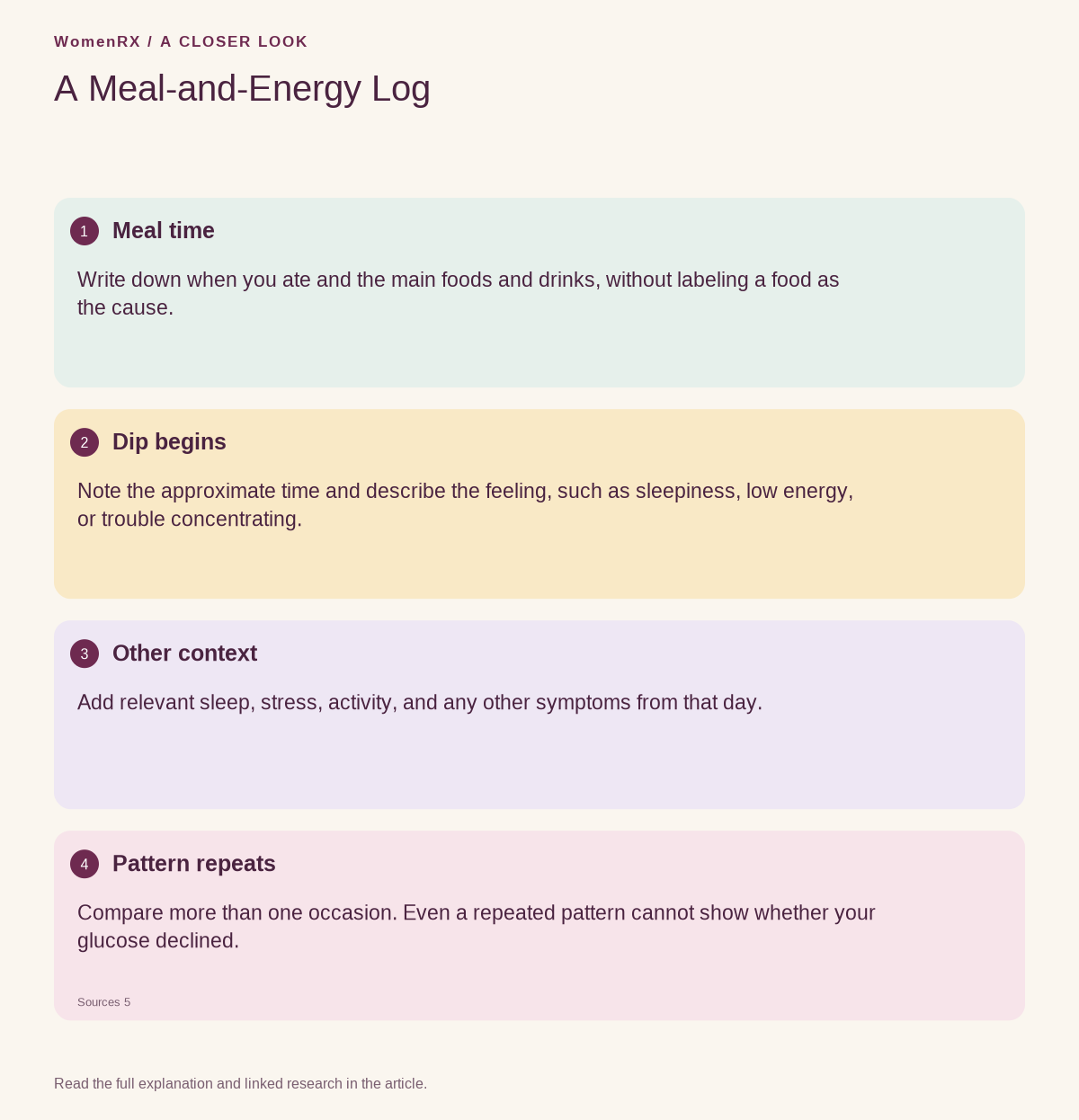
A Meal-and-Energy Log
Meal time: Write down when you ate and the main foods and drinks, without labeling a food as the cause.
Dip begins: Note the approximate time and describe the feeling, such as sleepiness, low energy, or trouble concentrating.
Other context: Add relevant sleep, stress, activity, and any other symptoms from that day.
Pattern repeats: Compare more than one occasion. Even a repeated pattern cannot show whether your glucose declined.5
Read the figure as text
A general fatigue diary can help reveal patterns across a day. 2 This meal-and-energy version puts events in order without treating the record as a glucose measurement.- Meal time: Write down when you ate and the main foods and drinks, without labeling a food as the cause.
- Dip begins: Note the approximate time and describe the feeling, such as sleepiness, low energy, or trouble concentrating.
- Other context: Add relevant sleep, stress, activity, and any other symptoms from that day.
- Pattern repeats: Compare more than one occasion. Even a repeated pattern cannot show whether your glucose declined.5
More questions, answered
Should I cut out sugar if I feel tired after eating?
Not based on the slump alone. Timing does not prove that sugar, or any single food, caused the fatigue; symptoms attributed to low blood sugar can occur without a glucose decline. 5 Note what you ate and when symptoms began, then look for a repeating pattern before making a major diet change.
Can a meal-and-symptom log diagnose low blood sugar?
No. A log can describe when symptoms happen and what else may be going on, but symptoms attributed to hypoglycemia can occur with or without a glucose decline. 5 Share recurring concerns with a clinician rather than treating the log as a glucose measurement.
Sources you can check
- Tiredness and fatigue - NHSAccessed 2026-09-25Return to first citation
- Fatigue: MedlinePlusAccessed 2026-09-25Return to first citation
- Dietary Fiber: MedlinePlusAccessed 2026-09-25Return to first citation
- Dietary Proteins: MedlinePlusAccessed 2026-09-25Return to first citation
- Assessing Long-Term Impact of Dietary Interventions on Occurrence of Symptoms Consistent with Hypoglycemia in Patients without Diabetes: A One-Year Follow-Up Study.Hall M, Walicka M, Panczyk M, Traczyk I. · Nutrients · 2022Return to first citation