Afternoon Fatigue: Could Lunch or Your Routine Be Involved?
A repeatable afternoon slump is worth looking at alongside your lunch, sleep, fluids, and caffeine, not treating as proof that one food is the problem.
Lunch may be part of your afternoon fatigue pattern, but tiredness after eating doesn’t identify a particular food. It doesn’t prove low blood sugar, either; confirming that requires a glucose measurement.2 Compare when you eat and what your meal contains with your sleep, fluids, and caffeine over several days. If fatigue lasts for weeks or affects daily life, it deserves a broader assessment.47
First, look at the whole afternoon
Maybe you feel fine while eating lunch, then struggle to focus later. It’s tempting to blame the meal you just had. But a short night, too little to drink, or caffeine that disrupts your sleep can also shape how you feel the next day. Fatigue has many possible causes, and a diary can help reveal when it happens without diagnosing why.134
The useful question is whether your tiredness consistently follows a certain kind of lunch, or whether it appears even when lunch changes. Keep sleep and caffeine in the picture while you look for that difference.
What to compare on your plate
You don’t need to label foods as good or bad. Start with a plain description: Did you eat lunch or miss it? What made up most of the meal? Was there a protein food, such as eggs, yogurt, beans, or tofu? Was there a source of fiber, such as fruit, vegetables, or whole grains? Use these details to compare meals with how you feel later, rather than treating any one ingredient as a guaranteed fix.56
For example, if your usual lunch is toast by itself, you might compare it with a lunch of toast, an egg, and fruit on another day. That gives you a clearer comparison than changing lunch, coffee, bedtime, and exercise all at once. Fiber-containing foods can help with fullness, but feeling full and feeling alert are different outcomes. Don’t assume that adding fiber or protein will fix fatigue.56
Timing matters too. Note whether you ate much earlier than usual, skipped lunch, or felt tired before you ate. A dip that begins before lunch is harder to attribute to lunch. A dip that follows many different lunches is a reason to look beyond a single food.
Check the other parts of your day
If you’re thirsty, dizzy, and tired, fluids deserve attention: those can be symptoms of dehydration. Hot weather, outdoor work, and exercise can increase fluid losses. Water may be a sensible first thing to try when you haven’t had much to drink, but not every afternoon slump is dehydration.3
Caffeine can make you feel more awake, which may help briefly without resolving why you’re tired. Its effects may still be felt four to six hours after you have it, and too much caffeine can interfere with a good night’s sleep. Note both your morning coffee and any later tea, coffee, energy drink, or caffeine-containing medicine. If you’re pregnant, ask your pregnancy care team whether you should limit caffeine rather than using extra caffeine to get through the afternoon.14
Your night matters as much as your lunch. Record whether sleep was short or interrupted and whether you wake feeling rested. Pregnancy can be a context for fatigue. During perimenopause, sleep problems and night sweats are also worth noting when you consider fatigue, alongside hormonal changes.78
A small log that can answer a useful question
For several ordinary days, jot down five things: how you slept; when and what you ate for lunch; roughly when you drank fluids and had caffeine; when tiredness began; and whether it eased or lasted. You’re looking for a repeatable pattern, not a score. Keeping a fatigue diary can help you spot more-tired and more-energetic parts of the day.4
If the dip repeatedly follows similar lunches and you’ve slept reasonably well, a modest meal change may be worth comparing while keeping the rest of your routine fairly similar. If it happens regardless of lunch but follows interrupted nights, changing food may not be the most useful first experiment. Either way, a few days of notes can make the pattern easier to describe.
When it’s more than a lunch question
Feeling suddenly hungry and tired after a meal doesn’t, by itself, establish low blood sugar. Low blood glucose is more common in people with diabetes who take insulin or certain other diabetes medicines; confirming it involves a glucose measurement. If that applies to you, follow your diabetes care plan for checking and responding to symptoms rather than trying to diagnose them from meal notes.2
If fatigue has lasted for weeks or is affecting daily life, arrange an assessment rather than continuing to experiment with lunch.47 If you have heavy menstrual bleeding, mention it when seeking an assessment for fatigue: heavy periods can cause iron-deficiency anemia, which can leave you tired.910 Mention symptoms such as breathlessness or noticeable heartbeats, which can occur with iron-deficiency anemia, or unusual thirst and frequent urination, which can be clues to diabetes. Fatigue can also relate to sleep problems, pregnancy, medicines, and other health conditions, so the pattern matters more than a guess about one meal.4710
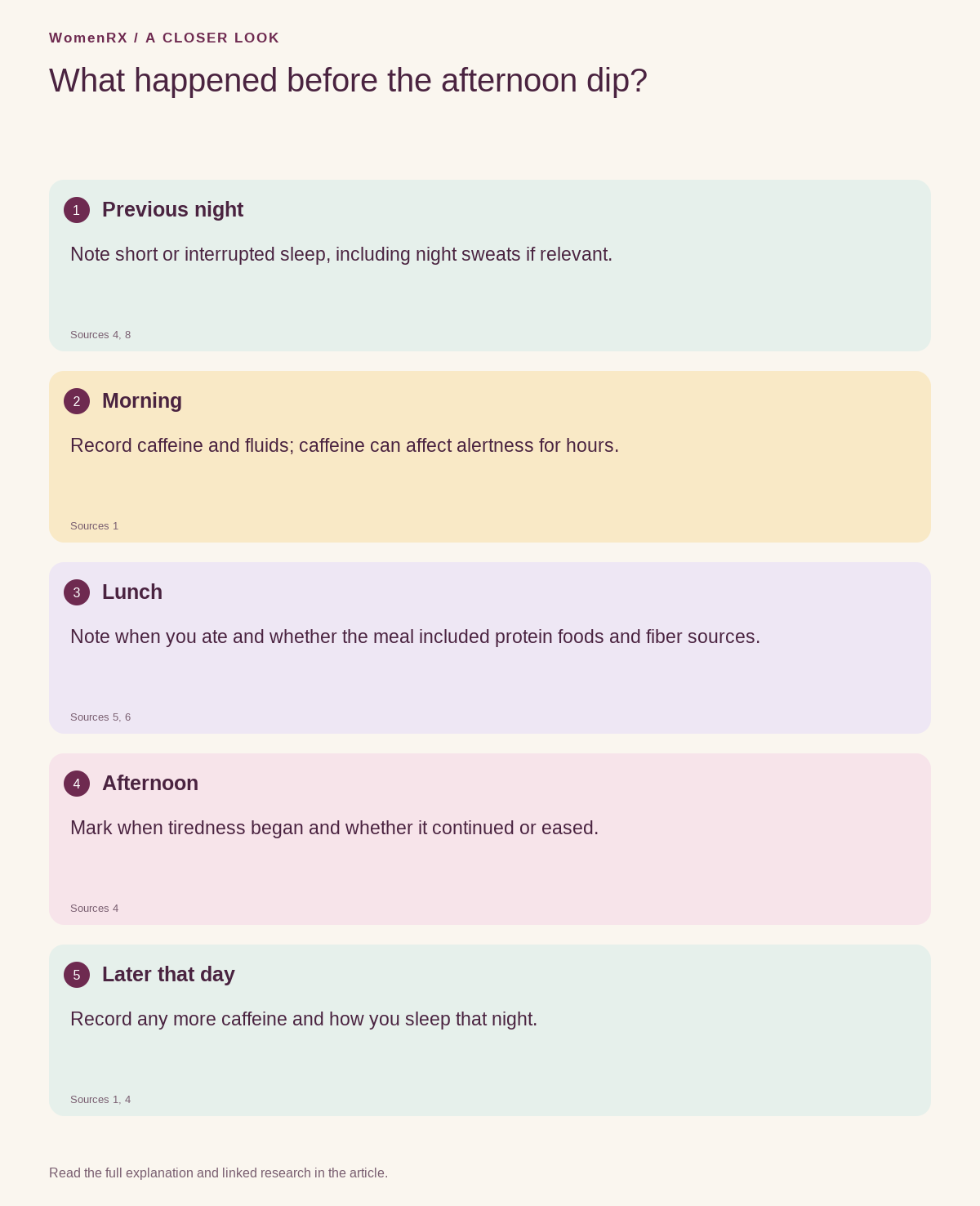
What happened before the afternoon dip?
Previous night: Note short or interrupted sleep, including night sweats if relevant.48
Morning: Record caffeine and fluids; caffeine can affect alertness for hours.1
Lunch: Note when you ate and whether the meal included protein foods and fiber sources.56
Afternoon: Mark when tiredness began and whether it continued or eased.4
Later that day: Record any more caffeine and how you sleep that night.14
Read the figure as text
A day-long view helps you compare lunch with other factors that might affect how tired you feel.- Previous night: Note short or interrupted sleep, including night sweats if relevant.48
- Morning: Record caffeine and fluids; caffeine can affect alertness for hours.1
- Lunch: Note when you ate and whether the meal included protein foods and fiber sources.56
- Afternoon: Mark when tiredness began and whether it continued or eased.4
- Later that day: Record any more caffeine and how you sleep that night.14
Sources you can check
- Caffeine: MedlinePlusAccessed 2026-09-25Return to first citation
- Hypoglycemia: MedlinePlusAccessed 2026-09-25Return to first citation
- Dehydration: MedlinePlusAccessed 2026-09-25Return to first citation
- Fatigue: MedlinePlusAccessed 2026-09-25Return to first citation
- MedlinePlus: Protein in diet, including tofu and other plant sourcesAccessed 2026-09-25Return to first citation
- Dietary Fiber: MedlinePlusAccessed 2026-09-25Return to first citation
- Tiredness and fatigue - NHSAccessed 2026-09-25Return to first citation
- Things you can do to help menopause and perimenopause symptoms - NHSAccessed 2026-09-25Return to first citation
- Heavy periods - NHSAccessed 2026-09-25Return to first citation
- Iron deficiency anaemia - NHSAccessed 2026-09-25Return to first citation