Endometriosis Symptoms: Patterns That Merit an Assessment
Painful periods are one clue, but pelvic pain between periods or with sex, bowel movements or urination can matter too.
Recurring pelvic pain deserves an assessment when it disrupts daily life, is getting worse, or comes with heavy or irregular bleeding, pain during sex, or pain when you pee or poop. These patterns can raise suspicion for endometriosis, but they don’t diagnose it: other pelvic, bowel and bladder conditions can cause similar symptoms. Hormonal treatment may ease pain without settling the cause. 2 3
Look at the pattern, not just the pain score
Endometriosis is worth considering when period pain is severe enough to stop your usual activities, especially if it recurs or is getting worse. Pain may also occur outside your period, in the lower belly or back, or during or after sex. Pain when you pee or have a bowel movement, heavy periods, and marked fatigue are other possible symptoms. Some people also have difficulty getting pregnant. No one symptom proves that you have endometriosis, and symptoms can vary. 2 3
A useful clue is how symptoms fit into your life: when they show up, what they interfere with, and whether the pattern is changing. Ordinary period cramps can happen around the start of bleeding and may spread to the back or thighs. But pain that stops you doing usual activities, becomes more painful over time, or appears with sex, urination or bowel movements is a reason to seek an assessment, whether or not it happens only during your period. 3
Symptoms overlap with other conditions
Pelvic pain has many possible causes. Period pain may be related to endometriosis, adenomyosis or fibroids; constipation and irritable bowel syndrome can also cause pelvic pain. Bladder problems and infection are among other possible causes. That overlap helps explain why symptoms alone can’t confirm endometriosis and why an evaluation may look beyond one diagnosis. 1 3
An assessment can start with a conversation about your symptoms and, if appropriate, an examination. A clinician may consider referral or tests, which can include imaging; laparoscopy is one procedure that can confirm endometriosis. The path to an answer may take time because symptoms resemble those of other conditions. If an initial step doesn’t explain your symptoms, keep describing what’s happening and ask what the next step could be. 2
Symptoms can shift across menstrual life
Endometriosis is commonly diagnosed from puberty, when periods begin, through menopause. Symptoms usually stop after menopause, though they can persist. A change in symptoms at a different life stage doesn’t by itself confirm or exclude endometriosis. 2
Hormonal treatments, including combined contraception and other hormone medicines, may ease endometriosis-related pain. If pain improves while you’re using hormonal contraception, that change alone doesn’t establish what caused the pain. You can still mention the symptoms you had before treatment, what changed, and what remains. 2
If you’re pregnant or might be and have pelvic pain, get prompt medical assessment rather than assuming the pain is from endometriosis. 1
When to seek care
Arrange an assessment if pelvic pain keeps coming back or doesn’t go away, period pain is getting worse or stopping your usual activities, bleeding becomes heavier or irregular, or you have pain during sex or when you pee or poop. You don’t need to wait for every symptom to appear or for pain to happen only during periods. 2 3
Seek urgent assessment for severe pelvic or period pain that’s worse than usual and hasn’t improved with pain relief. With pelvic pain, seek urgent help if you have a very high temperature, vomiting and diarrhea or feel sick, feel faint or dizzy, or pass out, or if you’re pregnant or might be pregnant. 1 3
A short record can make the pattern clearer
Before an appointment, jot down when pain happens in relation to bleeding, where you feel it, and whether it affects sex, bowel movements, urination, work or everyday activities. Add changes in bleeding and any treatments that seemed to change symptoms. This isn’t a diagnostic test; it’s a practical way to describe a pattern that may otherwise be hard to recall in the moment. 2 4
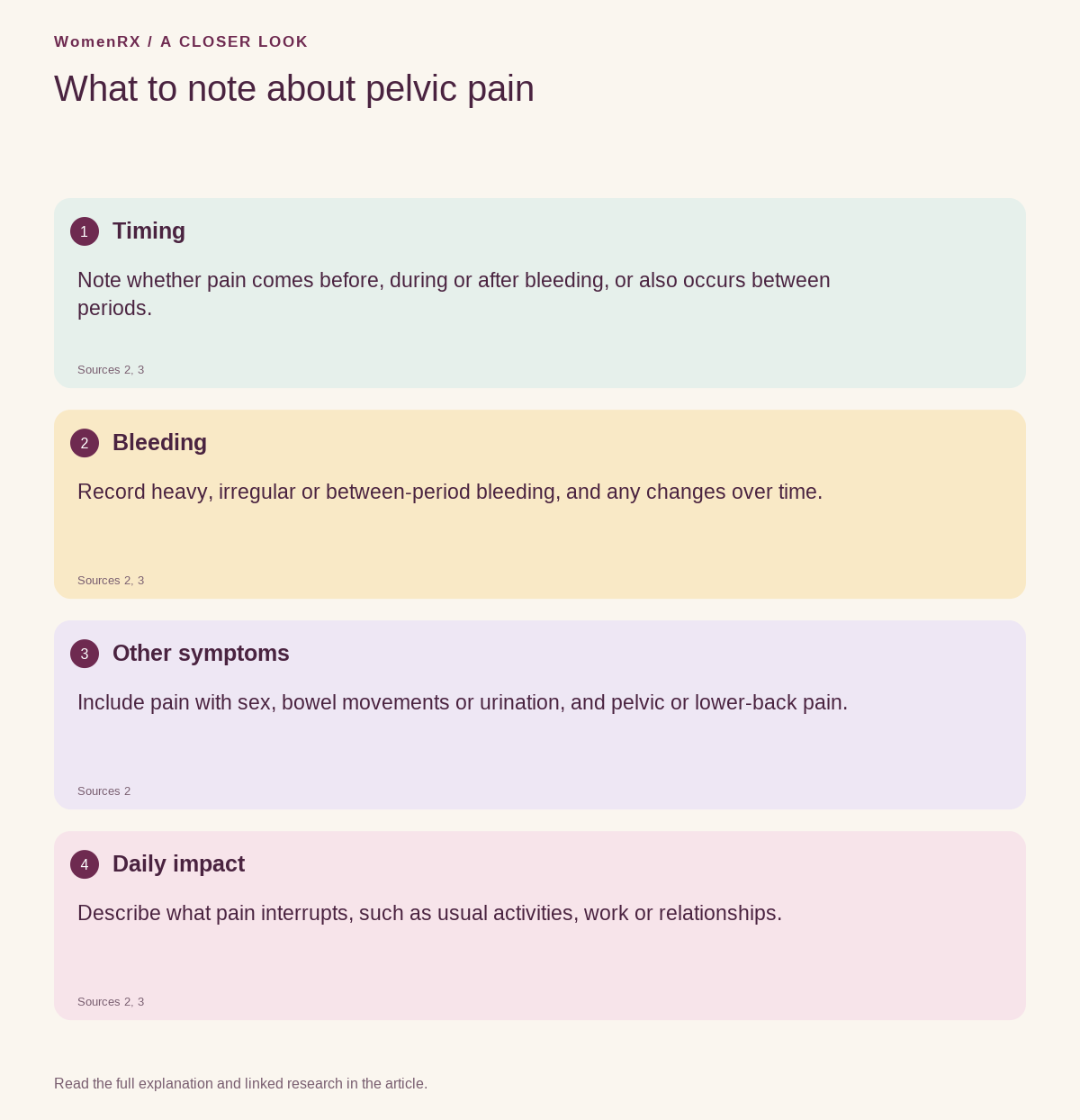
What to note about pelvic pain
Timing: Note whether pain comes before, during or after bleeding, or also occurs between periods.23
Bleeding: Record heavy, irregular or between-period bleeding, and any changes over time.23
Other symptoms: Include pain with sex, bowel movements or urination, and pelvic or lower-back pain.2
Daily impact: Describe what pain interrupts, such as usual activities, work or relationships.23
Read the figure as text
Use these prompts to describe recurring symptoms and their effect on daily life. They organize a conversation; they don’t diagnose endometriosis.- Timing: Note whether pain comes before, during or after bleeding, or also occurs between periods.23
- Bleeding: Record heavy, irregular or between-period bleeding, and any changes over time.23
- Other symptoms: Include pain with sex, bowel movements or urination, and pelvic or lower-back pain.2
- Daily impact: Describe what pain interrupts, such as usual activities, work or relationships.23
More questions, answered
Does endometriosis pain have to happen during a period?
No. Period pain is one possible symptom, but pelvic pain and pain during or after sex, when peeing, or when having a bowel movement can occur at other times too. 2
Does feeling better on hormonal contraception rule out endometriosis?
No conclusion follows from symptom relief alone. Hormonal treatments can ease endometriosis-related pain, so share both your earlier symptoms and what changed after starting treatment. 2
Sources you can check
- Pelvic pain - NHSAccessed 2026-09-25Return to first citation
- Endometriosis - NHSAccessed 2026-09-25Return to first citation
- Period pain - NHSAccessed 2026-09-25Return to first citation
- Pain | MedlinePlusAccessed 2026-09-25Return to first citation