Endometriosis, Fibroids, or an Ovarian Cyst: What Differs?
Where a finding sits offers a starting point, but symptoms and scan results need to be considered together.
Fibroids grow in or around the uterine wall, ovarian cysts are fluid-filled sacs on an ovary, and endometriosis involves tissue similar to the uterine lining growing elsewhere in the body. Their symptoms can overlap, and you can have more than one condition. The useful next question is whether the finding explains your symptoms and needs follow-up, not just what the scan calls it. 1245
Three different findings, some familiar symptoms
Fibroids are noncancerous growths made of muscle cells and other tissue in or around the uterine wall. Many cause no symptoms. When they do, the pattern can include heavy or painful periods, bleeding between periods, or difficulty getting pregnant. Their location, size and number can affect what you experience. 1
Ovarian cysts are fluid-filled sacs on an ovary. Many develop as part of the menstrual cycle and disappear without treatment. Most cause no symptoms; a cyst may become painful if it grows large, ruptures or twists and affects the ovary’s blood supply. Endometriosis can also cause an ovarian cyst, so “cyst” and “endometriosis” aren’t always competing explanations. 24
Endometriosis means cells similar to those in the uterine lining grow in other parts of the body. It can cause severe period pain that disrupts ordinary activities, heavy periods, fatigue or difficulty getting pregnant. Symptoms may also occur outside your period. It can affect an ovary, but endometriosis isn’t defined by an ovarian cyst, and a cyst doesn’t automatically mean endometriosis. 24
Heavy or painful periods, pelvic pain and fertility concerns aren’t a reliable three-way sorting test. Fibroids and endometriosis can also coexist. For example, finding a fibroid on a scan doesn’t, by itself, establish that the fibroid explains severe period pain. The finding has to be considered alongside your symptoms and any other possible causes. 145
What a scan can answer, and what it may not
If a report says fibroid, ask where it is in relation to the uterus and whether its location fits the bleeding, pain or fertility concern being investigated. Fibroids may be found during a pelvic exam or on imaging, including when they haven’t caused symptoms. A symptom-free fibroid may not need treatment. 1
If it says ovarian cyst, ask what kind of cyst the scan suggests and whether another ultrasound is planned. A repeat scan can show whether a cyst has disappeared. Follow-up depends on the finding and your circumstances; a large, persistent or symptomatic cyst, or one that raises concern for cancer, may need a different discussion than a short-lived cyst found during the cycling years. Not every cyst needs surgery. 23
If you suspect endometriosis, the conversation may not end with the scan. Assessment starts with symptoms and may include an exam, ultrasound or MRI. Laparoscopy can confirm endometriosis, but suspected disease can also be addressed when imaging is inconclusive, particularly when pain or fertility concerns need attention. If your symptoms remain disruptive, ask what the scan did and didn’t clarify and what the next option is. 45
Life stage changes the follow-up question
During the years when you have periods, a cyst may be related to the menstrual cycle, while endometriosis commonly presents from the start of periods through menopause. Fibroids are common during childbearing years. None of those patterns tells you what an individual finding means without the rest of the picture. 124
After menopause, an ovarian cyst calls for a more careful discussion because ovarian cancer risk is somewhat higher than before menopause; ultrasound and sometimes blood tests may be part of its assessment. Endometriosis symptoms usually stop after menopause, but they can persist. New symptoms still deserve an explanation rather than being assigned to an old diagnosis. 24
If you’re pregnant, tell the care team assessing pelvic pain or a scan finding. Fibroids can matter during pregnancy, but this general comparison doesn’t determine how an ovarian finding should be assessed in pregnancy. Ask what the finding means in the context of your pregnancy and symptoms. New, severe pelvic pain needs prompt assessment: an ovarian problem isn’t the only possible cause of acute pain in pregnancy. 126
When the question is more urgent
A sudden, severe, sharp pelvic pain is different from a recurring pattern of period pain. An ovarian cyst can rupture or twist, and acute pelvic pain has other possible causes too. Seek urgent care for sudden severe pelvic pain, especially if you’re pregnant, rather than waiting for a routine scan follow-up. 26
For a less urgent finding, a useful question is specific: “Does this explain what I’m feeling, and what would change the follow-up plan?” The answer may be no treatment for a symptom-free fibroid, a repeat scan for a cyst, or further assessment for persistent symptoms that suggest endometriosis. Those are different next moves, even when the starting symptom is simply “pelvic pain.” 1245
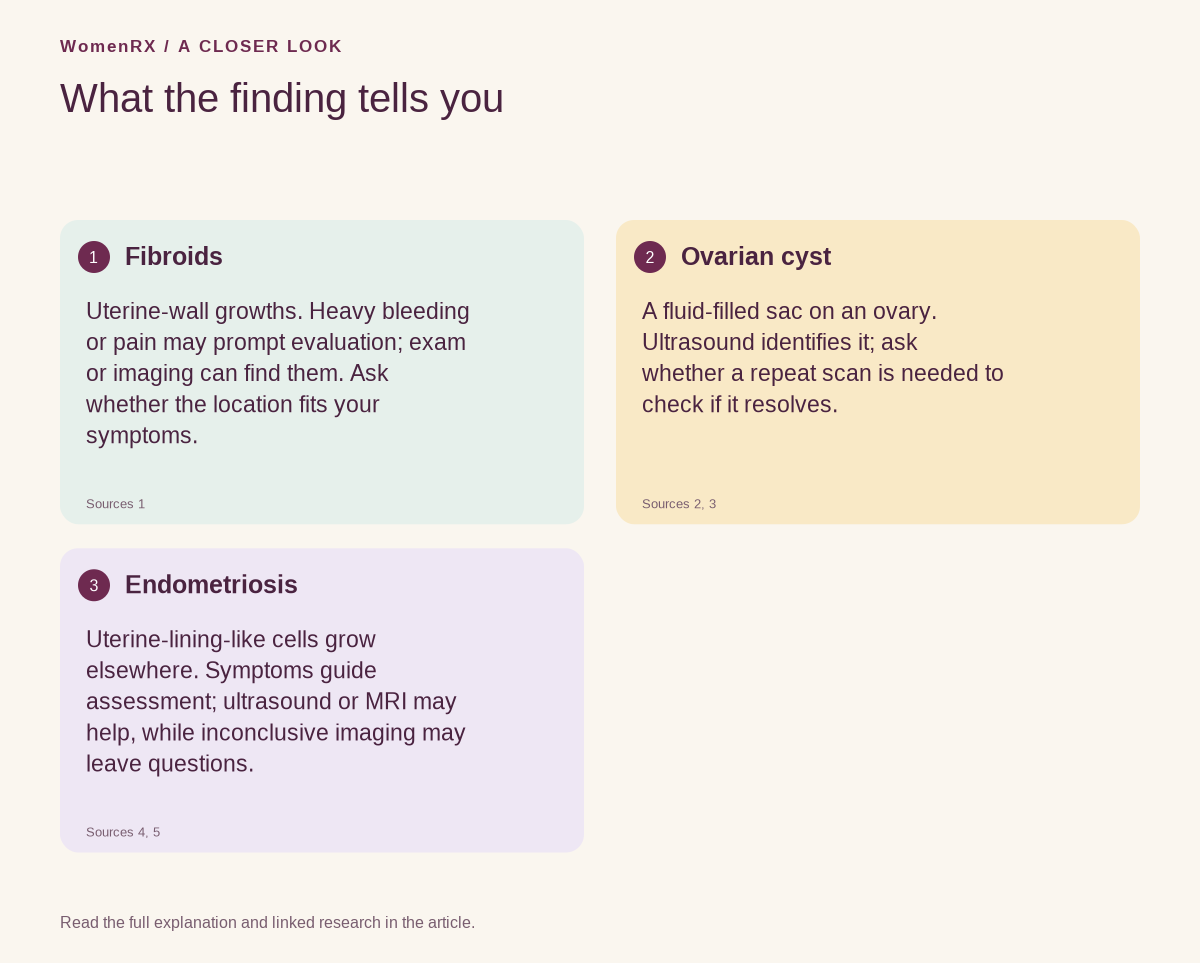
What the finding tells you
Fibroids: Uterine-wall growths. Heavy bleeding or pain may prompt evaluation; exam or imaging can find them. Ask whether the location fits your symptoms.1
Ovarian cyst: A fluid-filled sac on an ovary. Ultrasound identifies it; ask whether a repeat scan is needed to check if it resolves.23
Endometriosis: Uterine-lining-like cells grow elsewhere. Symptoms guide assessment; ultrasound or MRI may help, while inconclusive imaging may leave questions.45
Read the figure as text
Compare where each condition occurs, what may bring it to attention and what assessment may answer next.- Fibroids: Uterine-wall growths. Heavy bleeding or pain may prompt evaluation; exam or imaging can find them. Ask whether the location fits your symptoms.1
- Ovarian cyst: A fluid-filled sac on an ovary. Ultrasound identifies it; ask whether a repeat scan is needed to check if it resolves.23
- Endometriosis: Uterine-lining-like cells grow elsewhere. Symptoms guide assessment; ultrasound or MRI may help, while inconclusive imaging may leave questions.45
More questions, answered
Can I have endometriosis and fibroids at the same time?
Yes. Coexisting fibroids are recognized in the assessment of endometriosis-related fertility concerns. That’s one reason a finding on a scan should be matched to your symptoms rather than treated as the only possible explanation. 5
Does an ovarian cyst mean I need surgery?
No. Many cysts disappear without treatment, and a repeat ultrasound may be used to check. Surgery becomes a consideration for findings such as a large or persistent cyst, one causing symptoms, or one that raises concern for cancer. 23
Sources you can check
- Uterine Fibroids | Fibroids | MedlinePlusAccessed 2026-09-25Return to first citation
- Ovarian cyst - NHSAccessed 2026-09-25Return to first citation
- Ovarian cyst - Treatment - NHSAccessed 2026-09-25Return to first citation
- Endometriosis - NHSAccessed 2026-09-25Return to first citation
- Maximising and Maintaining Fertility in Suspected or Confirmed Endometriosis: A Structured Narrative Review for Clinical Practice.Nandi M, Mondal R. · Cureus · 2026Return to first citation
- Acute pelvic pain in females in septic and aseptic contexts.Pages-Bouic E, Millet I, Curros-Doyon F, Faget C, Fontaine M, Taourel P. · Diagnostic and interventional imaging · 2015Return to first citation