Endometriosis and Diet: What Might Help Symptoms?
Some dietary changes may ease particular symptoms, especially gut symptoms, but research hasn’t established a diet that treats endometriosis or improves fertility.
Diet may be worth exploring as a way to manage symptoms, not as a replacement for endometriosis care. Small, varied studies suggest possible pain benefits from several dietary approaches, while low-FODMAP has limited evidence for gut symptoms in particular. If you try a change, track whether it helps and what it costs you nutritionally, financially, and day to day. Diet hasn’t been shown here to improve fertility. 3 4
What the research says, and what it doesn’t
Diet research in endometriosis is promising in places, but it hasn’t settled on a reliable, general-purpose “endo diet.” A 2022 systematic review found six studies of dietary changes in women of reproductive age with laparoscopically confirmed endometriosis. The studies reported improvements in pain, but they differed enough in diets, participants, measurements, and study designs that the researchers couldn’t combine their results. Most evidence came from non-randomized studies, which makes it hard to separate a diet’s effect from other influences. 3
The approaches studied included higher polyunsaturated-fat intake and gluten-free or low-nickel diets. That list describes what researchers examined, not a set of proven recommendations. It doesn’t show that everyone with endometriosis should avoid gluten or nickel, or that one eating pattern prevents disease or stops it progressing. 3
A separate review looked at randomized trials of dietary interventions, including supplements. It included 11 trials with 716 women; most had moderate or high risk of bias. In the six trials included in a meta-analysis, antioxidant supplements were associated with lower dysmenorrhea scores than placebo, but results for chronic pelvic pain and pain during sex weren’t statistically significant. The analyses were highly heterogeneous, and the lower-risk-of-bias studies didn’t show significant results compared with placebo. These findings aren’t a reason to start a supplement on your own. 5
If gut symptoms are the main problem
Bloating, abdominal pain, constipation, diarrhea, or pain with bowel movements may be the symptoms you most want to address. A 2026 systematic review found five clinical reports on low-FODMAP or structured FODMAP restriction in people with endometriosis. One randomized crossover feeding trial found a greater gastrointestinal response during a 28-day low-FODMAP period than during a nutritionally matched control diet. Other studies reported improvements in selected symptoms, but their designs make it harder to know how much the diet itself caused the change. 4
That makes low-FODMAP a possible targeted option for gut symptoms, not an established treatment for endometriosis lesions or fertility. The review describes the approach as potentially useful for selected patients and dietitian-guided. It also notes that longer-term tolerability and nutritional safety need more study. 4
A low-risk way to test a change
Before changing your meals, pick one specific symptom you hope to improve. For example, if bloating and bowel-related pain are your main concern, record those separately from menstrual cramps or pain during sex. Changing one thing at a time makes it easier to tell what may be helping, though it still can’t prove cause and effect.
Keep a simple log that reflects your real life:
- Symptoms: Note when the symptom occurs and how much it interferes with eating, sleep, work, or usual activities.
- Food and changes: Record the particular change you’re testing, rather than labelling a whole day “good” or “bad.”
- Nutrition and effort: Notice whether meals still feel varied and satisfying, and whether planning or finding food becomes difficult.
- Cost and tradeoffs: Track extra spending, time, social strain, and any foods you’re missing.
- Other changes: Note changes in treatment or routine that could also affect symptoms.
Decide ahead of time what would count as a worthwhile benefit for you. If you don’t notice a meaningful difference, or the restrictions are making it harder to eat well or live your life, that’s a good reason to stop and reconsider the plan. General healthy eating doesn’t require a strict diet or cutting out favorite foods; it should provide the nutrients and energy you need while fitting your preferences and budget. 2
For a restrictive plan such as low-FODMAP, consider working with a registered dietitian, particularly if you already have a limited diet or are having trouble maintaining your weight or intake. If you’re trying to conceive or are pregnant, don’t assume a symptom diet will improve fertility, and get individualized advice before eliminating foods. The reviews assessed pain and gut symptoms, not whether dietary changes improve pregnancy chances. 3 4
Keep symptom care in the picture
Endometriosis can affect daily life, and treatments can help manage symptoms. Diet is best considered one possible support alongside care, not a reason to put off evaluation or treatment. If you think you may have endometriosis, symptoms are affecting everyday life, or symptoms are worsening or not improving with treatment, seek medical care. 1
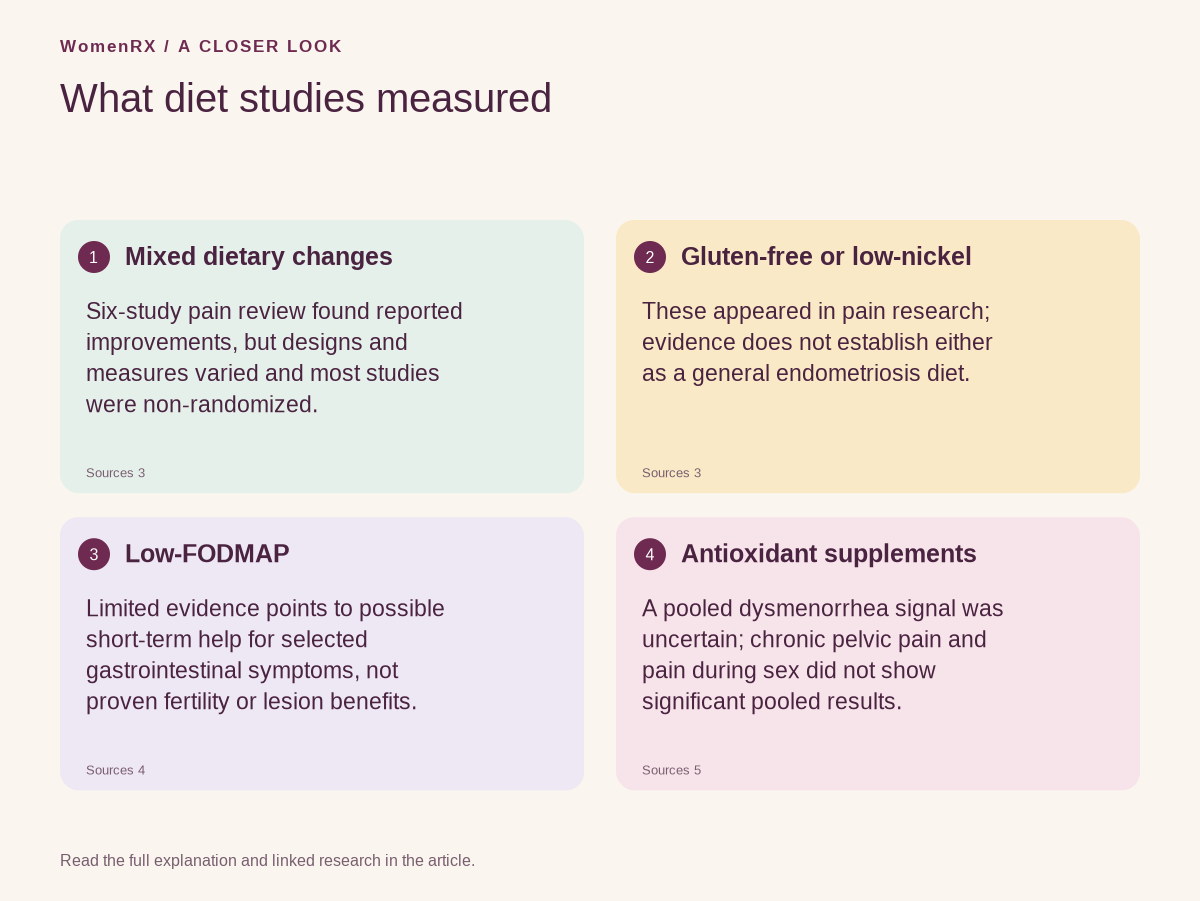
What diet studies measured
Mixed dietary changes: Six-study pain review found reported improvements, but designs and measures varied and most studies were non-randomized.3
Gluten-free or low-nickel: These appeared in pain research; evidence does not establish either as a general endometriosis diet.3
Low-FODMAP: Limited evidence points to possible short-term help for selected gastrointestinal symptoms, not proven fertility or lesion benefits.4
Antioxidant supplements: A pooled dysmenorrhea signal was uncertain; chronic pelvic pain and pain during sex did not show significant pooled results.5
Read the figure as text
The evidence differs by dietary approach and outcome. A possible signal for pain or gut symptoms is not proof of disease treatment or fertility benefit.- Mixed dietary changes: Six-study pain review found reported improvements, but designs and measures varied and most studies were non-randomized.3
- Gluten-free or low-nickel: These appeared in pain research; evidence does not establish either as a general endometriosis diet.3
- Low-FODMAP: Limited evidence points to possible short-term help for selected gastrointestinal symptoms, not proven fertility or lesion benefits.4
- Antioxidant supplements: A pooled dysmenorrhea signal was uncertain; chronic pelvic pain and pain during sex did not show significant pooled results.5
More questions, answered
Does an endometriosis diet improve fertility?
The dietary reviews described here examined pain and gastrointestinal symptoms, not whether a diet improves fertility. Don’t rely on a food restriction or supplement to change your chances of pregnancy. 3 4 5
Should I try gluten-free eating for endometriosis?
Gluten-free eating appeared among the approaches in a small, varied body of pain research, but that doesn’t establish it as a treatment or show that everyone with endometriosis benefits. Consider whether there’s a specific reason to test it, and avoid making a long-term restriction without considering nutrition and practicality. 3 2
Sources you can check
- Endometriosis - NHSAccessed 2026-09-25Return to first citation
- Nutrition: MedlinePlusAccessed 2026-09-25Return to first citation
- Impact of diet on pain perception in women with endometriosis: A systematic review.Sverrisdóttir UÁ, Hansen S, Rudnicki M. · European journal of obstetrics, gynecology, and reproductive biology · 2022Return to first citation
- Low-FODMAP Diet for Gastrointestinal Symptoms in Endometriosis: A Systematic Review.Watrowski R, Kostov S, Schäfer SD, Juhasz-Böss I, Palumbo M, Sparić R, Mereu L, Vitale SG, Alkatout I. · Nutrients · 2026Return to first citation
- Effect of Dietary Interventions on Endometriosis: A Systematic Review and Meta-Analysis of Randomized Controlled Trials.Meneghetti JK, Pedrotti MT, Coimbra IM, da Cunha-Filho JSL. · Reproductive sciences (Thousand Oaks, Calif.) · 2024Return to first citation