Eating on Ozempic: What to Change When Your Stomach Objects
There isn’t a universal list of foods to avoid on Ozempic; smaller meals, fluids, and noticing your own symptom patterns are more useful starting points.
You don’t need to ban a particular food just because you take Ozempic. If nausea or uncomfortable fullness is getting in the way, try smaller meals, drink enough fluids, and see whether high-fat or high-sugar foods make symptoms worse for you. Those are general strategies, not guarantees. Persistent nausea, vomiting, or diarrhea deserves a conversation with your prescriber. 1 2
Start with symptoms, not a forbidden-food list
Ozempic can cause nausea, vomiting, diarrhea, constipation, and stomach pain. Nausea, vomiting, and diarrhea were reported most often during dose escalation. The medication also delays stomach emptying, which may contribute to feeling full sooner than you expect. 1
That doesn’t mean one specific food is unsafe for everyone taking Ozempic. A review of gastrointestinal effects from incretin medicines recommends trying smaller, more frequent meals, staying adequately hydrated, and avoiding high-fat or high-sugar foods when symptoms are a problem. Think of those as options to test against your own experience, not a rule that every person on Ozempic must follow. 2
Match the adjustment to the symptom
If nausea is the problem: Try a smaller portion rather than pushing through a large meal. Notice whether high-fat or high-sugar foods seem to worsen your nausea. If you can eat comfortably at other times, use those meals to keep a varied pattern instead of labeling whole food groups off-limits. Smaller meals and avoiding high-fat or high-sugar foods are suggested management strategies, but responses differ. 2
If you feel full quickly: Pause when fullness arrives and consider a smaller meal next time. Ozempic delays stomach emptying, so your usual portion may feel different while you’re taking it. 1
If diarrhea or vomiting is reducing your fluid intake: Keep fluids in view, and contact your prescriber if symptoms persist or you’re struggling to replace what you lose. The Ozempic prescribing information warns that gastrointestinal symptoms can lead to dehydration and, in some cases, kidney injury; it advises promptly reporting persistent nausea, vomiting, or diarrhea. 1
If constipation is the main issue: Don’t assume that cutting out more foods is the answer. Constipation is among the common Ozempic side effects, so tell your prescriber if it continues. 1
Make changes without turning meals into a test
If you want to look for a pattern, jot down what you ate, roughly how much, when symptoms appeared, and how intense they felt. Use the notes to spot a practical experiment, such as trying a smaller portion, rather than judging foods as “good” or “bad.” If you have a history of disordered eating, you can skip food-by-food tracking and discuss symptom relief in a way that doesn’t bring back restrictive rules.
These notes are just an informal way to notice patterns. You don’t have to keep records if they make eating more stressful. The point is to find a manageable adjustment, not to shrink your diet without a clear reason.
When food changes aren’t enough
The prescribing information advises contacting your prescriber about persistent nausea, vomiting, or diarrhea. That matters because ongoing gastrointestinal symptoms can make it harder to stay hydrated. Don’t try to solve a continuing problem by eliminating more foods or simply waiting it out. 1
If symptoms started or worsened during a dose increase, mention that timing when you contact your prescriber; nausea, vomiting, and diarrhea were reported most often during dose escalation in the Ozempic prescribing information. A food change may help you cope, but it doesn’t replace a discussion about symptoms that persist. 1
Pregnancy planning and breastfeeding need separate advice
If you’re planning a pregnancy, bring Ozempic and your nutrition questions to your prescriber rather than relying on food changes to answer medication questions. For breastfeeding, the Ozempic prescribing information says it isn’t known whether semaglutide passes into breast milk and recommends discussing how best to feed your baby while using the medicine. 1
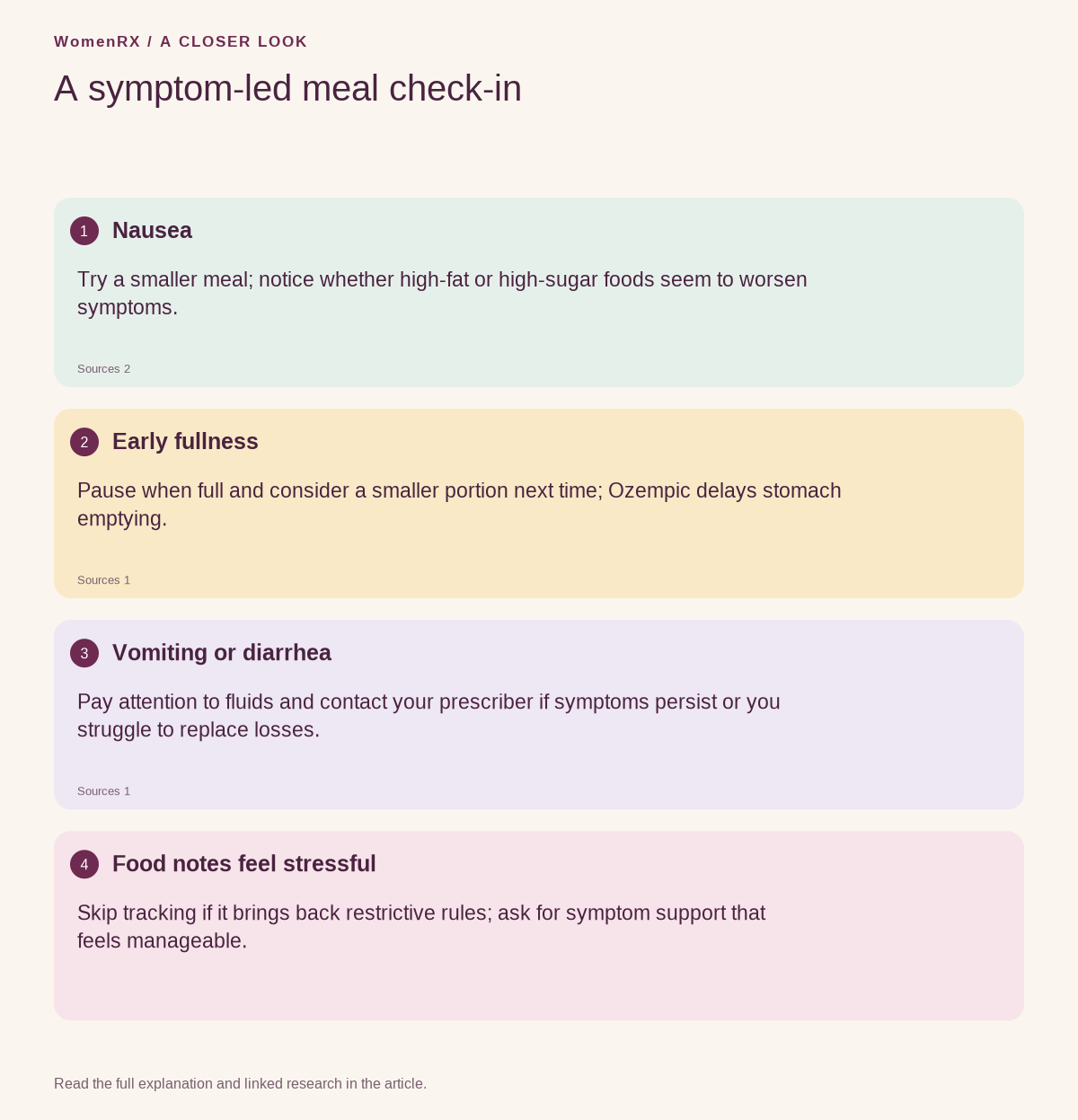
A symptom-led meal check-in
Nausea: Try a smaller meal; notice whether high-fat or high-sugar foods seem to worsen symptoms.2
Early fullness: Pause when full and consider a smaller portion next time; Ozempic delays stomach emptying.1
Vomiting or diarrhea: Pay attention to fluids and contact your prescriber if symptoms persist or you struggle to replace losses.1
Food notes feel stressful: Skip tracking if it brings back restrictive rules; ask for symptom support that feels manageable.
Read the figure as text
Use these prompts to choose a small, practical response to a symptom. They are options, not a diagnostic checklist.- Nausea: Try a smaller meal; notice whether high-fat or high-sugar foods seem to worsen symptoms.2
- Early fullness: Pause when full and consider a smaller portion next time; Ozempic delays stomach emptying.1
- Vomiting or diarrhea: Pay attention to fluids and contact your prescriber if symptoms persist or you struggle to replace losses.1
- Food notes feel stressful: Skip tracking if it brings back restrictive rules; ask for symptom support that feels manageable.
More questions, answered
Do I need to avoid high-fat foods on Ozempic?
Not automatically. A clinical review suggests avoiding high-fat foods as one possible strategy when gastrointestinal symptoms occur, but it doesn’t establish a universal ban. Notice whether they affect your symptoms and adjust only if that helps. 2
What if I’m breastfeeding while taking Ozempic?
The Ozempic prescribing information says it isn’t known whether semaglutide passes into breast milk. It advises discussing the best way to feed your baby with your prescriber. 1
Sources you can check
- OZEMPIC (SEMAGLUTIDE) INJECTION, SOLUTION [A-S MEDICATION SOLUTIONS] | US prescribing information and patient instructionsAccessed 2026-09-25Return to first citation
- GLP1 and GIP Receptor Agonists: Effects on the Gastrointestinal Tract and Management Strategies for Primary Care Physicians.Saha B, Kamalumpundi V, Codipilly DC. · Mayo Clinic proceedings · 2025Return to first citation