Eating During Perimenopause: What Can Food Really Do?
There’s no proven perimenopause diet for hot flashes, but a balanced eating pattern can still support broader health goals.
No single diet is shown in the cited guidance to reliably ease perimenopause symptoms or prevent weight gain. A systematic review of lifestyle trials for perimenopausal symptoms found no studies that tested diet alone, and it did not assess weight-gain prevention. Menopause guidance does not recommend dietary changes or soy foods as hot-flash treatments. General nutrition guidance supports a varied eating pattern, but not as a menopause-specific cure. 3412
Start with the goal, not a menopause diet
Food advice is easier to judge when you separate three different goals: easing symptoms such as hot flashes, managing weight, and supporting long-term health. Evidence for one goal doesn’t automatically apply to the others.
For perimenopause symptoms, the evidence is especially limited. A systematic review of randomized trials focused on perimenopause found no studies that examined a diet-only intervention. The review included exercise, combined lifestyle programs, and education, so its findings can’t tell us whether a specific food or eating pattern reduces symptoms. 4
The North American Menopause Society’s review of nonhormonal treatments does not recommend dietary modification for vasomotor symptoms, such as hot flashes, or soy foods and soy extracts as treatments. That is a judgment about using them to treat symptoms, not a reason to avoid soy as an ordinary food if you enjoy it. The statement’s evidence review concerns menopause-associated symptoms generally; it doesn’t establish a diet that works specifically for people in perimenopause. 3
For weight, don’t confuse the scale with the whole picture
General guidance says good nutrition and physical activity can help with weight loss. The perimenopause symptom review doesn’t answer whether a particular eating plan prevents weight gain during this transition, so it can’t support that conclusion. 24
Weight is only one part of health: it includes muscle, bone, fat, and water, and everyday factors can shift it. BMI also has limits because it doesn’t distinguish fat from muscle or bone. If weight is a goal for you, it may be more useful to consider the reasons behind the goal and your overall health than to treat one scale reading as the answer. 2
There is a nuance around symptoms: the menopause position statement lists weight loss as an option with limited-to-low evidence for vasomotor symptoms. That doesn’t mean weight loss will reliably relieve hot flashes, or that it is the right goal for every woman. It’s not a substitute for a symptom treatment with stronger evidence. 3
For broader health, use a flexible foundation
General nutrition guidance, not a perimenopause-specific trial, supports choosing a variety of foods, including vegetables, fruit, whole grains, beans, and lean protein sources. The aim is a pattern that supplies needed nutrients and fits your preferences, traditions, and budget, rather than a strict set of “menopause foods.” Good nutrition can support health throughout life, including lowering risk of problems such as heart disease and type 2 diabetes, but that general guidance does not promise a particular result for an individual during perimenopause. 1
A practical example: you might build a meal around beans or fish, vegetables, and a whole grain, then adapt the ingredients to what you like and can afford. That’s an example of a varied eating pattern, not a proven hot-flash intervention or a prescribed plan. 1
Perimenopause is a transition, not the same research population as postmenopause. When a recommendation comes from general adult nutrition guidance or studies of menopause symptoms broadly, it’s worth keeping that distinction in view. The useful takeaway is modest: eat in a way that supports your broader health, but don’t feel you have to overhaul your diet to control hormonal changes or treat symptoms that deserve other options.
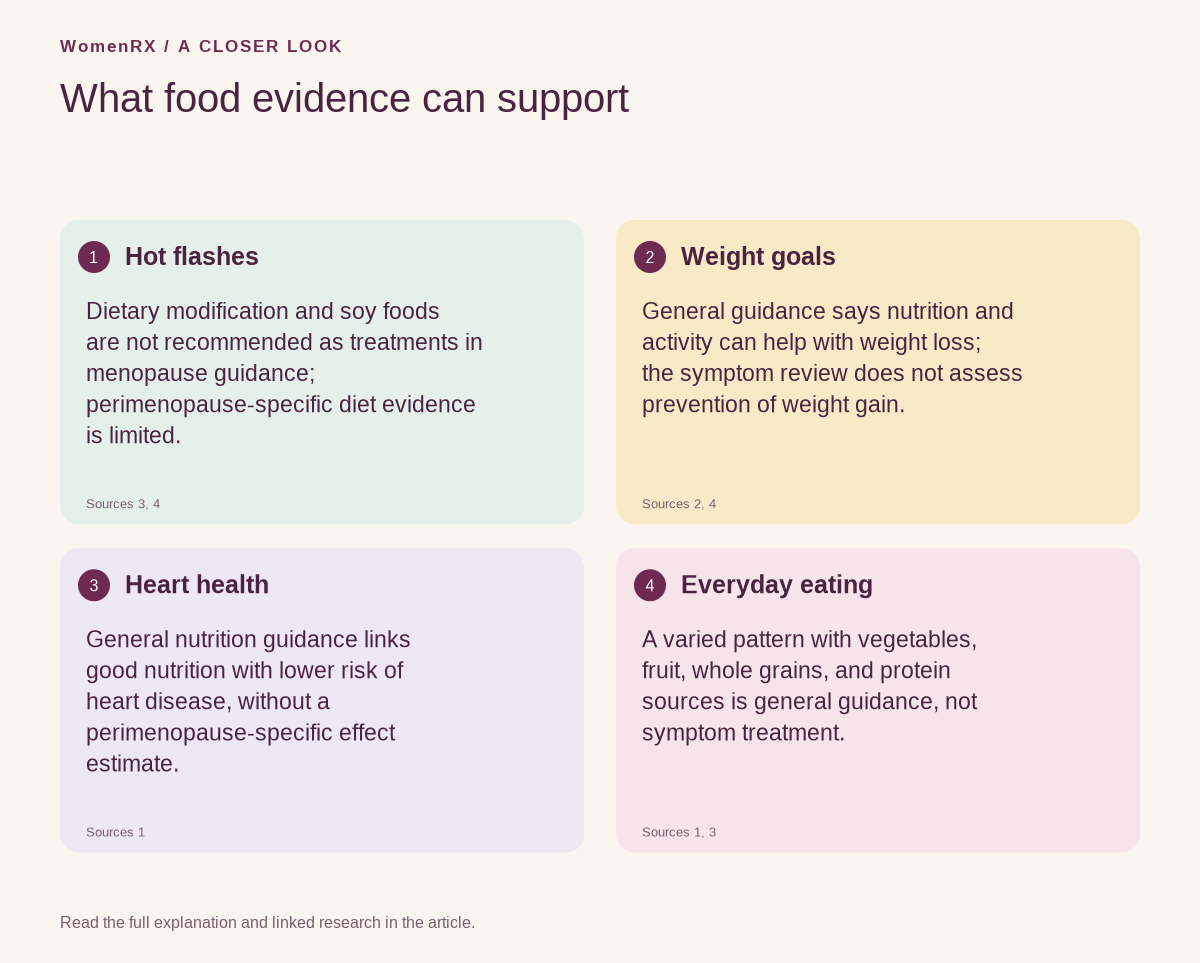
What food evidence can support
Hot flashes: Dietary modification and soy foods are not recommended as treatments in menopause guidance; perimenopause-specific diet evidence is limited.34
Weight goals: General guidance says nutrition and activity can help with weight loss; the symptom review does not assess prevention of weight gain.24
Heart health: General nutrition guidance links good nutrition with lower risk of heart disease, without a perimenopause-specific effect estimate.1
Everyday eating: A varied pattern with vegetables, fruit, whole grains, and protein sources is general guidance, not symptom treatment.13
Read the figure as text
These distinctions keep general nutrition advice separate from claims that a diet treats perimenopause symptoms or prevents weight gain.- Hot flashes: Dietary modification and soy foods are not recommended as treatments in menopause guidance; perimenopause-specific diet evidence is limited.34
- Weight goals: General guidance says nutrition and activity can help with weight loss; the symptom review does not assess prevention of weight gain.24
- Heart health: General nutrition guidance links good nutrition with lower risk of heart disease, without a perimenopause-specific effect estimate.1
- Everyday eating: A varied pattern with vegetables, fruit, whole grains, and protein sources is general guidance, not symptom treatment.13
More questions, answered
Should I avoid soy during perimenopause?
The menopause position statement does not recommend soy foods or soy extracts as hot-flash treatments. That is not a general instruction to avoid soy as a food; general nutrition guidance supports eating a varied diet that fits your preferences. 31
Does a healthy diet prevent perimenopause weight gain?
The perimenopause symptom review does not answer whether a particular diet prevents weight gain during the transition. General guidance says good nutrition and physical activity can help with weight loss, but that is not evidence of a specific preventive effect in perimenopause. 42
Sources you can check
- Nutrition: MedlinePlusAccessed 2026-09-25Return to first citation
- Body Weight: MedlinePlusAccessed 2026-09-25Return to first citation
- The 2023 nonhormone therapy position statement of The North American Menopause Society.Menopause (New York, N.Y.) · 2023Return to first citation
- The Effectiveness of Lifestyle Interventions, Including Exercise, Diet, and Health Education on Symptoms Experienced During Perimenopause: A Systematic Review of Randomized Controlled Trials.McNulty KL, Murphy M, Flynn E, Lane A, Muldoon A, Kealy R, Harrison M, Windle J, Heavey P. · Journal of aging and physical activity · 2026Return to first citation