Dry Skin at Midlife: When to Get It Checked
Moisturizer may help straightforward dryness, but severe itch, a new rash, or symptoms that keep returning deserve a closer look.
If your skin feels dry or mildly itchy without a concerning rash, try regular unperfumed moisturizer and gentler washing. Arrange a medical assessment if itch is severe, affects daily life, spreads across your body, keeps returning, or doesn’t improve with self-care. A new rash, lump, or swelling you’re worried about also deserves attention. Midlife timing alone doesn’t establish menopause as the cause. 34
Start with what has changed
Dryness can show up as roughness, flaking, tightness, or itch. 2 Skin also tends to become drier with age. Itching is common after menopause, but neither finding tells you why your skin has changed. Dry skin, eczema, reactions to cosmetics or other irritants, and several other conditions can all cause itching. 435
The useful first distinction is between skin that mainly feels dry and skin with something new to see or feel, such as a rash, lump, or swelling. You don’t have to name the condition yourself. Notice where it began, whether it’s spreading, and whether the itch is limited to that area or happening all over. Those details can change what needs checking. 35
Give simple dryness a gentler routine
If dryness is the main change and you otherwise feel well, start by reducing irritation: take cool or lukewarm showers, don’t stay in the bath or shower for a long time, and use an unperfumed moisturizer or emollient regularly. If you’re itchy, a cool damp cloth may feel better than scratching. Perfumed soaps and moisturizers, irritating fabrics, and some laundry products can make itchy skin harder to settle. 35
Think about what touches the affected area. For example, if your hands became irritated after a change in soap, or your neck started itching after a new cosmetic product, that exposure is worth noting. Chemicals, cosmetics, and other substances can irritate skin, though timing alone can’t confirm which product is responsible. 5
Moisturizing is a reasonable first step, not a test that rules out other causes. In one small randomized study of adults with dry, sensitive skin on their legs, the leg treated with an emollient had better measured hydration than the untreated leg over 28 days. Most participants were women, but the study didn’t test menopause as a cause of dryness, and it couldn’t show which ingredients made the difference. 2
Know when self-care isn’t enough
Make an appointment if the itch is severe, interrupts daily life, covers much of your body, keeps coming back, or isn’t getting better with self-care. The same applies to a new rash, lump, or swelling that worries you. Itch without an apparent cause that persists for weeks also merits assessment. 35
These patterns matter because itch isn’t always just a moisture problem. Eczema and other skin conditions, fungal skin infections, reactions to medicines or irritants, and parasites are among the possibilities. Less commonly, widespread or persistent itch can be related to thyroid, liver, or kidney problems. An assessment may start with a look at your skin and questions about your symptoms; further testing depends on what those findings suggest. 35
If you’re pregnant, don’t put new itching down to ordinary midlife dryness. Itching in pregnancy is often harmless, but it should be checked because it can sometimes be related to a liver condition. 3
A medicated cream isn’t interchangeable with moisturizer. Treatments for itch depend on its cause, so if a rash persists or you’re considering repeated use of a medicated cream, getting the skin assessed is more useful than continuing to guess. 31
Bring the pattern, not a self-diagnosis
If you seek care, describe the change in practical terms: where it is, whether there’s a visible rash or swelling, when it began, what touches that area, and whether moisturizer or a gentler routine has helped. Mention whether the itch is widespread, keeps returning, or is affecting sleep or daily activities. These details help separate a local skin problem from an itch that may need a broader look. 35
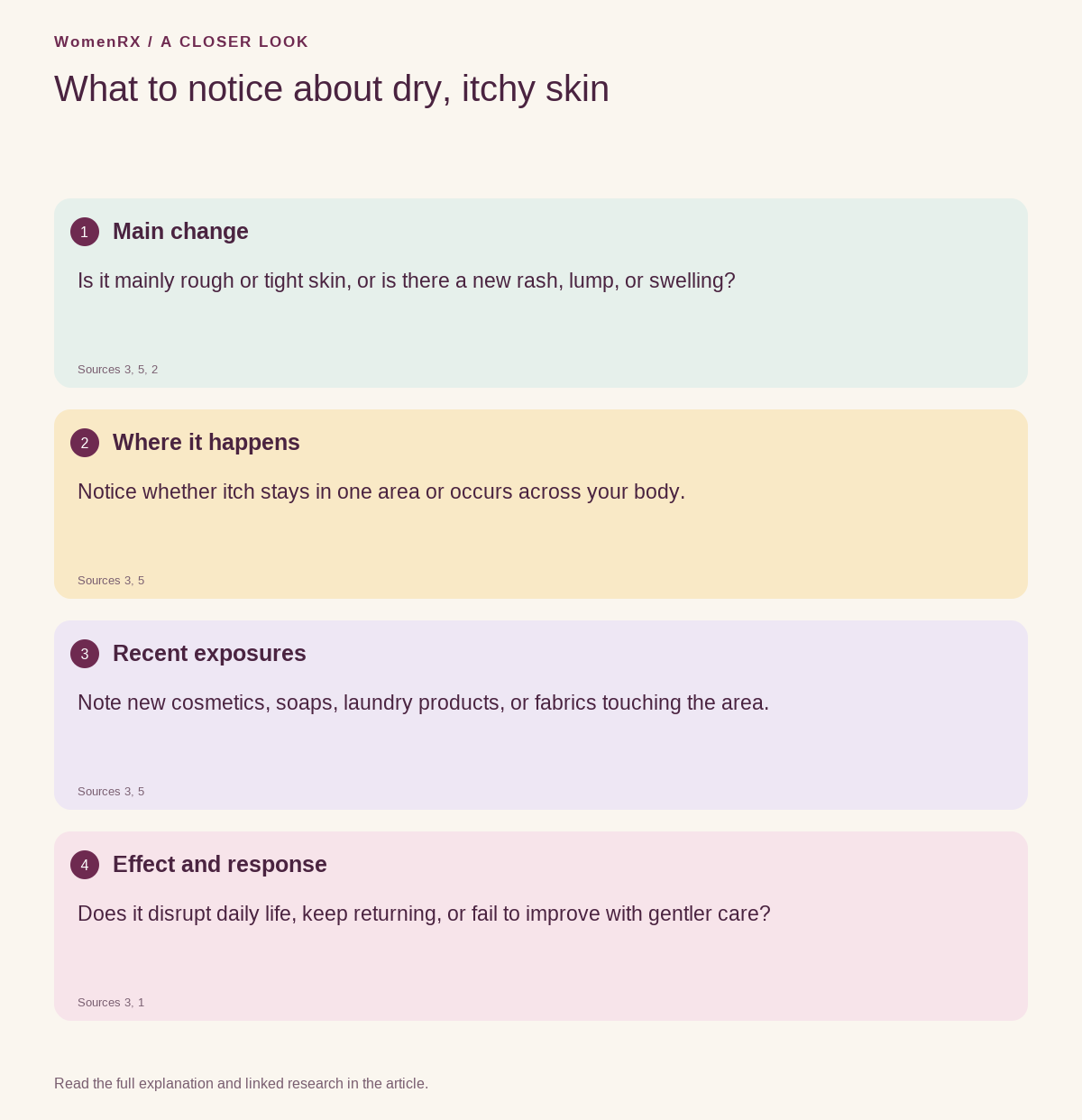
What to notice about dry, itchy skin
Main change: Is it mainly rough or tight skin, or is there a new rash, lump, or swelling?352
Where it happens: Notice whether itch stays in one area or occurs across your body.35
Recent exposures: Note new cosmetics, soaps, laundry products, or fabrics touching the area.35
Effect and response: Does it disrupt daily life, keep returning, or fail to improve with gentler care?31
Read the figure as text
These observations help you decide whether to try gentler care or arrange an assessment. They are not a diagnostic score.- Main change: Is it mainly rough or tight skin, or is there a new rash, lump, or swelling?352
- Where it happens: Notice whether itch stays in one area or occurs across your body.35
- Recent exposures: Note new cosmetics, soaps, laundry products, or fabrics touching the area.35
- Effect and response: Does it disrupt daily life, keep returning, or fail to improve with gentler care?31
More questions, answered
Can dry skin tell me I’m in menopause?
No. Itching can occur after menopause, and dryness can become more noticeable with age, but dry skin alone doesn’t identify menopause or explain a new rash. 34
Sources you can check
- Diagnosis and treatment of pruritus.Nowak DA, Yeung J. · Canadian family physician Medecin de famille canadien · 2017Return to first citation
- Efficacy of a Topical Formulation on Skin Hydration and Barrier Function in Individuals With Xerosis: A 28-Day Randomized, Split-Leg, Untreated-Controlled Trial.Morgado-Carrasco D, Balado-Simó P, Vivancos Cuadras F, Furmanczyk M, Delgado Ojeda J. · Journal of cosmetic dermatology · 2026Return to first citation
- Itchy skin - NHSAccessed 2026-09-25Return to first citation
- Aging Skin | Sunlight | MedlinePlusAccessed 2026-09-25Return to first citation
- Itching | Pruritus | Itchy skin | MedlinePlusAccessed 2026-09-25Return to first citation