Crawling Skin Sensations Around Menopause: What to Check
Itching can occur after menopause, but a crawling or prickling feeling can also have skin, nerve, or medicine-related causes.
A crawling or prickling feeling is a symptom, not a diagnosis of menopause. Check whether the skin looks irritated and whether you also have numbness or tingling, especially in your hands or feet. 236 Gentle skin care may help itching from dryness or irritation. 6 If the feeling persists or worsens without an obvious cause, consider making a medical appointment.
What the sensation can, and can’t, tell you
A crawling feeling might be hard to describe: perhaps it’s itchy, perhaps it feels more like pins and needles, or perhaps both words fit. The description alone won’t identify the cause. Itching is common after menopause, but that finding doesn’t establish that a crawling or prickling sensation is caused by hormonal change. 6
Start with two observations: what the skin looks like and where you feel the sensation. They’re useful details to report, not a test you can use to rule a condition in or out.
When the skin itself may be involved
Look at the area in good light. Dryness, cracking, a rash, or swelling can offer clues about itching. Possible skin-related causes include irritation, eczema, reactions to heat or allergens, fungal infections, and insect or parasite exposure. Visible changes alone don’t establish the cause. 6
If the area is dry or itchy, try a cool, damp cloth, a cool or lukewarm shower, and an unperfumed moisturizer. Avoiding perfumed products and scratching may also help irritated skin. These are ways to ease itching, not treatments for nerve symptoms. Arrange a medical visit if itching is severe, affects daily life, keeps returning or doesn’t improve with self-care, is widespread, or comes with a new rash, lump, or swelling that concerns you. 6
A crawling feeling on the vulva calls for particular care with assumptions. A review of vulvar pain includes formication among possible unpleasant vulvar sensations and explains that chronic vulvar symptoms may occur with or without visible skin disease. That vulvar-specific finding doesn’t explain a crawling feeling elsewhere on the body. 5
When the pattern points toward a nerve assessment
Nerves carry messages about touch, pain, and temperature. When peripheral sensory nerves are affected, symptoms can include pins and needles, numbness, burning or sharp pain, and reduced ability to feel temperature, often in the feet or hands. A sensation in a particular set of fingers can have a different pattern: for example, a compressed nerve at the wrist can cause finger tingling, pain, or numbness. Neither pattern can be diagnosed from sensation alone. 3
If you have numbness or tingling in your feet or hands, arrange an assessment rather than attributing it to menopause. A foot cut or ulcer that isn’t healing also needs assessment. Mention any trouble lifting the front of your foot when walking, since weakness can occur with neuropathy too. 23
If an unexplained crawling or prickling feeling persists or gets worse, consider making a medical appointment even without a rash or other nerve symptoms. That’s a cautious next step, not a sign that you have neuropathy. You don’t need to decide whether it’s coming from your skin or nerves before seeking care. A clinician can ask about the pattern and examine you to help decide what, if anything, to investigate next. 2
There are reasons to look beyond menopause if nerve symptoms are present. Diabetes, low vitamin B12, an underactive thyroid, nerve injury, substantial long-term alcohol use, and some medicines are among the possible causes of peripheral neuropathy. A clinician may ask about the pattern and arrange tests to investigate an underlying cause; treatment depends on what is found. 124
Bring the pattern, not a self-diagnosis
If you’re seeking care, a few concrete details can make the description more useful. Note whether the feeling is in one spot or both hands or feet; whether it comes with itching, a visible change, numbness, pain, or weakness; and when you first noticed it. Also note when episodes happen, how long they last, and whether they recur. If a rash appears, a photo can help show what you saw. These observations help explain the symptom but don’t sort skin and nerve causes with certainty. 63
Include medicines and when you started or changed them. Some chemotherapy medicines and, in certain circumstances, medicines such as metronidazole, nitrofurantoin, phenytoin, and amiodarone can be associated with peripheral neuropathy. That doesn’t mean a medicine is responsible in your case or that you should stop it yourself. It gives your care team a relevant possibility to check. 1
There isn’t one remedy for every crawling sensation. Moisturizer may help dry, itchy skin; treating an identified underlying condition may help some forms of neuropathy. Gabapentin is among the prescription medicines used for nerve pain, but its role there doesn’t make it a treatment for an unexplained crawling feeling. The useful next step is to match the response to the symptoms and their cause. 64
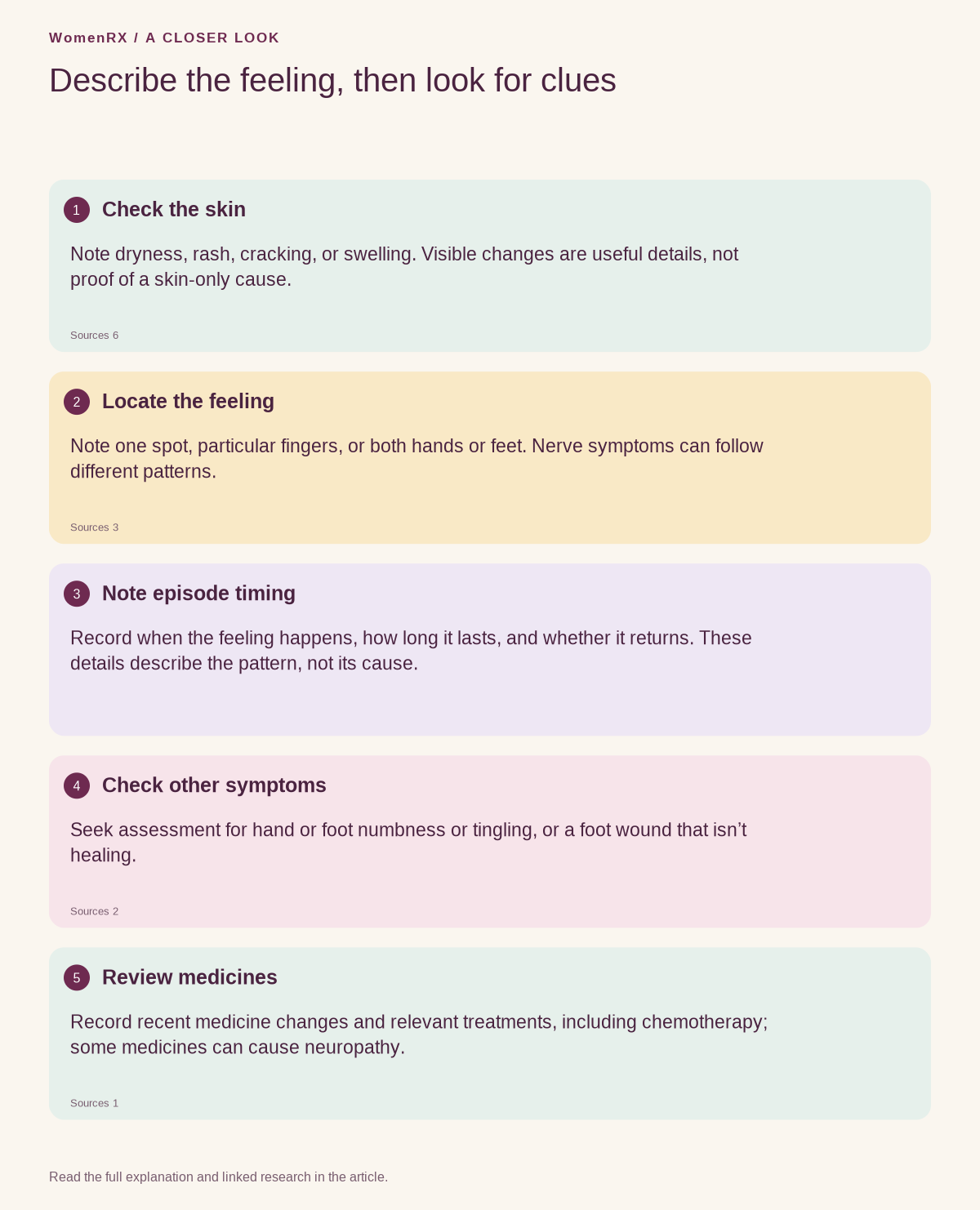
Describe the feeling, then look for clues
Check the skin: Note dryness, rash, cracking, or swelling. Visible changes are useful details, not proof of a skin-only cause.6
Locate the feeling: Note one spot, particular fingers, or both hands or feet. Nerve symptoms can follow different patterns.3
Note episode timing: Record when the feeling happens, how long it lasts, and whether it returns. These details describe the pattern, not its cause.
Check other symptoms: Seek assessment for hand or foot numbness or tingling, or a foot wound that isn’t healing.2
Review medicines: Record recent medicine changes and relevant treatments, including chemotherapy; some medicines can cause neuropathy.1
Read the figure as text
Use these observations to describe what’s happening and decide when to seek an assessment. They cannot diagnose the cause.- Check the skin: Note dryness, rash, cracking, or swelling. Visible changes are useful details, not proof of a skin-only cause.6
- Locate the feeling: Note one spot, particular fingers, or both hands or feet. Nerve symptoms can follow different patterns.3
- Note episode timing: Record when the feeling happens, how long it lasts, and whether it returns. These details describe the pattern, not its cause.
- Check other symptoms: Seek assessment for hand or foot numbness or tingling, or a foot wound that isn’t healing.2
- Review medicines: Record recent medicine changes and relevant treatments, including chemotherapy; some medicines can cause neuropathy.1
Sources you can check
- Peripheral neuropathy - Causes - NHSAccessed 2026-09-25Return to first citation
- Peripheral neuropathy - NHSAccessed 2026-09-25Return to first citation
- Peripheral neuropathy - Symptoms - NHSAccessed 2026-09-25Return to first citation
- Peripheral neuropathy - Treatment - NHSAccessed 2026-09-25Return to first citation
- Management of vulvar pain.Fischer G. · Dermatologic therapy · 2004Return to first citation
- Itchy skin - NHSAccessed 2026-09-25Return to first citation