Dry Eyes: When to Get an Eye-Care Assessment
Dryness that lasts for weeks deserves an assessment, while sudden sight changes or light-sensitive pain call for immediate eye care.
If dry, gritty, or irritated eyes continue after a few weeks of home care, arrange a routine eye-care assessment. Seek urgent care for a painful red eye or a red eye when you wear contact lenses. Get immediate care for sudden sight changes, pain with light, an eye injury, a very dark-red eye, or a red eye with severe headache and nausea. 23
First, sort out the urgency
Dry-eye symptoms are common and often aren’t serious. They can happen when your eyes don’t make enough tears or when tears dry up too quickly. Tears help keep the eye surface moist, which matters for vision. 12
Use the warning signs, not the word “dry,” to decide what to do next:
- Get immediate care for a sudden change in sight, such as loss of vision, flashing or wavy lines, or double vision. Pain when looking at light, an eye injury, a very dark-red eye, or a red eye with severe headache and nausea also needs immediate attention. 23
- Seek urgent assessment if your eye is both painful and red, or if you have a red eye and wear contact lenses. Redness by itself isn’t the same as these warning-sign combinations. 2
- Make a routine appointment if symptoms persist after a few weeks of home care, or if the shape of your eyelid changes. An eye-care professional can check for a cause and recommend treatment. 2
If your vision changes suddenly, don’t wait to see whether treating dryness helps. 23
What to make of dry eyes in midlife
The NHS guidance lists being over 50 as one factor that can make dry eyes more likely. That does not identify the cause of any one woman’s symptoms or establish that menopause or an estrogen change caused them. Tears can be too few or dry up too quickly, so persistent symptoms are worth assessing rather than explaining by timing alone. 12
Long stretches of screen use can also contribute to dryness because people may blink less while looking at screens. Taking a screen break is one practical step; MedlinePlus describes looking about 20 feet away for 20 seconds every 20 minutes. 3
If you think a prescribed medicine may be contributing, don’t stop it on your own. Ask the prescriber or an eye-care professional about it. 2
Make a routine visit more useful
Before an assessment, jot down a few observations. This is not a diagnostic test, but it can help you describe what’s happening:
- When the dryness or irritation began, and whether it’s getting better, worse, or staying about the same.
- Whether it affects one eye or both, and what the sensation is like, such as gritty, itchy, or irritated.
- Whether it seems connected to screen time or contact lens use.
- Any changes in sight, pain, light sensitivity, redness, or eyelid shape.
- Any eye drops or medicines you use, and when symptoms occur in relation to them.
For symptoms that persist after a few weeks of home care, bring those notes to a routine eye-care visit. For sudden vision changes, painful redness, light-sensitive pain, or a very dark-red eye, use the urgency guidance above instead of waiting for a routine appointment. 23
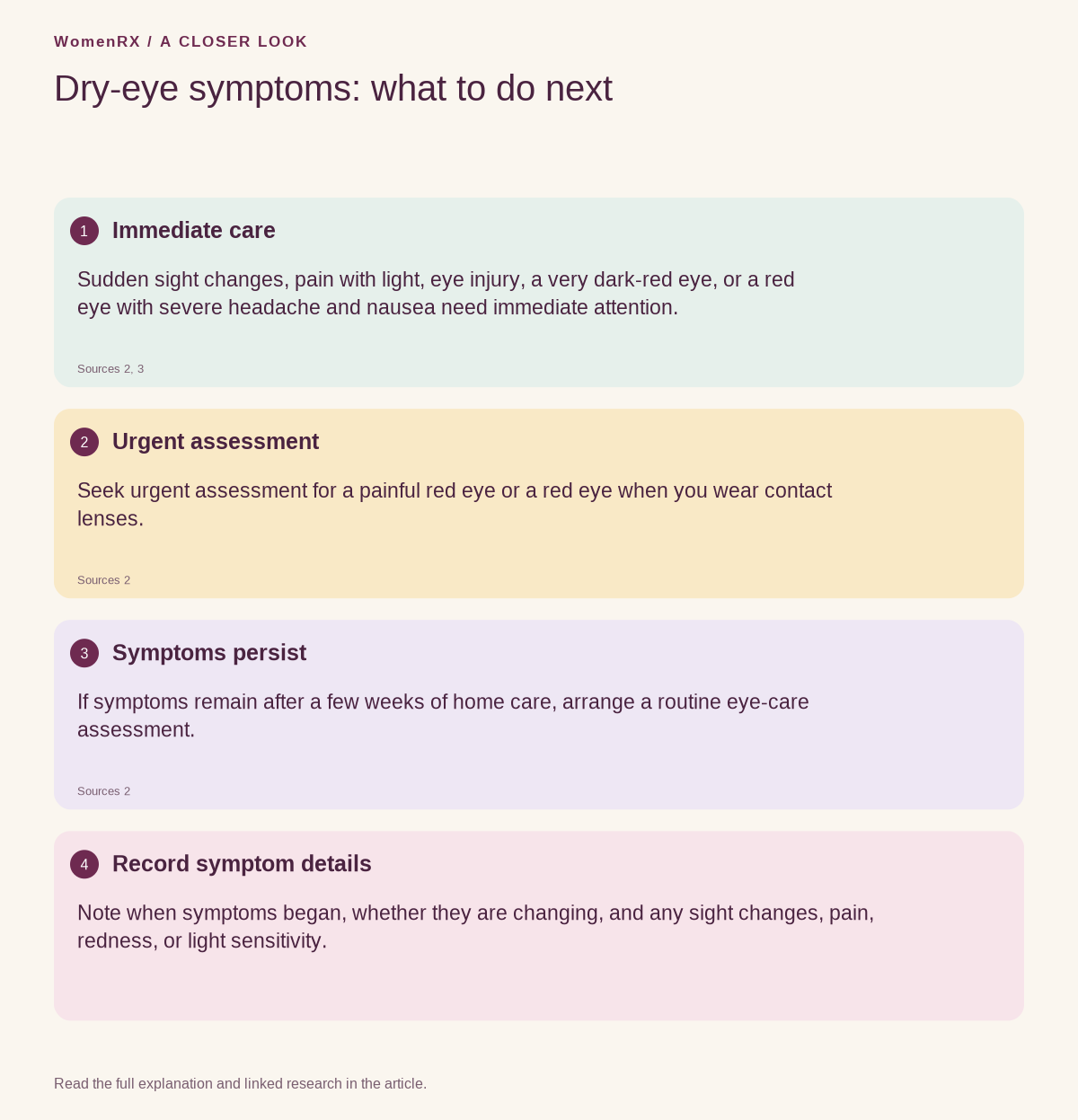
Dry-eye symptoms: what to do next
Immediate care: Sudden sight changes, pain with light, eye injury, a very dark-red eye, or a red eye with severe headache and nausea need immediate attention.23
Urgent assessment: Seek urgent assessment for a painful red eye or a red eye when you wear contact lenses.2
Symptoms persist: If symptoms remain after a few weeks of home care, arrange a routine eye-care assessment.2
Record symptom details: Note when symptoms began, whether they are changing, and any sight changes, pain, redness, or light sensitivity.
Read the figure as text
Use the accompanying signs and symptom duration to choose immediate, urgent, or routine eye-care assessment.- Immediate care: Sudden sight changes, pain with light, eye injury, a very dark-red eye, or a red eye with severe headache and nausea need immediate attention.23
- Urgent assessment: Seek urgent assessment for a painful red eye or a red eye when you wear contact lenses.2
- Symptoms persist: If symptoms remain after a few weeks of home care, arrange a routine eye-care assessment.2
- Record symptom details: Note when symptoms began, whether they are changing, and any sight changes, pain, redness, or light sensitivity.
More questions, answered
Should I stop wearing contact lenses if my eye is red?
Yes. Take out your contact lenses and wear glasses instead. A red eye when you wear contacts needs urgent assessment; don’t treat it as ordinary dryness and wait for it to pass. 2
Sources you can check
- Tears | Dry Eye | MedlinePlusAccessed 2026-09-25Return to first citation
- Dry eyes - NHSAccessed 2026-09-25Return to first citation
- Eye Care | Vision Care | MedlinePlusAccessed 2026-09-25Return to first citation