Dry Eyes Around Menopause: What Helps and When to Get Care
Gritty or burning eyes can improve with simple care, but pain, a red eye, or a sudden vision change calls for more than home remedies.
Dry eye can happen when tears are scarce or evaporate quickly. Menopause may be one factor, not the only cause. 2 4 Try lubricating drops, gentle eyelid care, and screen breaks. Arrange an eye exam if symptoms persist for a few weeks. A painful red eye, or a red eye in a contact-lens wearer even without pain, needs urgent assessment. Vision changes, light sensitivity, or eye injury need emergency assessment. 2 3
Why dry eyes can feel gritty, burn, or water
Your tears do more than appear when you cry. They keep the eye’s surface moist, and problems with the tear system can mean too few tears or too many. Dry-eye symptoms can include soreness, grittiness, itching, and blurry vision; watery eyes can occur too. 1 2
A useful way to think about dry eye is that the surface may not stay comfortably lubricated because tear production is low or tears dry up quickly. Eyelid oil glands matter as well: warming the area around the lids can make their oil less thick and easier to release. 2
Screens can add to discomfort. People often blink less while looking at a screen, which can leave eyes feeling dry and tired. A short, regular look-away break is a practical place to start. 3
What menopause research does, and doesn’t, tell us
There is a plausible connection between hormones and the tear film: a review describes sex hormones as influencing tear-film components. But dry eye is multifactorial, and that explanation does not show that hormonal changes are the sole cause or that hormone therapy will relieve symptoms. 5
In a cross-sectional comparison, postmenopausal women had more dry-eye symptoms and signs on average than age-matched men and younger women. Because the study measured people at one point in time, it can show an association, not that menopause caused the differences. 4
So menopause can be part of the picture, but it’s still worth considering other contributors, including screen habits, eyelid changes, and health conditions. An eye examination can help assess what is going on at the surface of your eye rather than assuming hormones explain everything. 2 4
A practical first try
- Use lubricating eye drops. Drops, gels, and ointments are among the options used for dry eyes. A pharmacist can help you compare available products; an eye-care professional can advise if symptoms continue or you’re unsure what fits your situation. 2
- Try gentle warmth on the lids. Wet a clean cloth with warm, not hot, water and gently hold it over the closed-eye area. Gentle lid massage may help release oil from the glands around the eyelids. 2
- Build in screen breaks. Every 20 minutes, look away from the screen at something about 20 feet away for 20 seconds. This is a simple way to interrupt long stretches of screen time, when blinking may decrease. 3
- If you wear contacts, give your eyes a rest when they feel irritated. Wear glasses instead, and don’t ignore a red eye while wearing contact lenses. 2
These steps may ease discomfort, but they don’t identify every cause. If symptoms remain after trying home care for a few weeks, arrange an eye examination. 2
When to stop home care and get assessed
A routine eye appointment is a sensible next step when dryness does not improve after a few weeks of home care or you notice a change in the shape of your eyelids. 2
Get urgent assessment for an eye that is both red and painful. A red eye in a contact-lens wearer needs urgent assessment even if it doesn’t hurt. 2
Seek emergency assessment now for a change in sight, pain when looking at light, an injured or pierced eye, a very dark-red eye, or a red eye with a severe headache and nausea. Sudden vision loss, double vision, flashes, black spots, halos, or blurred vision accompanied by eye pain also warrant assessment right away. 2 3
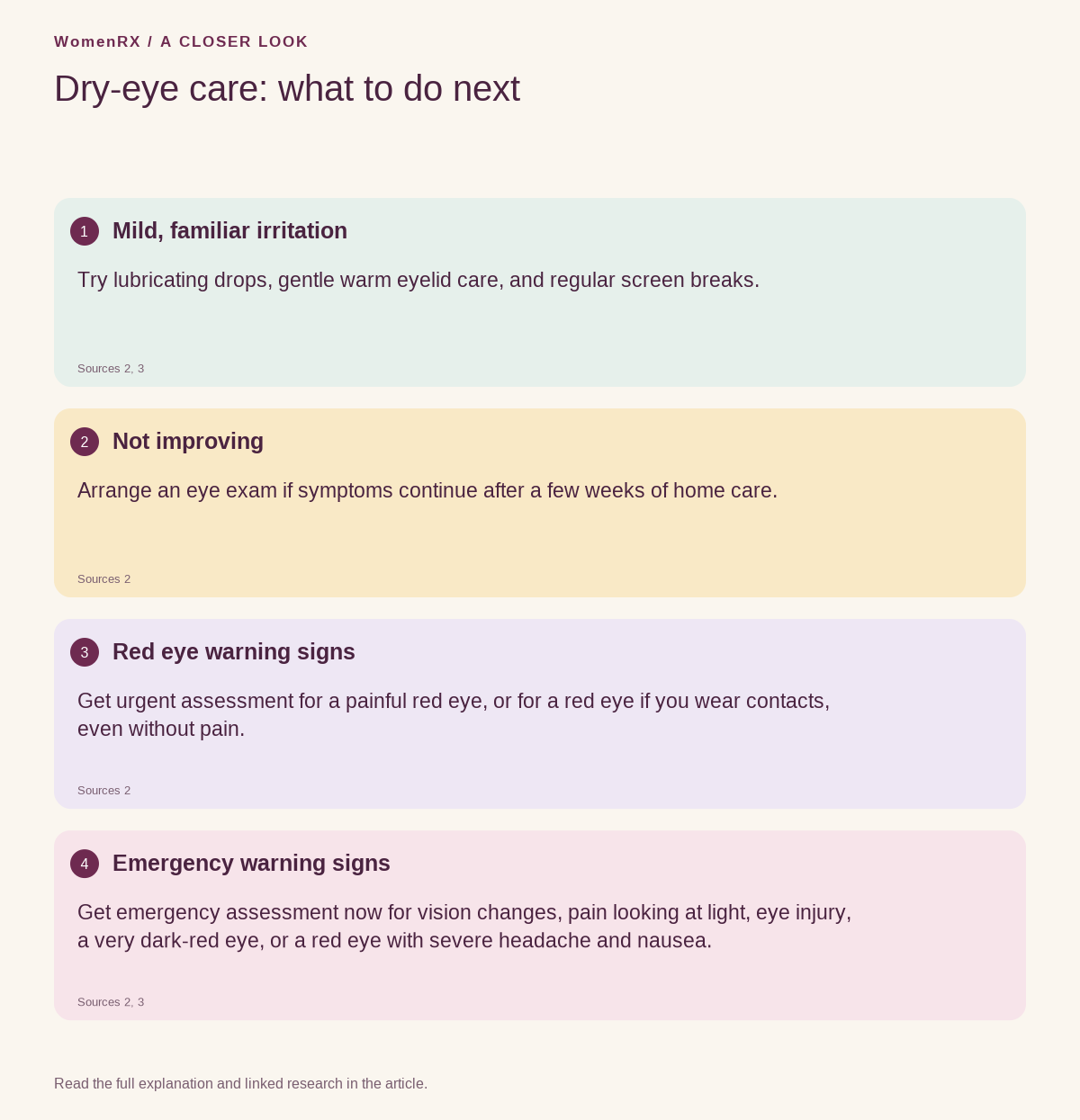
Dry-eye care: what to do next
Mild, familiar irritation: Try lubricating drops, gentle warm eyelid care, and regular screen breaks.23
Not improving: Arrange an eye exam if symptoms continue after a few weeks of home care.2
Red eye warning signs: Get urgent assessment for a painful red eye, or for a red eye if you wear contacts, even without pain.2
Emergency warning signs: Get emergency assessment now for vision changes, pain looking at light, eye injury, a very dark-red eye, or a red eye with severe headache and nausea.23
Read the figure as text
Use the symptom pattern to choose between a home-care trial, a routine eye exam, and urgent or emergency assessment.- Mild, familiar irritation: Try lubricating drops, gentle warm eyelid care, and regular screen breaks.23
- Not improving: Arrange an eye exam if symptoms continue after a few weeks of home care.2
- Red eye warning signs: Get urgent assessment for a painful red eye, or for a red eye if you wear contacts, even without pain.2
- Emergency warning signs: Get emergency assessment now for vision changes, pain looking at light, eye injury, a very dark-red eye, or a red eye with severe headache and nausea.23
More questions, answered
Can watery eyes still be a sign of dry eye?
Yes. Dry-eye symptoms can include eyes that water more than usual, and tear-system problems can involve too few or too many tears. Watery eyes alone don’t tell you which problem is present. 1 2
Should I use hormone therapy for dry eyes?
The hormone connection is plausible, but this evidence doesn’t establish hormone therapy as a treatment for dry eye. Don’t assume that treating menopause symptoms will resolve eye symptoms; persistent or concerning eye problems deserve their own assessment. 4 5
Sources you can check
- Tears | Dry Eye | MedlinePlusAccessed 2026-09-25Return to first citation
- Dry eyes - NHSAccessed 2026-09-25Return to first citation
- Eye Care | Vision Care | MedlinePlusAccessed 2026-09-25Return to first citation
- Impact of menopause on dry eye disease: a cross-sectional comparative study.Pandey H, Kumar R. · Post reproductive health · 2026Return to first citation
- Dry Eye Syndrome in Menopause and Perimenopausal Age Group.Peck T, Olsakovsky L, Aggarwal S. · Journal of mid-life health · 2017Return to first citation