Dry Eyes in Perimenopause: Patterns to Discuss at Your Eye Exam
Dry eyes during perimenopause are worth paying attention to, but timing alone won’t tell you what’s causing them.
Yes, you can have dry eyes during perimenopause, but that timing doesn’t prove hormones are the cause. Dry eye can happen when you make too few tears or they dry up too quickly. Note symptoms alongside contact-lens wear, screen time, surroundings, and medicines. Arrange an eye-care visit if dryness persists; a painful red eye, red eye with contacts, light sensitivity, or changing vision needs prompt assessment. 124
What the timing can and can’t tell you
Dry eye can happen when your eyes don’t make enough tears or tears dry up too quickly. Your eyes might itch or water more than usual, even though they feel dry. Contact lenses, long stretches at a screen without a break, and heated or air-conditioned air can make dry eyes more likely. So can certain conditions, including blepharitis and Sjögren’s syndrome. 1
If symptoms start during perimenopause, mention that timing at an eye-care visit. But don’t assume a hormone change explains them. Looking at what happens throughout your day may reveal something more useful for deciding what to try or what to have checked.
Make a few notes that help explain the pattern
You don’t need an elaborate diary. When dryness bothers you, jot down:
- What you notice: Dryness, itching, or extra watering, and whether it’s in one eye or both. Watery eyes can still be a dry-eye symptom. 1
- What you were doing: For example, did it start after a long video meeting or while wearing contacts? Note screen stretches and contact-lens wear because both can matter. 1
- What the air was like: A heated office or air-conditioned room may be part of the pattern. 1
- What medicines you use: Bring a list of prescription and over-the-counter medicines, including recent changes, to your visit. If you suspect a prescription is contributing, don’t stop it on your own. 1
These notes can help you describe the problem. They aren’t a test for dry eye or for a hormonal cause. Leave new vision changes, significant light sensitivity, and a painful red eye out of the “watch and track” category; those need prompt assessment. 124
What you can try, and when to book a visit
For mild dryness, take breaks during extended screen use, keep your screen just below eye level, and consider a humidifier if indoor air is dry. Cleaning your eyelids daily is another suggested self-care step. 1
If your eyes are still dry after a few weeks of home care, arrange a routine eye-care visit. An eye-care professional can look for a cause and recommend treatment. A change in the shape of an eyelid also merits an appointment rather than more self-care. 1
Symptoms that shouldn’t wait
Seek urgent eye care for an eye that is both painful and red, or for a red eye if you wear contact lenses. Contact-lens-related redness can signal an infection that needs timely evaluation. 13
New loss of vision, a rapid vision change, or marked light sensitivity also calls for prompt eye assessment, especially with a red eye. Reduced vision and light sensitivity are warning features in red-eye guidance, and both were associated with higher-acuity presentations in an adult eye-emergency triage study. Those findings help explain why these symptoms shouldn’t be treated as ordinary dryness to track at home. 24
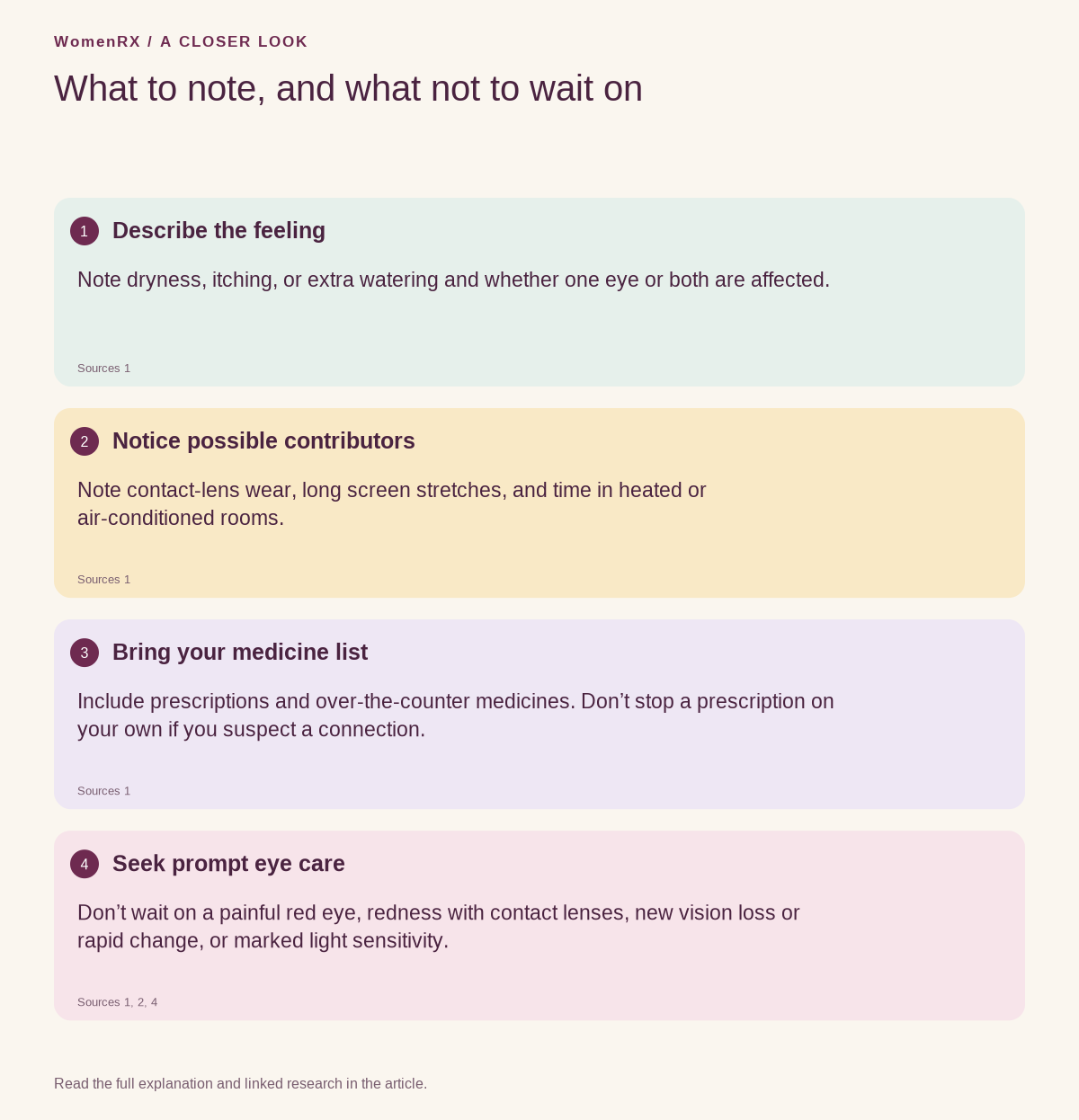
What to note, and what not to wait on
Describe the feeling: Note dryness, itching, or extra watering and whether one eye or both are affected.1
Notice possible contributors: Note contact-lens wear, long screen stretches, and time in heated or air-conditioned rooms.1
Bring your medicine list: Include prescriptions and over-the-counter medicines. Don’t stop a prescription on your own if you suspect a connection.1
Seek prompt eye care: Don’t wait on a painful red eye, redness with contact lenses, new vision loss or rapid change, or marked light sensitivity.124
Read the figure as text
Use the first three prompts to describe a dry-eye pattern. The last identifies symptoms that call for prompt assessment, not more tracking.- Describe the feeling: Note dryness, itching, or extra watering and whether one eye or both are affected.1
- Notice possible contributors: Note contact-lens wear, long screen stretches, and time in heated or air-conditioned rooms.1
- Bring your medicine list: Include prescriptions and over-the-counter medicines. Don’t stop a prescription on your own if you suspect a connection.1
- Seek prompt eye care: Don’t wait on a painful red eye, redness with contact lenses, new vision loss or rapid change, or marked light sensitivity.124
More questions, answered
Can dry eyes make your eyes water?
Yes. Extra watering can be a symptom of dry eyes, so it doesn’t rule dryness out. 1
Sources you can check
- Dry eyes - NHSAccessed 2026-09-25Return to first citation
- [Summary of the practice guideline 'The red eye' (first revision) of the Dutch College of General Practitioners (NHG)].van der Weele GM, Rietveld RP, Wiersma T, Goudswaard AN. · Nederlands tijdschrift voor geneeskunde · 2007Return to first citation
- Acute red eye in contact lens users: Clinical pearls for frontline clinicians.Ghalibafan S, Ferguson R, Ufongene C, Selvam A, Saperstein M, Sabater AL, Chaudhary S, Saeed HN, Djalilian AR. · The American journal of medicine · 2026Return to first citation
- Enhancing Ophthalmic Triage: identification of new clinical features to support healthcare professionals in triage.Jindal A, Brandao-de-Resende C, Neo YN, Melo M, Day AC. · Eye (London, England) · 2024Return to first citation