Does Betaine HCl Affect Your Weight?
A small human study reports a change in stomach acidity, with no reported body-weight results.
There’s no demonstrated weight-loss or weight-gain effect from betaine HCl in the human research discussed here. The reported findings from a nine-person study concern stomach acidity after a meal, not weight or digestive symptom relief. That leaves an important distinction: changing stomach pH is not evidence that a supplement changes what the scale shows.4

If you’re considering betaine HCl for digestion, it’s reasonable to wonder whether taking it could also change your weight. This human study addresses a narrower question: what happened to stomach acidity shortly after people ate.4
What the human study actually measured
In a small, open-label crossover study, nine people received betaine HCl under different meal-related conditions. Food raised their stomach pH, meaning the stomach contents became less acidic. One of the amounts tested brought pH back toward its pre-meal level sooner than it returned without the supplement. Across the study conditions, however, the overall pH measurements were not statistically different.4
The reported findings address stomach pH; they give no results on body weight, eating patterns, digestive symptoms, or women separately.4 So the study shows that betaine HCl can affect a short-term stomach measurement under the conditions tested. The reported pH results cannot tell you whether taking it for digestion will change your weight or help you feel better after meals.
That distinction matters because a proposed chain of events can sound like a proven outcome: more stomach acid, better digestion, different nutrient absorption, then weight change. Measuring the first step does not establish the later ones. Concerns about inadequate digestion and absorption have been discussed, but that does not establish a weight effect from betaine HCl.3
Why a weight result in chickens doesn’t answer your question
A separate experiment measured body weight while studying betaine HCl, but its participants were broiler chickens receiving it in their feed. At the end of the study, the chickens fed betaine HCl did not differ in body weight from the control group. Chickens fed a different form, natural betaine, had higher body weight than the other groups.5
That comparison is useful for spotting a misleading shortcut, not for predicting your result. It studied poultry feed and growth, not women taking a supplement for digestion. The natural betaine result also shouldn’t be presented as a weight effect of betaine HCl.5
If the number on the scale changes
A change that happens while you’re taking a supplement isn’t necessarily caused by it. Scale weight includes water, muscle, bone, and fat, and day-to-day factors such as diet can affect it.2 For example, feeling less bloated after a meal and losing body fat would be different experiences, even if both make you pay closer attention to your waist or the scale. The reported findings from the human betaine HCl study address neither outcome.4
If you keep losing weight without trying or without changing how you eat or exercise, don’t assume the supplement explains it. Digestive conditions, appetite changes, thyroid conditions, and medicines are among the possible causes of unintended weight loss; persistent unexplained loss deserves a medical assessment.1 An unexpected weight gain is also worth discussing with a US healthcare professional, particularly if it persists, rather than attributing it to betaine HCl without evidence.2
For the decision in front of you, keep the goals separate. The human finding about stomach pH does not establish digestive symptom relief, and neither it nor the chicken study establishes a weight benefit or risk for women.45
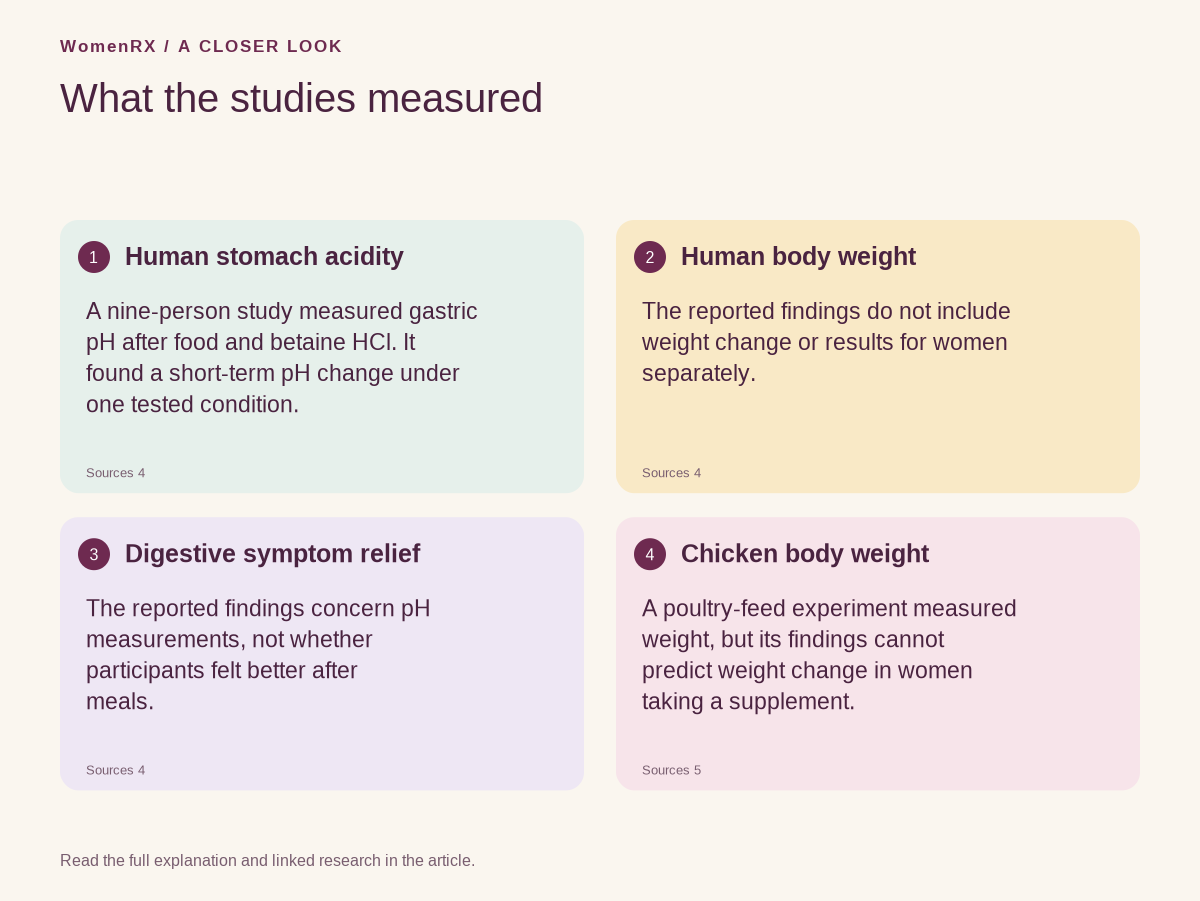
What the studies measured
Human stomach acidity: A nine-person study measured gastric pH after food and betaine HCl. It found a short-term pH change under one tested condition.4
Human body weight: The reported findings do not include weight change or results for women separately.4
Digestive symptom relief: The reported findings concern pH measurements, not whether participants felt better after meals.4
Chicken body weight: A poultry-feed experiment measured weight, but its findings cannot predict weight change in women taking a supplement.5
Read the figure as text
These findings answer different questions. A human betaine HCl study reports stomach pH findings but no weight results.- Human stomach acidity: A nine-person study measured gastric pH after food and betaine HCl. It found a short-term pH change under one tested condition.4
- Human body weight: The reported findings do not include weight change or results for women separately.4
- Digestive symptom relief: The reported findings concern pH measurements, not whether participants felt better after meals.4
- Chicken body weight: A poultry-feed experiment measured weight, but its findings cannot predict weight change in women taking a supplement.5
Sources you can check
- Unintentional weight loss - NHSAccessed 2026-09-25Return to first citation
- Body Weight: MedlinePlusAccessed 2026-09-25Return to first citation
- Meal-Time Supplementation with Betaine HCl for Functional Hypochlorhydria: What is the Evidence?Guilliams TG, Drake LE. · Integrative medicine (Encinitas, Calif.) · 2020Return to first citation
- Food, Acid Supplementation and Drug Absorption - a Complicated Gastric Mix: a Randomized Control Trial.Surofchy DD, Frassetto LA, Benet LZ. · Pharmaceutical research · 2019Return to first citation
- Comparing effects of natural betaine and betaine hydrochloride on gut physiology in broiler chickens.Awad WA, Ruhnau D, Gavrău A, Dublecz K, Hess M. · Poultry science · 2022Return to first citation