Depression in Perimenopause: When to Seek Help and What to Discuss
Low mood can have more than one cause during the menopause transition, and symptoms that persist or disrupt daily life deserve attention.
A few difficult days don’t necessarily mean depression. But low mood or loss of interest most of the day, nearly every day, for at least two weeks, especially when it affects daily life, is a reason to seek an assessment. Perimenopause may be part of the picture, but it isn’t the only possible cause. If you might harm yourself or can’t stay safe, get urgent help now. 1

A short spell of irritability or sadness can happen for many reasons. Depression is different from a passing mood change: symptoms such as low mood or loss of interest persist, and can make everyday activities harder. During perimenopause, it can be tempting to attribute every mood change to hormones. You don’t have to decide the cause before asking for help.
When low mood deserves an assessment
A common pattern used to assess major depression is a depressed mood or loss of interest that occurs most of the day, nearly every day, for at least two weeks. Other changes can include appetite, sleep, mood, or thoughts of death or suicide. The time period is a useful guide, not a reason to wait if symptoms feel severe or are worsening. 1
Consider how the symptoms affect your life, too. Maybe it’s become hard to work, manage usual responsibilities, enjoy time with people, or keep up with basic routines. You don’t need to meet a checklist on your own to deserve support. A clinician can ask about the pattern, your history, and what has changed.
Perimenopause can be context, not the whole explanation
Mood symptoms can arise during the menopause transition, but that doesn’t mean depression is inevitable or that changing hormones are the sole cause. Depression can have biological, psychological, environmental, and genetic contributors. Some medicines and health conditions, including thyroid disorders, can also cause symptoms that resemble depression. 1
A history of depression, including earlier episodes or depression around menstrual cycles, is worth mentioning. So are changes in your periods, sleep, hot flashes, or other symptoms that seem to occur alongside mood changes. These details can help frame the conversation; they don’t prove that hormones caused the depression. Research reviews discuss a possible role for estrogen, while also describing uncertainty about how it affects mood. 3
Make a short, useful note before the visit
You don’t need a perfect diary. A few examples can make it easier to describe what’s happening:
- Duration: When did the change begin? Is it present most days, and has it lasted two weeks or longer?
- Daily impact: What has become harder at home, at work, or in relationships? Has sleep or appetite changed?
- Cycle and other symptoms: Have your periods changed? Do mood symptoms seem to follow a cycle or coincide with hot flashes or sleep disruption?
- History and context: Have you experienced depression before, including around your menstrual cycle? Note relevant health conditions, medicines, or recent changes.
- Safety: Have you had thoughts of suicide or harming yourself? If you might act on those thoughts or can’t stay safe, tell someone nearby and seek urgent help now. Thoughts of suicide are among the symptoms of depression. 1
These notes are conversation prompts, not a diagnostic test. If you’re in immediate danger, don’t wait to complete them.
What treatment conversations can include
An assessment may include questions about symptoms and personal or family history. Depending on your situation, a clinician may also consider whether a health condition or medicine could be contributing. 1
Psychotherapy and antidepressant medicines are common treatment approaches for depression; the right options depend on your symptoms, history, preferences, and health. 1 If you’re also dealing with bothersome menopause symptoms, ask how those should be addressed alongside your mood. A menopause position statement identifies hormone therapy as an effective treatment for hot flashes and other vasomotor symptoms. A separate review reports short-term antidepressant effects of estradiol in perimenopausal women, but the summary does not establish that hormone therapy should replace a depression assessment or other depression care. 2 3
A useful starting sentence could be: “My mood has changed, and I’m not sure whether it’s related to perimenopause. Can we look at the duration, how it’s affecting me, and what treatment options fit?” You can bring up prior depression, cycle patterns, and menopause symptoms without needing to have worked out how they connect.
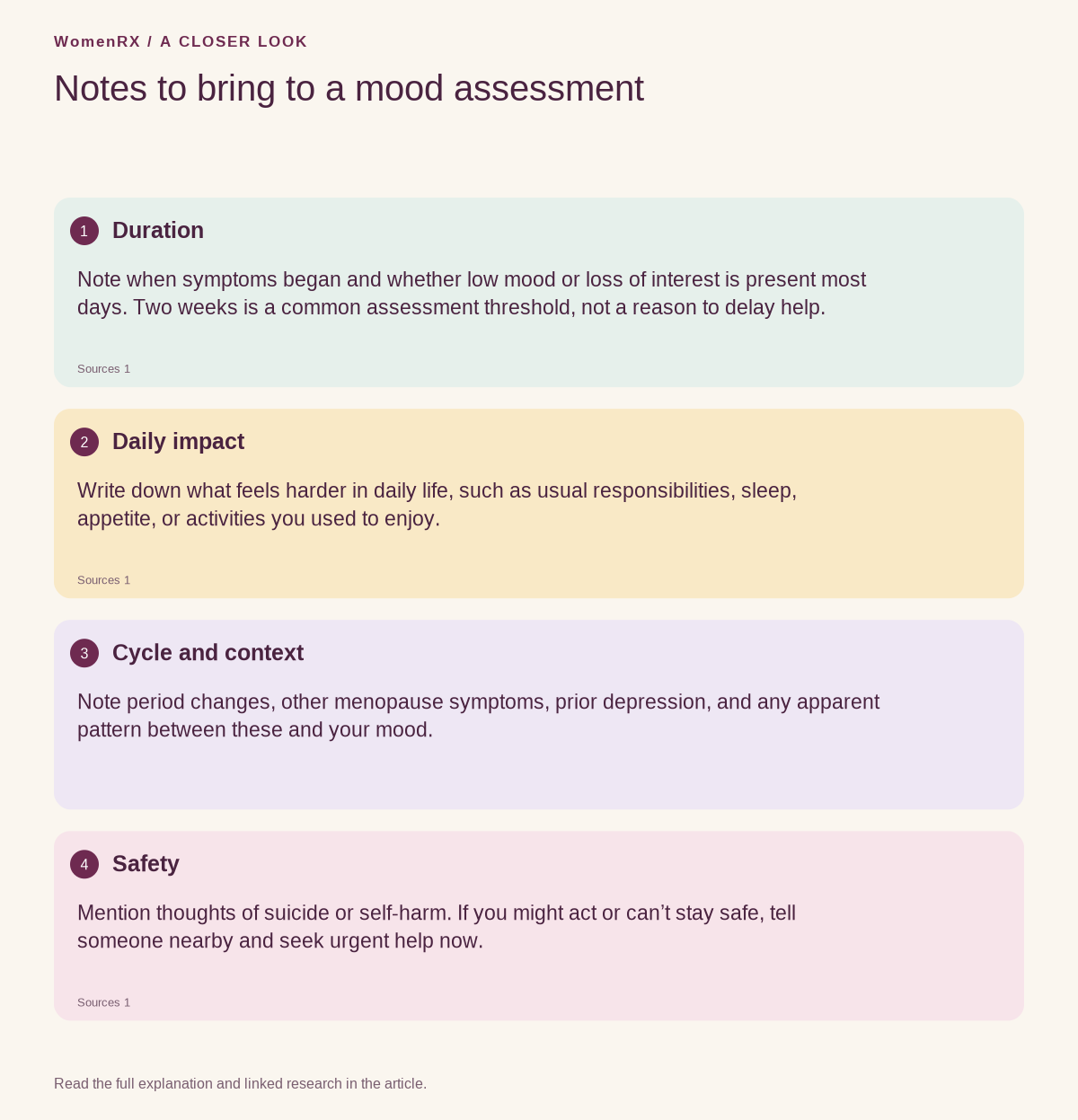
Notes to bring to a mood assessment
Duration: Note when symptoms began and whether low mood or loss of interest is present most days. Two weeks is a common assessment threshold, not a reason to delay help.1
Daily impact: Write down what feels harder in daily life, such as usual responsibilities, sleep, appetite, or activities you used to enjoy.1
Cycle and context: Note period changes, other menopause symptoms, prior depression, and any apparent pattern between these and your mood.
Safety: Mention thoughts of suicide or self-harm. If you might act or can’t stay safe, tell someone nearby and seek urgent help now.1
Read the figure as text
Use these prompts to describe what has changed and what support you need. They are conversation aids, not a diagnostic checklist.- Duration: Note when symptoms began and whether low mood or loss of interest is present most days. Two weeks is a common assessment threshold, not a reason to delay help.1
- Daily impact: Write down what feels harder in daily life, such as usual responsibilities, sleep, appetite, or activities you used to enjoy.1
- Cycle and context: Note period changes, other menopause symptoms, prior depression, and any apparent pattern between these and your mood.
- Safety: Mention thoughts of suicide or self-harm. If you might act or can’t stay safe, tell someone nearby and seek urgent help now.1
More questions, answered
What might an assessment for depression involve?
A clinician may ask about the symptoms, how long they’ve lasted, how they affect daily life, and your personal and family history. Depending on what you describe, they may consider medical conditions or medicines that can cause similar symptoms. 1
Does depression during perimenopause mean I need hormone therapy?
Not necessarily. Depression deserves its own assessment. Hormone therapy is an established option for bothersome menopause symptoms such as hot flashes, while a review describes only short-term antidepressant effects of estradiol in perimenopausal women. Discuss both your mood and any menopause symptoms rather than assuming one treatment addresses everything. 1 2 3
Sources you can check
- Depression: MedlinePlusAccessed 2026-09-25Return to first citation
- The 2022 hormone therapy position statement of The North American Menopause Society.“The 2022 Hormone Therapy Position Statement of The North American Menopause Society” Advisory Panel. · Menopause (New York, N.Y.) · 2022Return to first citation
- The Role and Mechanism of Estrogen in Perimenopausal Depression.Liu Y, Fu X, Guan B, Cui R, Yang W. · Current neuropharmacology · 2026Return to first citation