Could It Be Rosacea? Signs and Treatment Options
Rosacea can affect your skin, your eyes, or both, and the symptoms you have shape what treatment may help.
Rosacea is worth considering if facial flushing, lasting color changes, skin sensitivity, or acne-like breakouts keep returning. An examination matters because acne, dermatitis, and lupus can look similar. Treatment depends on whether the main concern is breakouts, persistent redness, or eye symptoms. A painful eye, blurred vision, or sensitivity to light needs urgent assessment. 16
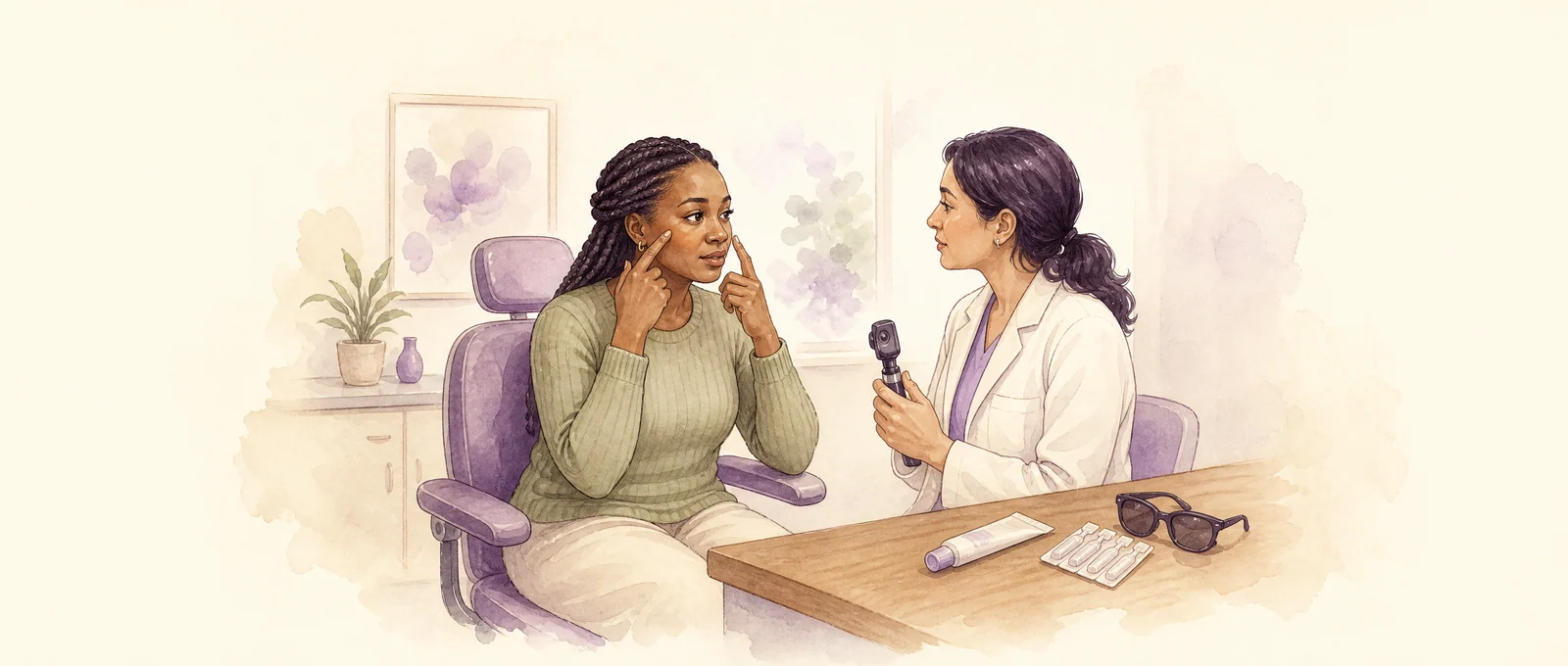
What makes rosacea worth checking?
Rosacea can begin with flushing across the cheeks, nose, forehead, or chin. Your face may feel hot or painful, and water or skincare products may sting. Some people develop longer-lasting color changes or acne-like breakouts. Redness can be harder to see on brown or Black skin, so the sensations and other changes you notice matter too. 16
None of those signs, alone, confirms rosacea. Acne and several kinds of dermatitis can resemble it; lupus can also cause a lasting change in facial color. A dermatologist examines the skin and eyes and asks about symptoms that come and go. Sometimes testing is needed to rule out another condition. That’s a useful reason to seek an assessment rather than trying to choose a rosacea treatment from a photo or a single symptom. 16
Rosacea is more common in women, but that doesn’t mean every facial flare during a hormonal transition is rosacea. The practical distinction is what’s happening on your skin and whether your eyes are involved, not an assumed cause based on your life stage. 16
Tell the clinician about your eyes, even if your skin seems mild
Rosacea can affect the eyelids and eye surface, sometimes without obvious facial signs. Dryness, burning, itching, gritty-feeling eyes, sore lids, or crusts around the lashes are worth mentioning when you’re assessed. An eye examination can help establish what’s causing them. 136
Seek urgent eye assessment if your eye is painful, your vision is blurred, or light hurts your eyes. A red or gritty eye alongside suspected rosacea also warrants urgent advice. These symptoms can signal a problem involving the cornea that should not wait for a routine skin appointment. 1
Treatment follows the symptom, not just the diagnosis
A treatment that helps bumps may not be the best answer for persistent redness. Once a clinician has assessed the pattern, these are some of the options they may discuss:
- For acne-like breakouts: Prescription treatments applied to the skin include azelaic acid foam or gel, ivermectin cream, and metronidazole cream, gel, or lotion. A clinician may consider oral doxycycline or another oral treatment when needed. These are treatments for rosacea breakouts, not proof that any unexplained facial bump is rosacea. 6
- For persistent facial redness: Brimonidine gel and oxymetazoline cream temporarily reduce color by narrowing blood vessels beneath the skin. Laser or light-based treatments may help redness and visible vessels. That’s a different treatment goal from calming acne-like breakouts. 62
- For eye symptoms: Care may involve eyelid hygiene, artificial tears, prescription eye treatments, or oral medication, depending on the findings. A dermatologist may involve an eye doctor, particularly when eyesight could be affected. Facial cream is not a substitute for assessing a painful or vision-changing eye. 36
Gentle skincare and sun protection are part of a rosacea plan, alongside treatment when it’s needed. Heat, sunlight, hot drinks, alcohol, and spicy foods are examples of triggers, but you don’t need to cut out everything on a list. If you notice a reliable connection for you, that’s useful information to bring to the discussion. Rosacea isn’t caused by poor hygiene. 16
What if you’re pregnant or breastfeeding?
Tell the clinician choosing your treatment if you’re pregnant, trying to become pregnant, or breastfeeding. Evidence about the effectiveness and safety of many rosacea treatments during pregnancy is limited, so a treatment that makes sense at another time may need a fresh discussion. Metronidazole may be considered during pregnancy; whether it’s appropriate for you depends on your situation. Guidance also notes that metronidazole used on the skin is unlikely to reach breast milk in meaningful amounts. These points don’t make every rosacea product interchangeable during pregnancy or breastfeeding. 54
The next move is straightforward: arrange a skin assessment for recurring facial changes, mention any eyelid or eye symptoms, and treat painful eyes or changes in vision as urgent rather than waiting to see whether a skin treatment helps. 16
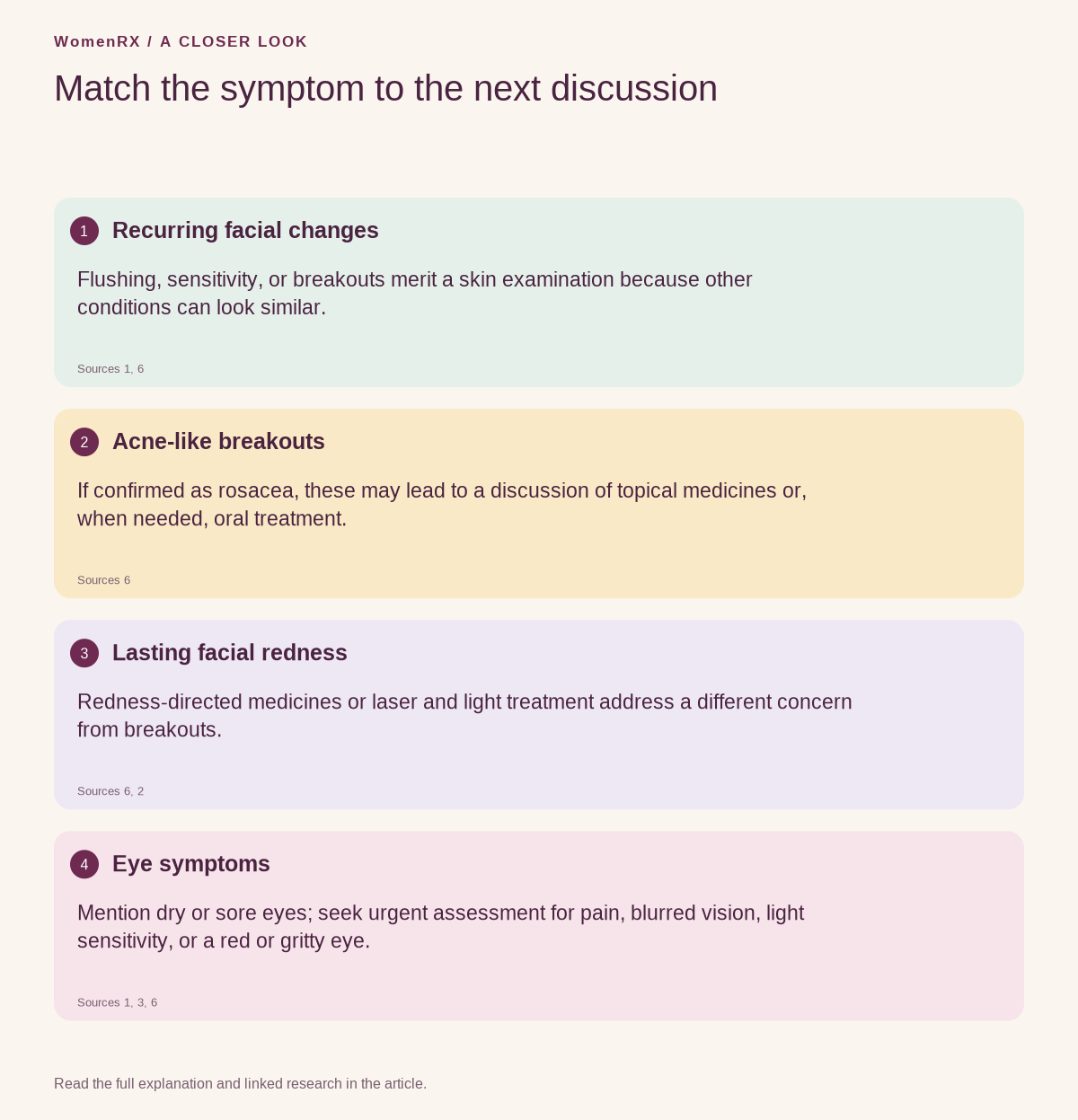
Match the symptom to the next discussion
Recurring facial changes: Flushing, sensitivity, or breakouts merit a skin examination because other conditions can look similar.16
Acne-like breakouts: If confirmed as rosacea, these may lead to a discussion of topical medicines or, when needed, oral treatment.6
Lasting facial redness: Redness-directed medicines or laser and light treatment address a different concern from breakouts.62
Eye symptoms: Mention dry or sore eyes; seek urgent assessment for pain, blurred vision, light sensitivity, or a red or gritty eye.136
Read the figure as text
These patterns point to different assessment needs and possible treatment categories; they do not diagnose rosacea.- Recurring facial changes: Flushing, sensitivity, or breakouts merit a skin examination because other conditions can look similar.16
- Acne-like breakouts: If confirmed as rosacea, these may lead to a discussion of topical medicines or, when needed, oral treatment.6
- Lasting facial redness: Redness-directed medicines or laser and light treatment address a different concern from breakouts.62
- Eye symptoms: Mention dry or sore eyes; seek urgent assessment for pain, blurred vision, light sensitivity, or a red or gritty eye.136
Sources you can check
- Rosacea - NHSAccessed 2026-09-26Return to first citation
- Pulsed Dye Laser and Intense Pulsed Light Therapy for Cutaneous and Ocular Rosacea: A Systematic Review.Finney OS, Soliman J, Choi M, Zachary CB, Lee OL, Kelly KM. · Lasers in surgery and medicine · 2026Return to first citation
- [Ocular rosacea : Clinical aspects, diagnostics, management and treatment].Partzsch L, Nguyen K, Korsing S, Pleyer U. · Dermatologie (Heidelberg, Germany) · 2026Return to first citation
- Pregnancy, breastfeeding and fertility while taking or using metronidazole - NHSAccessed 2026-09-25Return to first citation
- Treatment of rosacea during pregnancy.Gomolin T, Cline A, Pereira F. · Dermatology online journal · 2021Return to first citation
- Rosacea: Diagnosis and treatmentAccessed 2026-09-26Return to first citation