Combined Hormone Therapy Side Effects: What to Watch
Breast tenderness, headaches, nausea, and spotting can happen with combined hormone therapy, but the bleeding pattern and accompanying symptoms determine what to do next.
Breast tenderness, headache, nausea, and irregular bleeding can occur after starting combined menopause hormone therapy. Early spotting may settle; a scheduled bleed with sequential treatment is different from unexpected bleeding. Contact your prescriber about heavy, persistent, or newly changed bleeding. Get prompt advice for a painful swollen calf, and call 911 for chest pain with breathlessness or stroke symptoms. 456
First, check which bleeding pattern your treatment is meant to produce
Combined menopause hormone therapy pairs an estrogen with progesterone or a progestin. If you have a uterus, the second hormone helps reduce the risk of uterine cancer associated with estrogen treatment. Combined treatment may come as a tablet, capsule, or patch, depending on the product. 2456
The distinction that matters most when you notice bleeding is continuous versus sequential treatment. Irregular bleeding is common in the first few months after starting continuous combined therapy. With sequential combined therapy, a withdrawal bleed at the end of the progestogen portion is expected; irregular bleeding can also occur in the first few months. Heavy bleeding, or unexpected bleeding after six months on either regimen, is a reason to contact your prescriber. 45
Your own history matters too. If you’d already gone more than a year without a period before starting treatment, don’t assume new bleeding is harmless because you’re taking hormones. A bleed that follows the planned sequential-treatment pattern is different from an unexpected episode, even a small one. Bleeding after menopause can have several causes, including changes in the vaginal or uterine lining, polyps, and effects of hormone therapy. Unexpected bleeding should be assessed rather than assumed to be a treatment side effect. If you’re still having periods, explain whether bleeding fits your usual cycle, an expected sequential-treatment bleed, or neither. 15
Common effects and what may help
Breast tenderness, headache, nausea, vaginal bleeding or discharge, and pelvic pain were reported with an oral estradiol-and-progesterone product. A separate trial of oral progesterone taken with estrogen also reported breast tenderness, headache, dizziness, and bloating. These reports help identify effects to watch for, but a symptom alone generally won’t tell you which hormone caused it. 23
Some effects improve as you get used to treatment. If nausea follows an oral tablet or capsule, taking it with food and choosing simple foods for a while may help. If nausea lasts more than a week, ask your prescriber whether the treatment needs reviewing. Headaches that are severe or last longer than a week also deserve a conversation. Breast tenderness often improves, but bring it up if it remains painful or lasts beyond several weeks. These are reasons to discuss a change, not to adjust the hormones on your own. 45
A patch can cause redness or irritation where it sits. If the rash or itch stays at the patch site, tell your prescriber; a rash affecting a larger area also needs attention. For example, a small itchy outline under a patch points to a different practical problem than nausea after an oral capsule. The formulation matters when you describe what’s happening. 46
A new breast lump, skin dimpling, or a nipple change isn’t something to file under ordinary breast tenderness. Arrange a medical assessment. Keep up with your usual breast-screening appointments while using hormone therapy. 45
When not to wait for a routine review
Get prompt medical advice for pain, redness, or swelling in one leg, particularly the calf. It could be a deep vein clot. Call 911 for chest pain with breathlessness, sudden trouble speaking, a drooping face, or new difficulty moving an arm or leg. These may signal a clot in the lung, a heart problem, or a stroke. Sudden swelling of the lips, mouth, or throat, especially with trouble breathing, is also an emergency. These warnings are different from a mild headache or breast tenderness that starts with treatment. 456
For unexpected bleeding, the next step is usually to contact your prescriber for assessment rather than go to the emergency department solely because of a spot of blood. Don’t wait for a scheduled review if bleeding is heavy, begins after months without bleeding on treatment, or changes after you’ve been taking it for more than a few months. If you had already reached menopause before starting, report even a single small episode outside an expected sequential withdrawal bleed. Your prescriber can consider the regimen and other possible causes instead of assuming the hormones explain it. 145
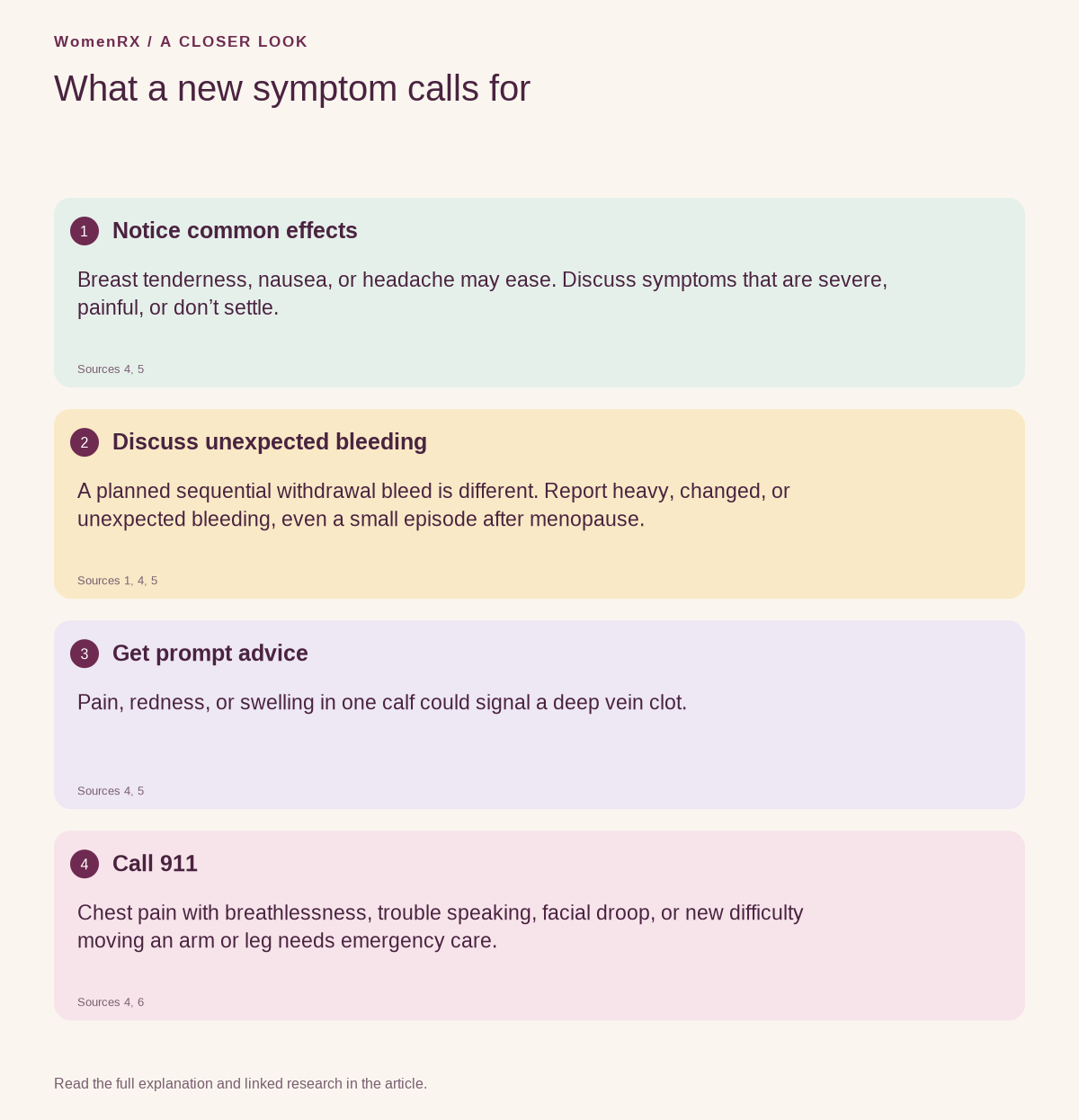
What a new symptom calls for
Notice common effects: Breast tenderness, nausea, or headache may ease. Discuss symptoms that are severe, painful, or don’t settle.45
Discuss unexpected bleeding: A planned sequential withdrawal bleed is different. Report heavy, changed, or unexpected bleeding, even a small episode after menopause.145
Get prompt advice: Pain, redness, or swelling in one calf could signal a deep vein clot.45
Call 911: Chest pain with breathlessness, trouble speaking, facial droop, or new difficulty moving an arm or leg needs emergency care.46
Read the figure as text
Use your treatment pattern and the symptom itself to choose the next step; this is not a diagnostic score.- Notice common effects: Breast tenderness, nausea, or headache may ease. Discuss symptoms that are severe, painful, or don’t settle.45
- Discuss unexpected bleeding: A planned sequential withdrawal bleed is different. Report heavy, changed, or unexpected bleeding, even a small episode after menopause.145
- Get prompt advice: Pain, redness, or swelling in one calf could signal a deep vein clot.45
- Call 911: Chest pain with breathlessness, trouble speaking, facial droop, or new difficulty moving an arm or leg needs emergency care.46
More questions, answered
Could a missed patch explain spotting?
It could. US patient information for combined estrogen-and-progestin patches says that stopping a patch or forgetting a replacement can cause spotting or bleeding and allow symptoms to return. Still, tell your prescriber about bleeding that is heavy, persists, or appears after an established pattern changes. 64
Sources you can check
- Postmenopausal bleeding - NHSAccessed 2026-09-25Return to first citation
- BIJUVA (ESTRADIOL AND PROGESTERONE) CAPSULE [MAYNE PHARMA] | US prescribing information and patient instructionsAccessed 2026-09-25Return to first citation
- PROMETRIUM (PROGESTERONE) CAPSULE [ACERTIS PHARMACEUTICALS, LLC] | US prescribing information and patient instructionsAccessed 2026-09-25Return to first citation
- Side effects of continuous combined HRT - NHSAccessed 2026-09-25Return to first citation
- Side effects of sequential combined hormone replacement therapy (HRT) - NHSAccessed 2026-09-25Return to first citation
- Estrogen and Progestin Transdermal Patch (Hormone Replacement Therapy): MedlinePlus Drug InformationAccessed 2026-09-25Return to first citation