Can You Boost Your Metabolism? What Actually Changes
Some foods and supplements briefly change energy use, but a measurable metabolic effect doesn’t automatically translate into meaningful weight loss.
“Boosting metabolism” can mean raising energy use for a short time, changing appetite, or losing weight, and those aren’t the same result. Caffeine can temporarily increase measured energy expenditure, while weight-loss supplements often show small, inconsistent effects on body weight. Activity and body composition also contribute to daily energy use, but a metabolism claim alone can’t tell you whether a routine will meaningfully change your weight. 2 3
First, ask what “boost” means
A product can raise energy expenditure during a short test without producing a noticeable change in body weight. It might affect appetite instead, or change alertness without showing that it meaningfully changes daily energy use. Those are different outcomes, even when the label groups them all under “metabolism.”
Total daily energy expenditure depends partly on body size, body composition, food intake, and physical activity. That makes a temporary lab-measured change only one piece of the picture. In a systematic review of 47 clinical trials of interventions intended to increase thermogenesis, the researchers found that changes in energy expenditure did not consistently correspond to major weight changes. The studies also varied in their duration and measurement methods. 3
A useful question is: What changed in the study: energy use, appetite, or body weight, and for how long?
Caffeine: a real short-term effect, not a weight-loss promise
Caffeine can increase measured energy expenditure. One human study summarized by the NIH Office of Dietary Supplements found that 100 mg of caffeine raised energy expenditure by an average of 9.2 calories per hour more than placebo, with the effect lasting at least three hours. That’s a measurement from a particular short-term study, not a prediction of how much weight someone will lose. Regular caffeine use can also reduce the size of its effects over time. 2
Caffeine may also make you feel more alert. That sensation is not itself proof that a product is burning a meaningful amount of body fat. Energy drinks and “thermogenic” blends can contain caffeine from several sources, and some labels may not make the total amount obvious. 1 2
If you’re pregnant or breastfeeding, caffeine deserves particular attention: it crosses the placenta, and a small amount passes into breast milk. Caffeine can also interact with some medicines, including certain stimulants, antibiotics, asthma medicines, and heart medicines. Check the product’s ingredients and discuss caffeine with your clinician or pharmacist if one of these situations applies to you. 1
Meals and “fat-burning” ingredients
Eating causes a temporary rise in energy use as your body digests and absorbs food. That normal response doesn’t mean a particular meal schedule or ingredient will create meaningful weight loss. The evidence summarized by NIH illustrates why it helps to look past a proposed mechanism and check the outcome actually measured. 2
For example, beta-glucan fiber has been proposed to increase fullness, but trials lasting several weeks generally found no significant difference in weight loss compared with control groups. Capsaicinoids, the compounds that give chili peppers their heat, reduced reported calorie intake in some studies, but a 12-week trial found that the calorie reduction did not significantly change body weight. Appetite or intake results can be interesting, but they’re not the same as demonstrated weight loss. 2
Green tea is another common example. Some research on green tea preparations, often containing both catechins and caffeine, found a small average weight difference; results varied, and studies conducted outside Japan in one review did not show a statistically significant difference. Green tea extract is not interchangeable with brewed tea: extracts have been linked to liver injury in human reports and trials. 2
Activity and muscle: worth separating from “metabolism hacks”
Physical activity is one component of total daily energy expenditure. Body composition is another. That makes it reasonable to distinguish activity and muscle-building from a supplement that claims to “fire up” metabolism, but it doesn’t tell you how much a particular workout or amount of muscle gain will change your daily energy use. 3
The thermogenesis review found that increases in measured energy expenditure from several kinds of interventions did not reliably track with major weight changes. Its trials weren’t a direct test of everyday strength-training programs, so they can’t establish the size of a lasting metabolic effect from building muscle. Treat a muscle-building claim as a body-composition claim that needs its own evidence, not as proof of a large or automatic weight-loss effect. 3
A quick way to assess a product or routine
Before you buy a “metabolism booster,” look for three things:
- The outcome: Was energy expenditure measured, or did the study measure body weight, appetite, or something else?
- The comparison and timeframe: Was it compared with a placebo or usual routine, and was the study long enough to assess weight change?
- The exact product: Was the tested ingredient used alone, or was it one part of a multi-ingredient blend?
That last distinction matters. Weight-loss supplements can combine many ingredients, and results from a study of one ingredient may not apply to a finished product. The amount of evidence and safety information varies by ingredient; some ingredients also interact with medicines. 2
A modest change in energy use can be real and still have little practical effect on weight. The most informative claim is one that clearly names what changed, in whom, compared with what, and over what period.
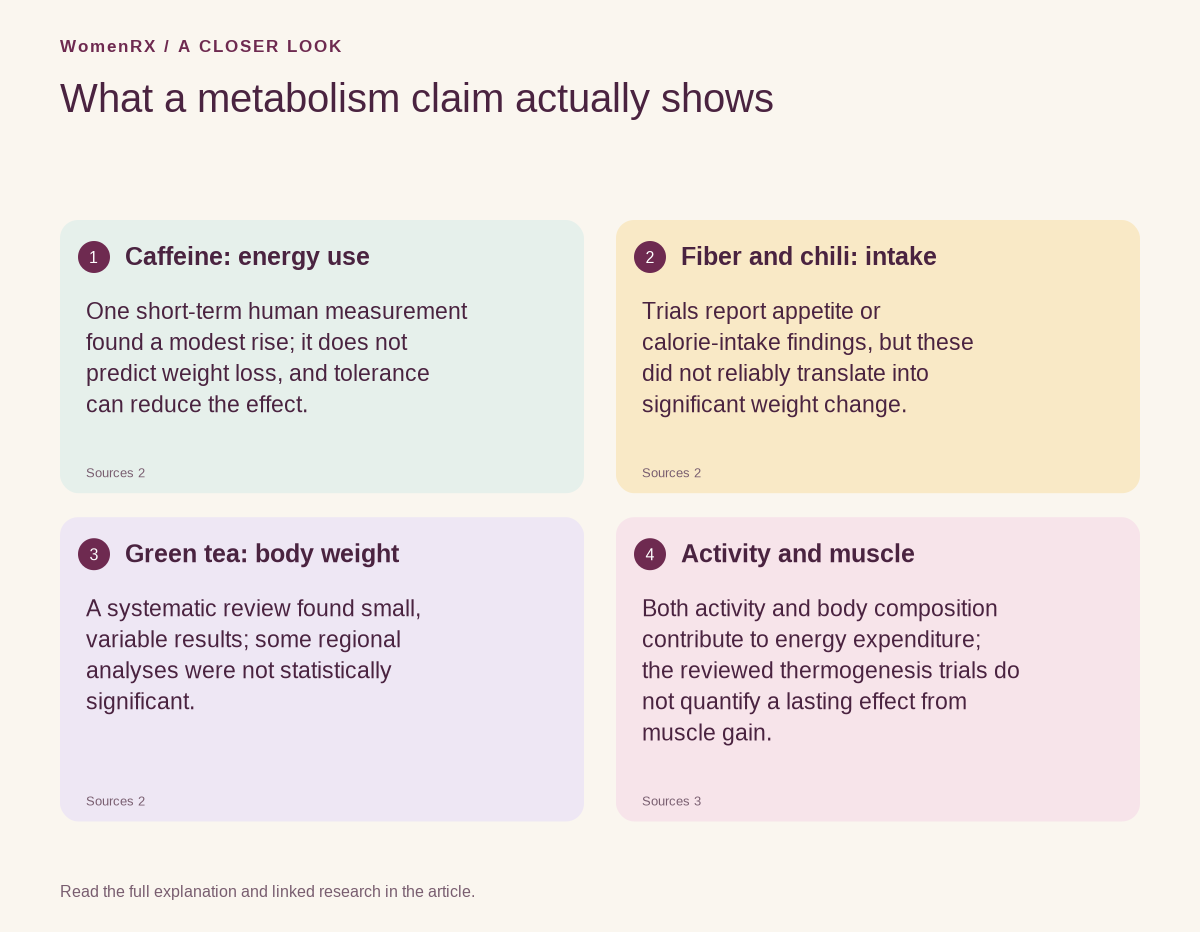
What a metabolism claim actually shows
Caffeine: energy use: One short-term human measurement found a modest rise; it does not predict weight loss, and tolerance can reduce the effect.2
Fiber and chili: intake: Trials report appetite or calorie-intake findings, but these did not reliably translate into significant weight change.2
Green tea: body weight: A systematic review found small, variable results; some regional analyses were not statistically significant.2
Activity and muscle: Both activity and body composition contribute to energy expenditure; the reviewed thermogenesis trials do not quantify a lasting effect from muscle gain.3
Read the figure as text
Separate the measured outcome from the strength and limits of the evidence before deciding how much a claim matters.- Caffeine: energy use: One short-term human measurement found a modest rise; it does not predict weight loss, and tolerance can reduce the effect.2
- Fiber and chili: intake: Trials report appetite or calorie-intake findings, but these did not reliably translate into significant weight change.2
- Green tea: body weight: A systematic review found small, variable results; some regional analyses were not statistically significant.2
- Activity and muscle: Both activity and body composition contribute to energy expenditure; the reviewed thermogenesis trials do not quantify a lasting effect from muscle gain.3
More questions, answered
Does feeling warmer mean a supplement is working?
Not necessarily. Feeling warm or alert doesn’t establish that a supplement increased measured energy expenditure or produced weight loss. Those outcomes need to be assessed separately. 1 2
Are metabolism supplements proven safe because they’re sold over the counter?
No. Dietary supplements aren’t reviewed and approved before sale in the same way as drugs, and blends may contain many ingredients with varying amounts of safety and effectiveness evidence. Some ingredients can interact with medicines. 2
Sources you can check
- Caffeine: MedlinePlusAccessed 2026-09-25Return to first citation
- Dietary Supplements for Weight Loss - Health Professional Fact SheetAccessed 2026-09-25Return to first citation
- Interventions associated with brown adipose tissue activation and the impact on energy expenditure and weight loss: A systematic review.Perez LC, Perez LT, Nene Y, Umpierrez GE, Davis GM, Pasquel FJ. · Frontiers in endocrinology · 2022Return to first citation