Can What You Eat Help You Sleep Better?
Meal timing, caffeine, and alcohol are worth checking before you go looking for a sleep-inducing food.
A balanced eating pattern is linked with better sleep in observational research, but that doesn’t show that changing your diet will treat insomnia. A more useful first step is to look at late meals, afternoon caffeine, and evening alcohol, all of which may work against sleep. If sleep problems persist or affect your days, food changes shouldn’t be the whole plan. 1234
Think patterns, not a magic bedtime food
If you’re sleeping poorly, it’s tempting to ask what to eat tonight to fix it. Research offers a less dramatic, but more useful, answer. In a review of 57 studies of college students, healthier dietary patterns, including Mediterranean-style patterns, were generally associated with better sleep quality. Later last meals were associated with poorer sleep. Most studies were cross-sectional, though, so they can’t tell us whether eating differently improved sleep or whether better-rested people found it easier to eat regularly. These were college-student studies, not studies establishing an effect specifically in women. 4
Another review of young adults also found associations between healthier diets and better sleep, while noting that most studies did not establish cause and effect. That’s a reason to favor an eating pattern you can sustain for its broader value, not to rebuild dinner around a supposed sleep cure. Findings about individual foods and nutrients have been mixed. 45
Review the hours around bedtime
Start with the parts of an ordinary day that could be keeping you alert or uncomfortable. This isn’t a prescribed schedule. It’s a way to spot a plausible change without blaming every restless night on dinner.
In the afternoon, notice where caffeine shows up. Coffee and tea are obvious sources, but caffeine can also be in chocolate, energy drinks, some snacks, and certain pain or cold medicines. It stimulates the nervous system, and its effects may still be felt four to six hours after you have it. The amount in coffee or tea varies considerably, so the size of your usual drink doesn’t tell you everything. If you’re having trouble falling asleep, moving a caffeinated drink earlier in the day is a more grounded experiment than adding a special bedtime food. 1
At dinner, consider timing as well as the food. Guidance for insomnia advises against a large meal late at night. The college-student research also links later last meals with poorer sleep, but it doesn’t prove that an earlier dinner will solve the problem. For example, if a busy schedule regularly pushes your largest meal close to bed, see whether a different meal time is practical before cutting out otherwise nourishing foods. 34
In the evening, don’t count alcohol as a sleep aid. Alcohol is listed among substances that can contribute to insomnia. If you’re in perimenopause or menopause, it may also be worth noticing whether alcohol seems to coincide with symptoms such as hot flashes or night sweats; triggers differ from person to person. 26
Change one thing you can actually observe, rather than overhauling your diet at once. If you normally have coffee late in the day, for example, try having it earlier and notice whether falling asleep feels different. If nights remain difficult, that information is useful, too. It tells you not to keep chasing a food fix.
The reason you’re awake matters
Food choices are only one piece of sleep. Insomnia can mean difficulty falling asleep, staying asleep, or both, and stress, medical conditions, medicines, and other sleep disorders may play a part. Daytime tiredness, irritability, or trouble concentrating can be signs that poor sleep is affecting more than your nights. 2
Pregnancy, postpartum life, and menopause also call for different conversations rather than one set of “sleep foods.” The dietary research discussed here does not establish a pregnancy-specific sleep remedy. If sleep difficulty persists while you’re pregnant, the general advice to seek an assessment for ongoing sleep problems still applies. 24 If you’re postpartum and awake because you’re caring for a baby, changing dinner cannot remove those necessary awakenings. You can still review caffeine or meal timing, but be clear about whether the problem is an interrupted opportunity to sleep, difficulty sleeping when you have the chance, or both.
During perimenopause and menopause, hot flashes and night sweats are worth naming if they wake you. Mood changes and anxiety can also occur around this time, and cognitive behavioral therapy can help with sleep problems. Mentioning those symptoms helps make the discussion more specific; it doesn’t mean hormones are automatically the cause of every bad night. Caffeine, alcohol, stress, and other sleep problems can still matter. 26
If difficulty sleeping keeps happening, leaves you struggling during the day, or makes you drowsy while driving, seek an assessment rather than continuing to test foods. An assessment can look for contributing conditions, medicines, or another sleep disorder. Cognitive behavioral therapy is one option used for ongoing insomnia. 23
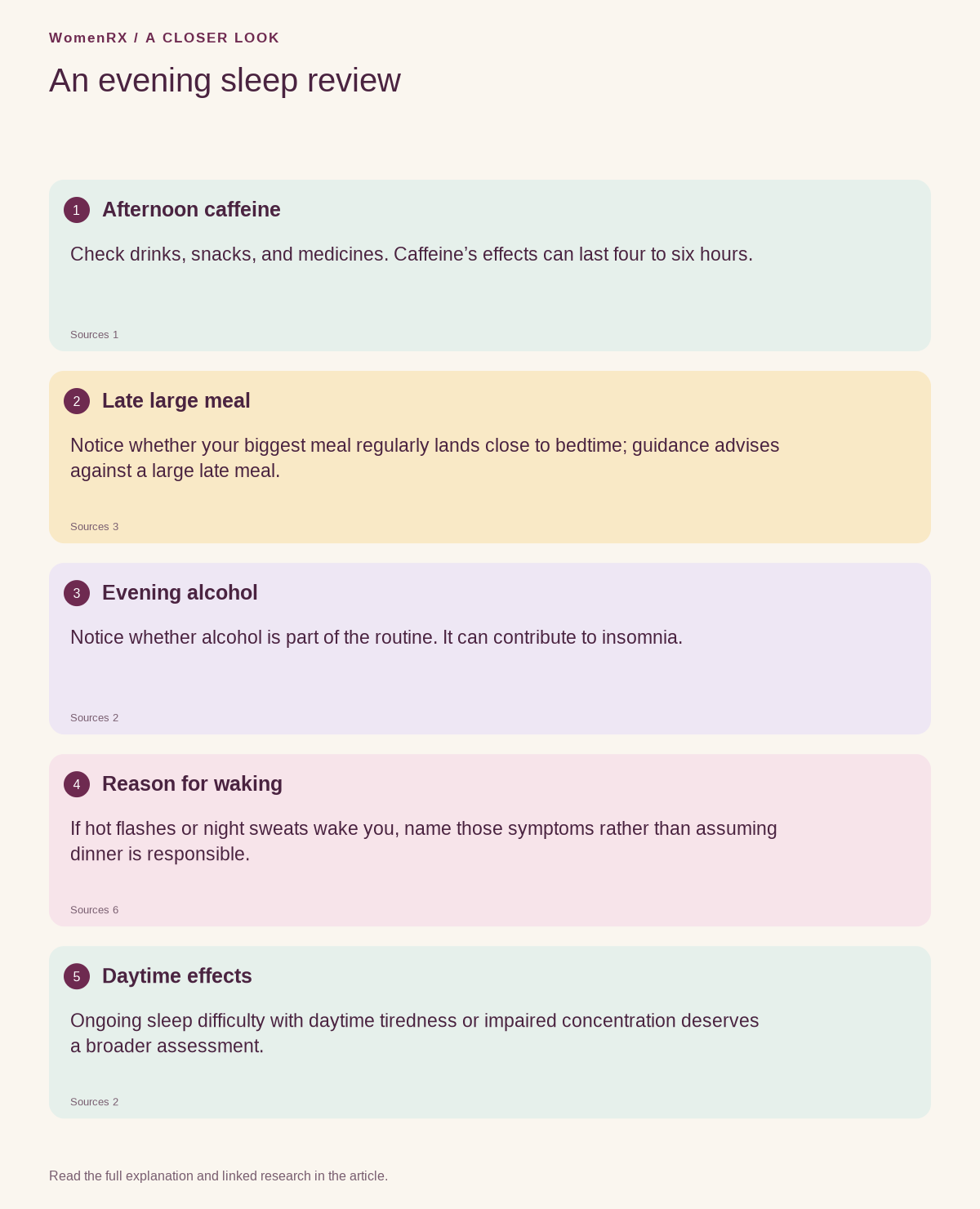
An evening sleep review
Afternoon caffeine: Check drinks, snacks, and medicines. Caffeine’s effects can last four to six hours.1
Late large meal: Notice whether your biggest meal regularly lands close to bedtime; guidance advises against a large late meal.3
Evening alcohol: Notice whether alcohol is part of the routine. It can contribute to insomnia.2
Reason for waking: If hot flashes or night sweats wake you, name those symptoms rather than assuming dinner is responsible.6
Daytime effects: Ongoing sleep difficulty with daytime tiredness or impaired concentration deserves a broader assessment.2
Read the figure as text
Use these prompts to distinguish a changeable evening habit from a sleep problem that needs a broader look.- Afternoon caffeine: Check drinks, snacks, and medicines. Caffeine’s effects can last four to six hours.1
- Late large meal: Notice whether your biggest meal regularly lands close to bedtime; guidance advises against a large late meal.3
- Evening alcohol: Notice whether alcohol is part of the routine. It can contribute to insomnia.2
- Reason for waking: If hot flashes or night sweats wake you, name those symptoms rather than assuming dinner is responsible.6
- Daytime effects: Ongoing sleep difficulty with daytime tiredness or impaired concentration deserves a broader assessment.2
More questions, answered
Should I cut out fruit or dairy because they contain sugar?
The research here doesn’t support cutting out whole food groups to treat insomnia. In college-student studies, associations for individual foods and nutrients were mixed; healthier overall patterns were more consistently linked with better sleep. Those associations don’t establish that any particular food causes better or worse sleep. 4
Sources you can check
- Caffeine: MedlinePlusAccessed 2026-09-25Return to first citation
- Insomnia | MedlinePlusAccessed 2026-09-25Return to first citation
- Insomnia - NHSAccessed 2026-09-25Return to first citation
- Diet and sleep among college student populations: a systematic review.Almahasneh N, Halabicky O, Guzman O, Dunietz GL, Jansen EC. · Sleep medicine reviews · 2026Return to first citation
- Relationship of sleep quality, BMI, Dietary, and socioeconomic attributes among young adults: A systematic review.Ahn S, Zaman WSBWK, Goh SK, Chan CK. · Journal of health psychology · 2026Return to first citation
- Things you can do to help menopause and perimenopause symptoms - NHSAccessed 2026-09-25Return to first citation