Can Vitamin B12 Help With Low Mood?
B12 deficiency has been associated with depression, but taking extra B12 hasn’t been shown to improve depressive symptoms when deficiency isn’t present.
Vitamin B12 deficiency can cause fatigue and nerve changes, and it has been associated with depression. That association doesn’t prove low B12 caused someone’s mood symptoms. In a review of randomized trials, B12 supplements didn’t improve depressive-symptom measures overall in people without overt deficiency. B12 shouldn’t replace an assessment or treatment for low mood, including during pregnancy or postpartum. 2 3 1
Low mood can make a supplement seem like a simple place to start. Vitamin B12 can be part of the picture if you’re deficient, but it isn’t a proven mood treatment for everyone. The useful distinction is between correcting a confirmed deficiency and taking extra B12 when you aren’t deficient.
When low B12 could be relevant
B12 deficiency can cause fatigue, anemia, and changes to the nervous system, including numbness or tingling. It has also been associated with depression, but an association doesn’t establish that low B12 caused someone’s mood symptoms. A blood test can help assess B12 status; sometimes a follow-up marker is used to clarify an uncertain result. 2
Deficiency can happen even when you eat foods containing B12, because some health conditions and procedures make it harder to absorb. Risk factors include a vegetarian diet, gastrointestinal conditions or surgery, pernicious anemia, and prolonged use of some medicines, including metformin and proton pump inhibitors. These factors don’t prove you’re deficient, but they can make it worth discussing B12 testing when you’re also experiencing symptoms. 2 4
What supplements have shown when deficiency isn’t present
A systematic review and meta-analysis examined 16 randomized trials with 6,276 participants who did not have overt B12 deficiency or advanced neurological disorders. It found no overall effect of B12, alone or in B-vitamin combinations, on measures of depressive symptoms. The review excluded trials focused on major depression, so it doesn’t establish B12 as a treatment for diagnosed major depression. 3
That result is about supplementation in people without clear deficiency. It isn’t a reason to ignore a confirmed deficiency, which can have blood and nerve effects. But treating a deficiency shouldn’t be assumed to resolve low mood or replace depression care. 2 3
Pregnancy and postpartum deserve attention of their own
Depression can occur during pregnancy and after birth. Those circumstances don’t, by themselves, show that B12 deficiency or hormonal changes are the cause. If low mood is affecting your daily life, worsening, or worrying you, bring it up promptly with a health care provider who can assess your mood and whether medical factors, including B12 status, are relevant. B12 deficiency during pregnancy or breastfeeding may also affect an infant’s health, which is another reason to address a suspected deficiency rather than guess with supplements. 1 2
A useful next step
If you’re considering B12 because of low mood, mention both the mood change and any reasons deficiency might be more likely, such as a restricted diet, digestive condition, relevant surgery, or long-term use of metformin or a proton pump inhibitor. A provider can decide whether testing makes sense and interpret the result in context. Don’t wait for a supplement to work before seeking help for low mood: depression assessment considers symptoms and their effect on daily life, and treatment may include talk therapy, medication, or both. 1 2
Depression symptoms can include low mood or loss of interest for at least two weeks, but you don’t have to wait that long to ask for help, especially if things are worsening. If you’re thinking about hurting yourself or suicide, get help right away. If there’s an immediate emergency, call 911. 1
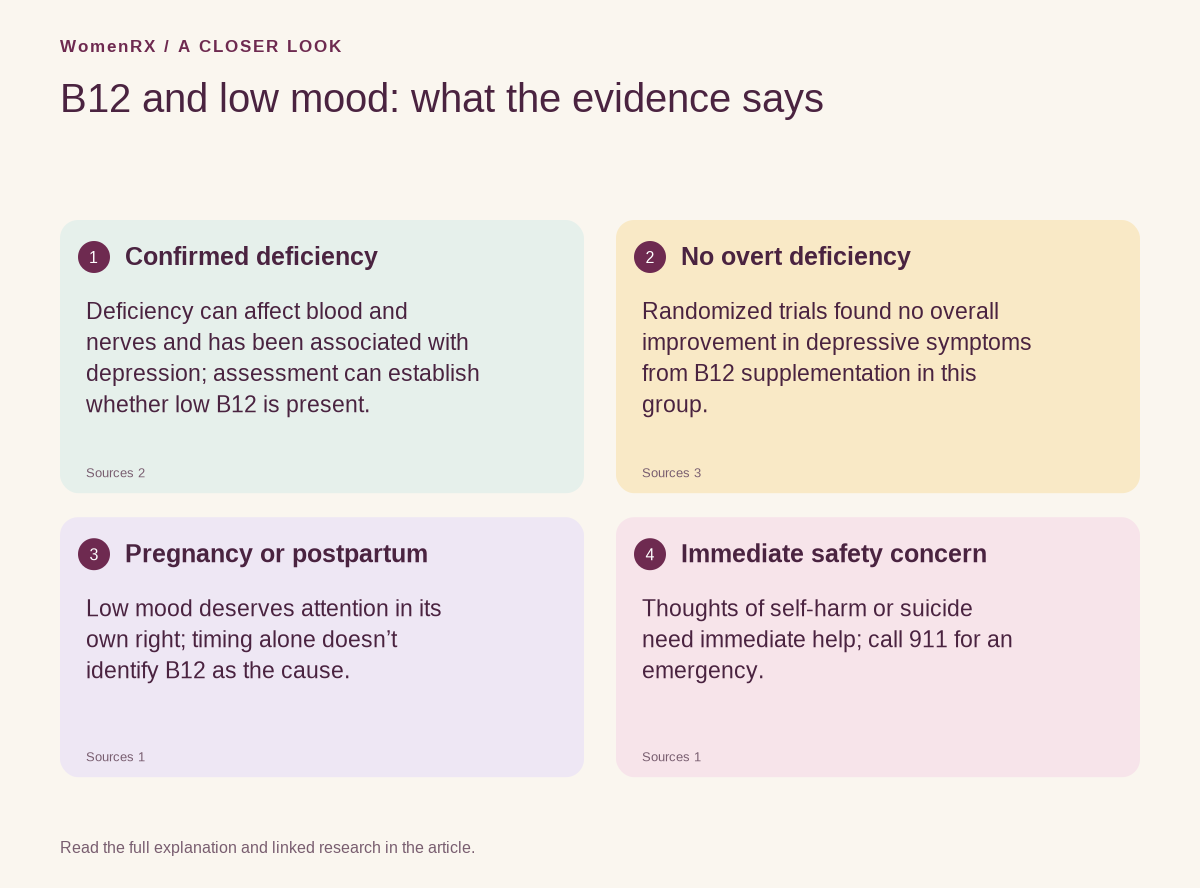
B12 and low mood: what the evidence says
Confirmed deficiency: Deficiency can affect blood and nerves and has been associated with depression; assessment can establish whether low B12 is present.2
No overt deficiency: Randomized trials found no overall improvement in depressive symptoms from B12 supplementation in this group.3
Pregnancy or postpartum: Low mood deserves attention in its own right; timing alone doesn’t identify B12 as the cause.1
Immediate safety concern: Thoughts of self-harm or suicide need immediate help; call 911 for an emergency.1
Read the figure as text
The key distinction is whether B12 deficiency is present. A supplement isn’t a replacement for assessing low mood.- Confirmed deficiency: Deficiency can affect blood and nerves and has been associated with depression; assessment can establish whether low B12 is present.2
- No overt deficiency: Randomized trials found no overall improvement in depressive symptoms from B12 supplementation in this group.3
- Pregnancy or postpartum: Low mood deserves attention in its own right; timing alone doesn’t identify B12 as the cause.1
- Immediate safety concern: Thoughts of self-harm or suicide need immediate help; call 911 for an emergency.1
More questions, answered
Does a B12 test prove low mood is caused by B12?
No. A test can help identify deficiency, but it doesn’t show that deficiency caused your mood symptoms. Low B12 and depression have been associated; depression assessment also considers symptoms, daily functioning, and other possible medical or mental health factors. 1 2
Should I wait to see whether B12 improves my mood?
No. If low mood is affecting your life, worsening, or concerning you, seek an assessment rather than waiting on a supplement. If you might hurt yourself, get help right away; call 911 for an immediate emergency. 1
Sources you can check
- Depression: MedlinePlusAccessed 2026-09-25Return to first citation
- Vitamin B12 - Health Professional Fact SheetAccessed 2026-09-25Return to first citation
- Effects of Vitamin B12 Supplementation on Cognitive Function, Depressive Symptoms, and Fatigue: A Systematic Review, Meta-Analysis, and Meta-Regression.Markun S, Gravestock I, Jäger L, Rosemann T, Pichierri G, Burgstaller JM. · Nutrients · 2021Return to first citation
- Vitamin B12 Deficiency: Common Questions and Answers.Patel H, McGuirk R. · American family physician · 2025Return to first citation