Can Vitamin B12 Improve Memory?
Treating a B12 deficiency matters, but extra B12 isn’t an established memory booster when your levels are adequate.
B12 deficiency can affect the nervous system and may contribute to cognitive problems, so identifying and treating it matters. That’s different from taking extra B12 to improve memory when you aren’t deficient, a benefit that hasn’t been established. If memory changes are new, worsening, or disrupting familiar tasks, have them assessed rather than assuming B12 or hormones are the cause. 1 2 3
Treating a deficiency isn’t the same as boosting memory
Vitamin B12 deficiency can cause neurological changes, and the NIH Office of Dietary Supplements lists dementia among its possible effects. If a deficiency is contributing to cognitive symptoms, identifying and treating it addresses a real health problem. It doesn’t guarantee that memory will improve or explain every change you’ve noticed. 2
Taking B12 when your levels are adequate is a different question. Research on B12 supplementation and cognition has produced mixed findings, and some studies have combined B12 with other nutrients or included people without confirmed deficiency. That evidence doesn’t establish extra B12 as a general-purpose memory aid. 3
What the treatment evidence can tell you
In one small, open-label study, 39 older patients with low B12 and cognitive impairment seen at dementia clinics received B12. Their average score on a cognitive screening test increased from 20.5 to 22.9 when retested, after a median of 56 days. Because everyone received B12 and there was no comparison group, the study can’t show how much of that change was caused by treatment. Nor does it predict what will happen for someone with ordinary forgetfulness or adequate B12 levels. 3
The useful distinction is this: a confirmed deficiency deserves attention even if memory improvement is uncertain. A B12 supplement, on its own, isn’t a substitute for finding out why your memory has changed.
When B12 belongs in the conversation
Low dietary intake is one possible route to deficiency, but it isn’t the only one. Difficulty absorbing B12 from food, pernicious anemia, certain gastrointestinal conditions or surgeries, and prolonged use of medicines such as metformin or proton pump inhibitors can also play a part. Older adults and people following vegetarian diets are among those at greater risk. None of these factors proves you’re deficient, but each gives useful context if you’re discussing memory concerns. 2
B12 status is usually assessed with a blood test. If the result needs clarification, a clinician may use a test called methylmalonic acid, or MMA. That result also needs context because MMA can rise with reduced kidney function and tends to be higher in older adults. 2
B12 can matter during pregnancy and breastfeeding for reasons beyond the mother’s memory: deficiency may affect the baby. That makes possible deficiency worth addressing, but it isn’t evidence that taking B12 improves memory during pregnancy or postpartum. 2
Don’t let a possible cause hide the change itself
Occasionally forgetting a name or misplacing keys happens. More frequent problems, or difficulty with familiar tasks such as using your phone or finding your way home, are different and deserve assessment. 1
The same principle applies in perimenopause. The timing of a memory change doesn’t tell you whether B12, hormones, or something else is responsible. A specific description is more useful than a guess about the cause. For example: “I’ve started missing appointments, and it’s affecting my routine. Could we discuss the change and whether checking B12 makes sense?” Mention when it began and any relevant diet, medical, surgery, or medication history. That keeps both questions in view: whether you might have a B12 deficiency and what else could explain the memory change.
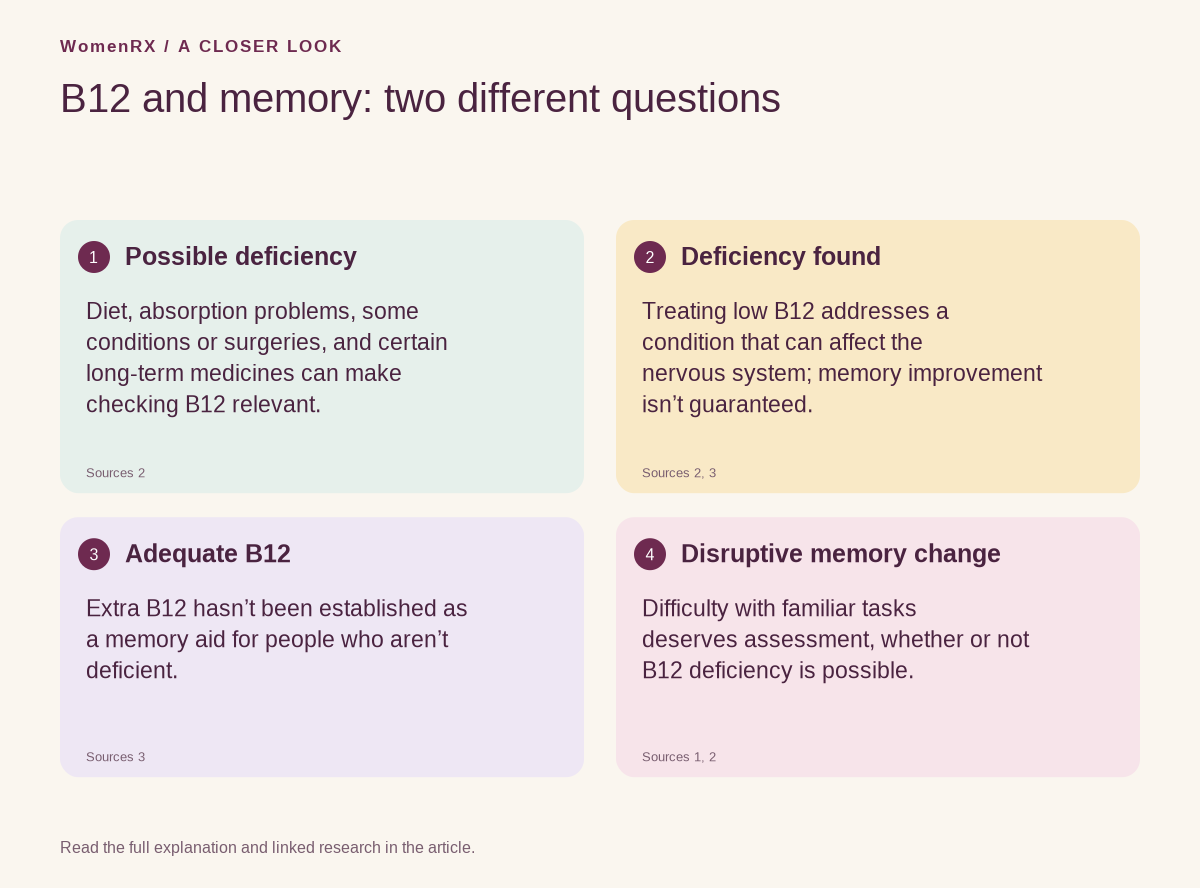
B12 and memory: two different questions
Possible deficiency: Diet, absorption problems, some conditions or surgeries, and certain long-term medicines can make checking B12 relevant.2
Deficiency found: Treating low B12 addresses a condition that can affect the nervous system; memory improvement isn’t guaranteed.23
Adequate B12: Extra B12 hasn’t been established as a memory aid for people who aren’t deficient.3
Disruptive memory change: Difficulty with familiar tasks deserves assessment, whether or not B12 deficiency is possible.12
Read the figure as text
Whether deficiency is present changes what a B12 supplement can reasonably be expected to address.- Possible deficiency: Diet, absorption problems, some conditions or surgeries, and certain long-term medicines can make checking B12 relevant.2
- Deficiency found: Treating low B12 addresses a condition that can affect the nervous system; memory improvement isn’t guaranteed.23
- Adequate B12: Extra B12 hasn’t been established as a memory aid for people who aren’t deficient.3
- Disruptive memory change: Difficulty with familiar tasks deserves assessment, whether or not B12 deficiency is possible.12
More questions, answered
Does memory trouble mean I’m low in B12?
No. Memory trouble alone can’t establish B12 status. A blood result considered alongside your health history and possible diet or absorption risks is more informative. 2
Sources you can check
- Memory | MedlinePlusAccessed 2026-09-25Return to first citation
- Vitamin B12 - Health Professional Fact SheetAccessed 2026-09-25Return to first citation
- Influences of Vitamin B12 Supplementation on Cognition and Homocysteine in Patients with Vitamin B12 Deficiency and Cognitive Impairment.Ueno A, Hamano T, Enomoto S, Shirafuji N, Nagata M, Kimura H, Ikawa M, Yamamura O, Yamanaka D, Ito T, Kimura Y, Kuriyama M, Nakamoto Y. · Nutrients · 2022Return to first citation