Can Tirzepatide Change the Way Your Face Looks?
Facial volume can change with substantial weight loss, but “Ozempic face” isn’t a diagnosis or proof of a unique effect from tirzepatide.
Yes, your face may look different while you lose weight on tirzepatide, also known by the brand name Mounjaro. Loss of facial soft-tissue volume and changes in skin laxity can accompany substantial or rapid weight loss. The informal label “Ozempic face” doesn’t establish that a medication directly changed your face, and available research doesn’t show a distinct effect in women or a reliable way to prevent it. 1 2
What people mean by “Ozempic face”
The phrase usually describes a face that appears less full after weight loss, sometimes with more noticeable lines or looser-looking skin. It’s a popular label, not a medical diagnosis. A change in facial appearance can be real without meaning that something is wrong with your health.
The key distinction is between weight loss that happens while taking a medication and a facial effect caused specifically by the medication. A small study of adults who had lost weight through medication, surgery, or behavioral changes describes reduced facial volume and skin changes alongside significant weight loss. Most participants were taking GLP-1/GIP medicines, including semaglutide or tirzepatide, but the study did not compare the drugs or separate medication effects from the effects of weight loss itself. 1
A 2025 review found that the medical literature on these facial changes was limited and affected by study biases. So, the label shouldn’t be taken as evidence that tirzepatide has a unique face-altering effect, or that everyone who takes it will notice one. 2
Why your face may look different
Facial fat and other soft tissues contribute to facial fullness and support. When you lose a substantial amount of weight, changes in those tissues can make your face appear less full. Skin may also look looser or lines more noticeable. How much you notice depends on your own starting point and weight-loss experience; the available research doesn’t offer a dependable way to predict an individual result. 1
That can feel unexpected if you’re pleased with other changes in your body but don’t recognize your face in the mirror. A changed appearance isn’t, by itself, a sign that weight loss is unhealthy. Nor does the phrase “Ozempic face” tell you whether the weight loss is medically appropriate for you.
What the evidence says about creams and cosmetic options
There are cosmetic approaches aimed at facial changes after weight loss, but evidence for any particular option matters. One 12-week study tested a topical volumizing cream in 33 adults experiencing rapid weight loss from medication, surgery, or behavioral changes; 29 completed the study. Participants had improvements in some measured skin and appearance outcomes, but the study did not include a comparison group. It can’t establish how much of the change came from the cream or show that topical products generally prevent or reverse facial volume loss. 1
A review of plastic-surgery literature describes surgical and nonsurgical options, but it also notes limitations in the underlying evidence. That means cosmetic treatment is a preference, not a required fix, and the existence of an option doesn’t establish that it will suit your face or goals. 2
If you’re considering a procedure or product, ask what change it is intended to address, what evidence supports it for people after weight loss, and what tradeoffs it carries. If you’re not interested in cosmetic treatment, you don’t need to treat a normal appearance change just because it has a catchy name.
Does being a woman change the answer?
The research summarized here doesn’t establish a different medication-related facial effect for women, or report a women-specific result that would predict what you’ll experience. It also doesn’t provide a clear comparison across adult life stages. Your face can change over time for many reasons, but this evidence doesn’t show that women have a unique “Ozempic face” effect from tirzepatide. 1 2
The useful question is not whether your face fits a trend’s label. It’s whether the change concerns you, whether it’s happening alongside weight loss you understand, and whether you want to explore cosmetic options. Appearance alone can’t tell you whether to continue or change a medication; that decision belongs in a conversation about your treatment goals and overall health.
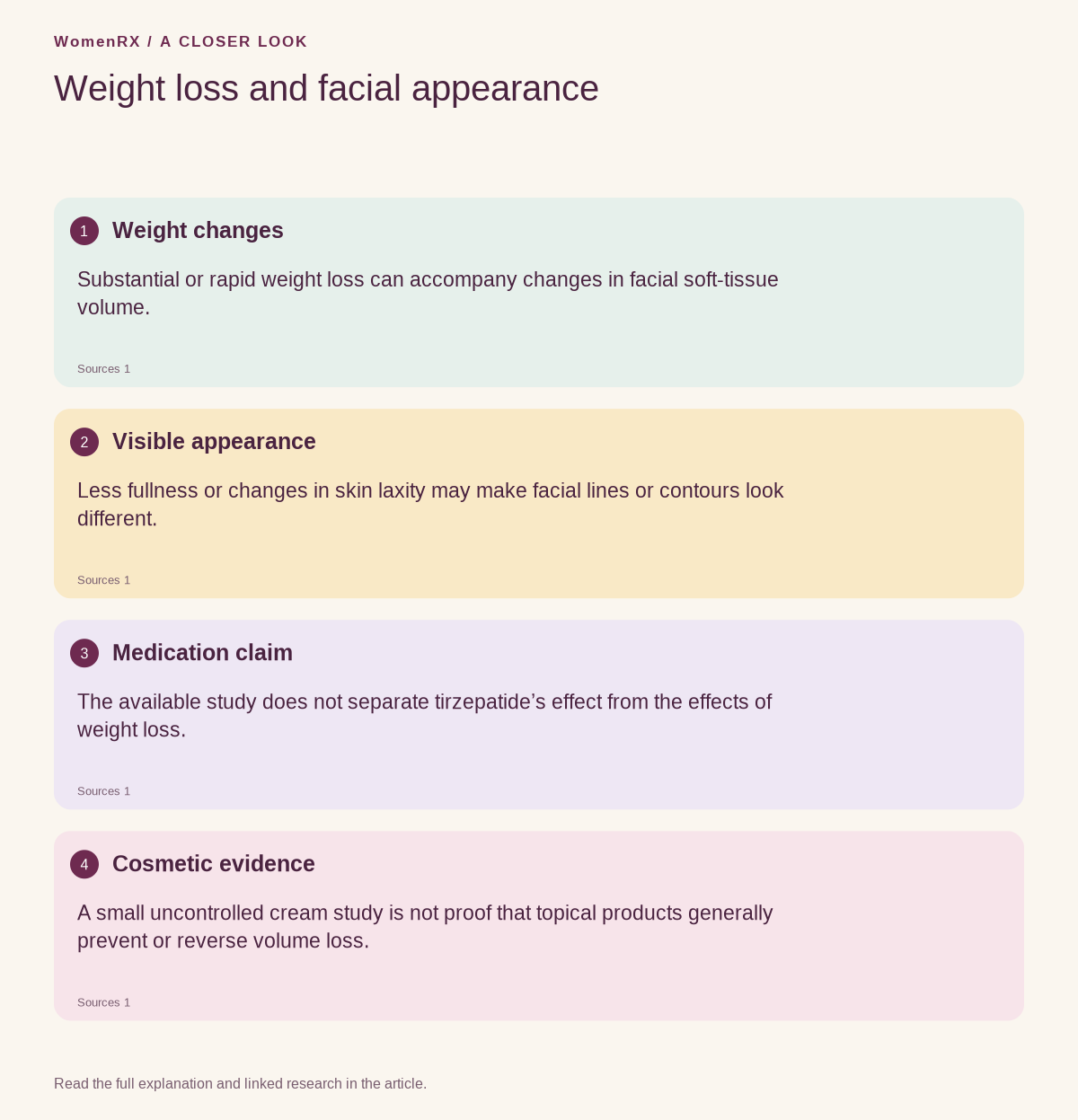
Weight loss and facial appearance
Weight changes: Substantial or rapid weight loss can accompany changes in facial soft-tissue volume.1
Visible appearance: Less fullness or changes in skin laxity may make facial lines or contours look different.1
Medication claim: The available study does not separate tirzepatide’s effect from the effects of weight loss.1
Cosmetic evidence: A small uncontrolled cream study is not proof that topical products generally prevent or reverse volume loss.1
Read the figure as text
A simple distinction between changes that may accompany weight loss and claims the evidence cannot establish about a specific medicine.- Weight changes: Substantial or rapid weight loss can accompany changes in facial soft-tissue volume.1
- Visible appearance: Less fullness or changes in skin laxity may make facial lines or contours look different.1
- Medication claim: The available study does not separate tirzepatide’s effect from the effects of weight loss.1
- Cosmetic evidence: A small uncontrolled cream study is not proof that topical products generally prevent or reverse volume loss.1
More questions, answered
Can a cream prevent “Ozempic face”?
There isn’t enough evidence here to say that creams prevent facial volume changes during weight loss. A small, uncontrolled 12-week study found improvements in some measures with one topical product, but it can’t establish that the product caused those changes or that creams generally prevent or reverse volume loss. 1
Does a changed face mean I should stop tirzepatide?
A facial appearance change alone doesn’t show whether a medication is right for you. Consider it alongside your treatment goals and overall health rather than making the decision based on the informal label “Ozempic face.”
Sources you can check
- Topical Volumizing Cream Improves Facial Volume and Skin Health in Adults With Rapid Weight Loss From Pharmacologic (GLP-1/GIP Agonists), Surgical, or Behavioral Interventions.Nguyen N, Aguilar A, Afzal N, Lee A, Akram W, Duong MN, Sivamani RK. · Journal of cosmetic dermatology · 2026Return to first citation
- "Ozempic Face" in Plastic Surgery: A Systematic Review of the Literature on GLP-1 Receptor Agonist Mediated Weight Loss and Analysis of Public Perceptions.Daneshgaran G, Shauly O, Gould DJ. · Aesthetic surgery journal. Open forum · 2025Return to first citation