What to Do if Your GLP-1 Vial Looks Cloudy
If your injectable medicine looks different than expected, pause and check the instructions for the exact product before using it.
Don’t inject a GLP-1 medicine that looks unexpectedly cloudy, discolored, or otherwise different while you’re trying to identify the change. Check the instructions for the exact product and contact the dispensing pharmacy or prescriber if you’re unsure. Saxenda’s pen instructions, for example, say its solution should be clear and colorless and not to use the pen if it looks cloudy. That rule is specific to Saxenda. 1

First, pause the injection
If you notice cloudiness, a color change, visible specks, or anything else that doesn’t match what you expected, set the medicine aside before injecting it. You don’t need to work out what caused the change. You need to find out whether this product is appropriate to use.
Start with the name on the label and the instructions that came with your medicine. Check that the instructions match what you have in your hands: a pen, a vial, or another presentation. Saxenda, for example, is a liraglutide pen. Its instructions say the medicine should look clear and colorless through the pen window and specifically say not to use the pen if it looks cloudy. 1 That’s a useful example of how precise an appearance instruction can be, not a rule to apply to every GLP-1 injection.
Give the pharmacy the details it needs
If you can’t find an appearance instruction for your product, or what you see doesn’t match it, contact the pharmacy that dispensed it or your prescriber before using it. Have the labeled container and packaging handy. Tell them the product name, whether it’s a vial or pen, and exactly what changed. For example, is the liquid cloudy throughout, a different color, or showing visible specks? Ask whether you should use this specific container and what to do with it if not.
A photo can help you describe the concern, but don’t rely on a photo or someone else’s medicine to decide it’s safe to inject. This matters particularly with a vial: a brand-name pen’s instructions may not describe the vial you received. Victoza’s medication guide directs people to read its own instructions for use and says they can ask a pharmacist or healthcare provider for product information. 2
If you’re pregnant, the appearance question calls for the same pause and product-specific check. Pregnancy may also raise a separate question about the medicine itself; Victoza’s guide, for example, tells patients to inform their healthcare provider if they become pregnant while using it. 2 Neither question needs to be settled by guessing what a questionable injection contains.
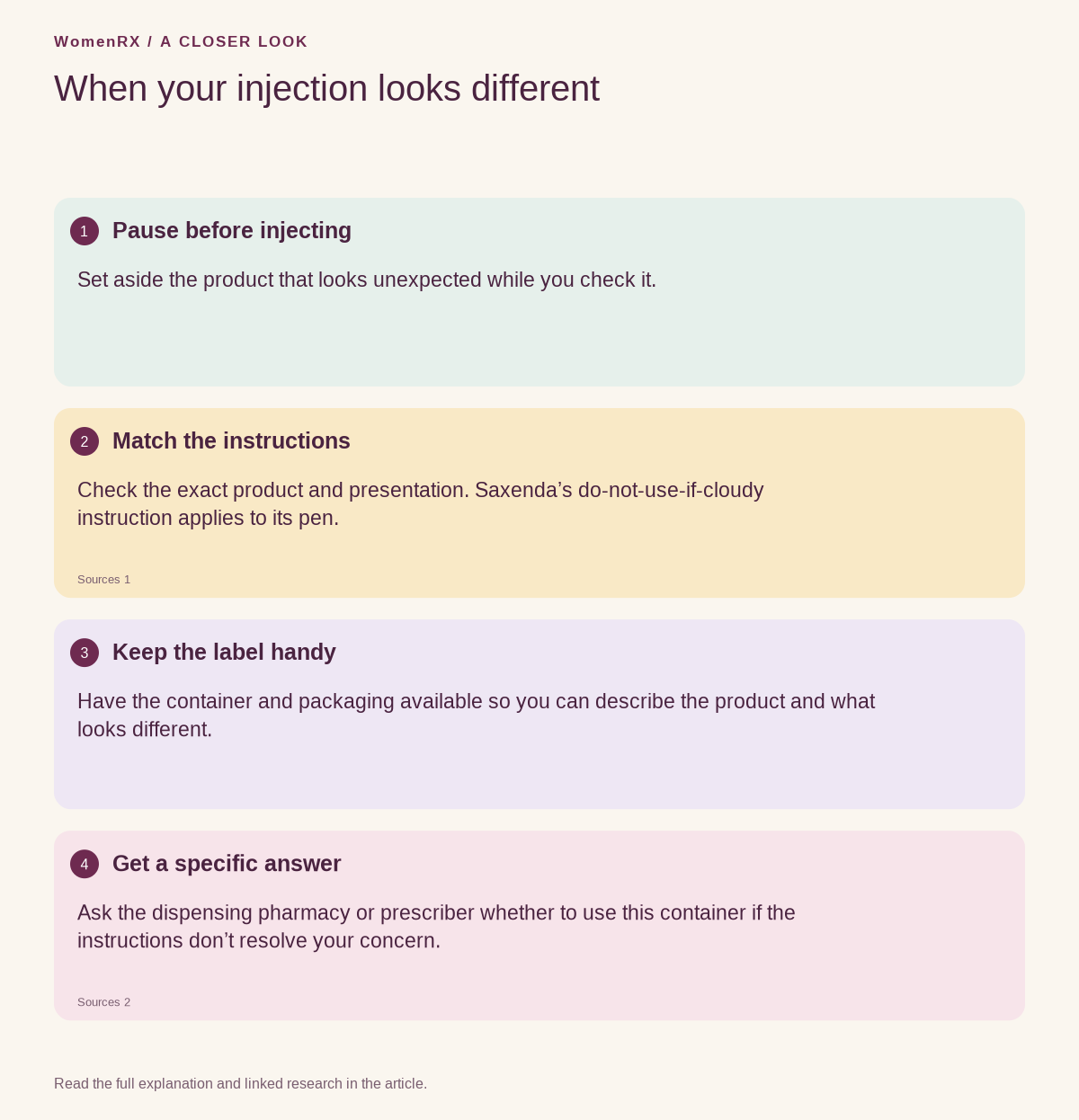
When your injection looks different
Pause before injecting: Set aside the product that looks unexpected while you check it.
Match the instructions: Check the exact product and presentation. Saxenda’s do-not-use-if-cloudy instruction applies to its pen.1
Keep the label handy: Have the container and packaging available so you can describe the product and what looks different.
Get a specific answer: Ask the dispensing pharmacy or prescriber whether to use this container if the instructions don’t resolve your concern.2
Read the figure as text
A sequence for checking an unexpected appearance without guessing what caused it.- Pause before injecting: Set aside the product that looks unexpected while you check it.
- Match the instructions: Check the exact product and presentation. Saxenda’s do-not-use-if-cloudy instruction applies to its pen.1
- Keep the label handy: Have the container and packaging available so you can describe the product and what looks different.
- Get a specific answer: Ask the dispensing pharmacy or prescriber whether to use this container if the instructions don’t resolve your concern.2
Sources you can check
- SAXENDA (LIRAGLUTIDE) INJECTION, SOLUTION [NOVO NORDISK PHARMACEUTICAL INDUSTRIES, LP] | US prescribing information and patient instructionsAccessed 2026-09-25Return to first citation
- VICTOZA (LIRAGLUTIDE) INJECTION [NOVO NORDISK] | US prescribing information and patient instructionsAccessed 2026-09-25Return to first citation