Can Perimenopause Cause Weight Loss? When to Look Beyond Hormones
Changing periods don’t explain ongoing, unintended weight loss by themselves. The pattern and any other changes matter.
Changing or skipped periods can be part of perimenopause, but they don’t explain continuing weight loss you didn’t intend. If the loss continues without a change in your eating or activity, arrange a medical check-up, especially if you have other new symptoms. Irregular periods also don’t mean pregnancy is impossible before menopause is established. 1 2

Changing periods don’t explain a downward trend
Perimenopause can make periods less predictable, and their length or flow can change. Those changes alone don’t explain ongoing weight loss you didn’t intend. Research on weight during the transition has examined weight gain and women’s experiences of body changes; it doesn’t establish that perimenopause explains persistent, unexplained loss. 2 3 4
One scale reading can’t tell you whether your weight is truly trending down. Consider the readings and dates you already have, and whether the change is continuing. The key distinction is between a brief fluctuation and ongoing loss without a change you meant to make to your eating or activity.
Several kinds of changes can contribute
Unintended weight loss can have different causes, and sometimes more than one factor is involved. Possibilities include stress or mental health concerns, digestive conditions, an overactive thyroid, type 1 diabetes, heart conditions, poor nutrition, and side effects of some medicines. Cancer is another possible cause, but weight loss by itself doesn’t identify the reason. 1
Think about what changed around the time the loss began. For example, note whether your appetite or usual eating has shifted, whether stress has increased, whether you’ve had digestive problems, or whether a medication or supplement changed. This information can help put the weight pattern in context; it won’t tell you the cause on its own. 1
When to arrange a check-up
If you keep losing weight without trying and haven’t changed your eating or activity, arrange a medical appointment rather than assuming it’s part of perimenopause. If you’re losing weight along with other new symptoms, seek care promptly. 1
A short record can make it easier to describe what’s happening. Include:
- When you first noticed the change, with any weights and dates you already have.
- Whether your appetite, eating, or activity has changed.
- Other new symptoms, such as digestive problems.
- Major stressors and any medication or supplement changes.
- Whether pregnancy could be possible.
A clinician may ask about your health and consider whether tests or other evaluation are appropriate. The purpose of your notes is to make the pattern clearer, not to diagnose yourself. 1
Irregular periods don’t rule out pregnancy
Perimenopause is the transition before menopause. Menopause is defined as 12 months without a period; before that point, irregular or skipped periods don’t establish that pregnancy is impossible. If pregnancy could be relevant, mention it when you seek care. 2
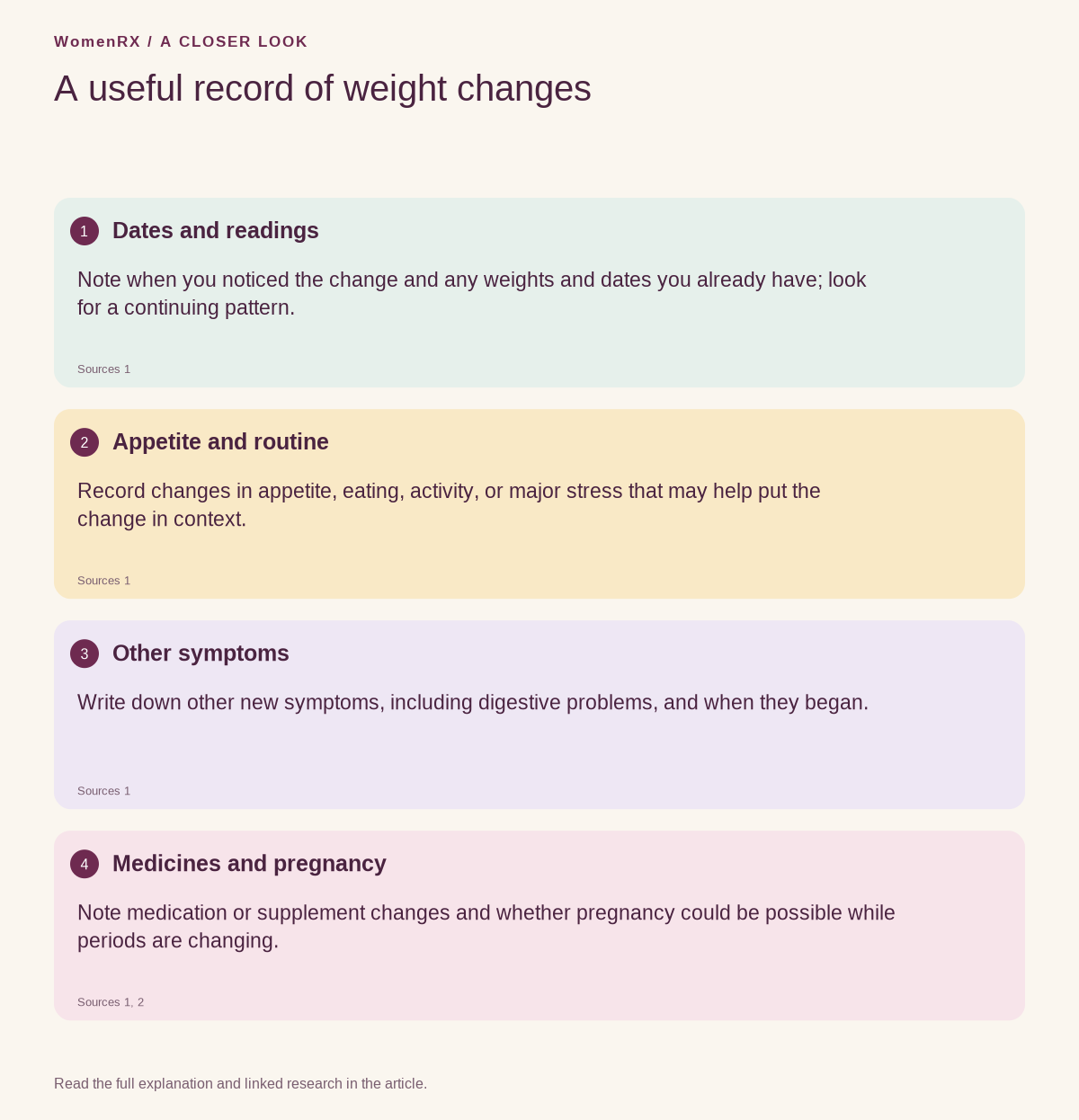
A useful record of weight changes
Dates and readings: Note when you noticed the change and any weights and dates you already have; look for a continuing pattern.1
Appetite and routine: Record changes in appetite, eating, activity, or major stress that may help put the change in context.1
Other symptoms: Write down other new symptoms, including digestive problems, and when they began.1
Medicines and pregnancy: Note medication or supplement changes and whether pregnancy could be possible while periods are changing.12
Read the figure as text
These prompts help you describe whether weight loss is continuing and what else changed around the same time.- Dates and readings: Note when you noticed the change and any weights and dates you already have; look for a continuing pattern.1
- Appetite and routine: Record changes in appetite, eating, activity, or major stress that may help put the change in context.1
- Other symptoms: Write down other new symptoms, including digestive problems, and when they began.1
- Medicines and pregnancy: Note medication or supplement changes and whether pregnancy could be possible while periods are changing.12
Sources you can check
- Unintentional weight loss - NHSAccessed 2026-09-25Return to first citation
- Menopause | Menopause Symptoms | MedlinePlusAccessed 2026-09-25Return to first citation
- "Weight loss is my goal and being healthy is my goal… I can get over the hot flashes": a qualitative exploration of menopausal transition experiences and preferences for weight management among White women.Kracht CL, St Romain J, Hardee JC, Santoro N, Redman LM, Marlatt KL. · Menopause (New York, N.Y.) · 2023Return to first citation
- Dairy Foods, Weight Change, and Risk of Obesity During the Menopausal Transition.Yuan M, Hu FB, Li Y, Cabral HJ, Das SK, Deeney JT, Moore LL. · The Journal of nutrition · 2023Return to first citation