Can Magnesium Help PMS? How to Judge the Evidence
Magnesium hasn’t been shown to reliably ease PMS, but symptom timing can help you understand what’s recurring before your period.
Magnesium isn’t an established PMS treatment. A systematic review found insufficient evidence that it improves psychological PMS symptoms; that finding doesn’t settle whether it helps a particular physical symptom. A daily record across at least two cycles can help you check whether symptoms rise before your period and ease afterward. 2
What the magnesium research can tell you
Magnesium hasn’t been shown to reliably treat PMS. A systematic review of randomized nutrition trials in people of reproductive age found insufficient evidence for magnesium’s effect on psychological PMS symptoms. The review covered 31 trials of different nutritional interventions, and only one was judged to have a low risk of bias. Those figures describe the review as a whole, not magnesium trials alone. 2
That conclusion has a boundary: the review focused on psychological symptoms. It doesn’t tell us whether magnesium eases a particular physical symptom, such as bloating or breast tenderness. So it’s more accurate to say that a dependable benefit hasn’t been established than to say magnesium cannot help anyone. NHS guidance likewise describes evidence for supplements such as magnesium for PMS as limited. 12
There’s also a difference between an association and a treatment result. In a cross-sectional study of 252 women with PMS in Iran, higher reported magnesium intake was associated with fewer psychological symptoms. Because the study measured diet and symptoms rather than testing magnesium as a treatment, it can’t show that taking a supplement would reduce symptoms. 3
Use timing to see what repeats
PMS can feel different from person to person, and symptoms may vary from month to month. Timing is a helpful clue: PMS symptoms typically worsen during the one to two weeks before menstruation and resolve by the start of the period or within a few days. The definition described in the review also includes symptoms that interfere with everyday life. 12
For at least two cycles, make a brief note each day. Record:
- The symptoms you notice, including days when you feel well.
- When bleeding starts and whether symptoms ease afterward.
- How much symptoms affect work, school, relationships, or other daily activities.
At the end of each cycle, look for a repeated rise before your period and a clear easing afterward. Prospective recording over two cycles is part of the PMS definition described in the review. Your notes can clarify the pattern, but they aren’t a diagnostic test. 2
If symptoms continue throughout the month or don’t reliably ease after your period begins, that’s different from the pattern described for PMS. Your record can make that distinction easier to explain when seeking care.
PMS and PMDD aren’t the same question
PMDD involves more intense symptoms and a greater effect on daily life than PMS. It has separate diagnostic criteria, including at least five symptoms, with at least one mood symptom. Evidence about magnesium and psychological symptoms of PMS shouldn’t be treated as proof that magnesium treats PMDD. 12
You don’t need to finish two cycles of tracking before seeking help if symptoms are seriously disrupting your life. NHS guidance recommends seeking help when PMS affects daily life. 1
If you’re weighing a supplement
Choose what you’d want to change before trying anything: for example, a recurring mood symptom or breast tenderness, and how much it affects your day. Cycle notes give you a clearer comparison than memory alone. Even if symptoms change, that won’t establish that magnesium caused the change. Current research doesn’t support a reliable promise of benefit. 2
If you take medicines, check with a pharmacist before starting a regular supplement. 1
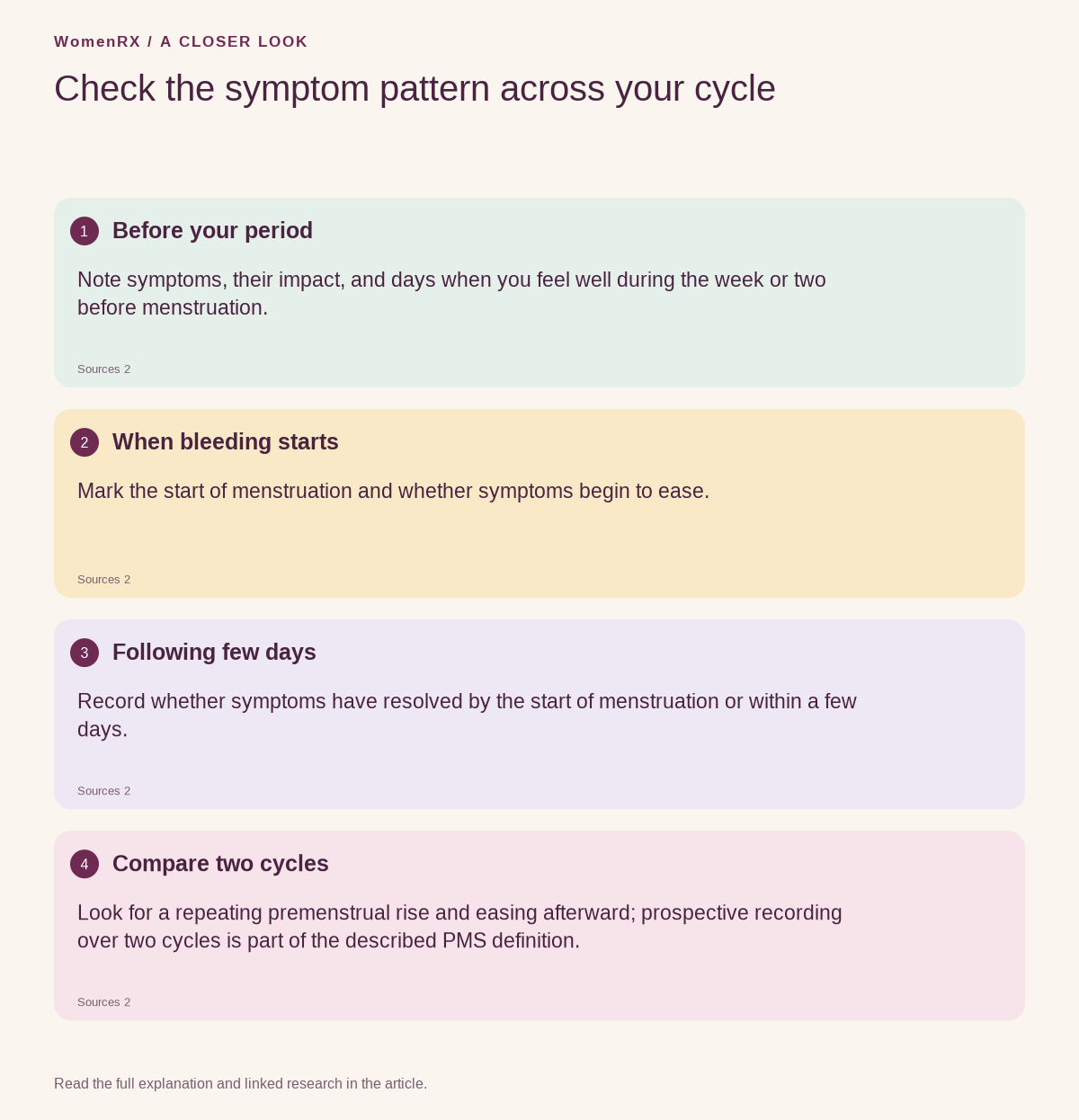
Check the symptom pattern across your cycle
Before your period: Note symptoms, their impact, and days when you feel well during the week or two before menstruation.2
When bleeding starts: Mark the start of menstruation and whether symptoms begin to ease.2
Following few days: Record whether symptoms have resolved by the start of menstruation or within a few days.2
Compare two cycles: Look for a repeating premenstrual rise and easing afterward; prospective recording over two cycles is part of the described PMS definition.2
Read the figure as text
Record symptoms and their effect each day, then compare whether they rise before menstruation and ease afterward across at least two cycles.- Before your period: Note symptoms, their impact, and days when you feel well during the week or two before menstruation.2
- When bleeding starts: Mark the start of menstruation and whether symptoms begin to ease.2
- Following few days: Record whether symptoms have resolved by the start of menstruation or within a few days.2
- Compare two cycles: Look for a repeating premenstrual rise and easing afterward; prospective recording over two cycles is part of the described PMS definition.2
Sources you can check
- PMS (premenstrual syndrome) - NHSAccessed 2026-09-25Return to first citation
- Effect of nutritional interventions on the psychological symptoms of premenstrual syndrome in women of reproductive age: a systematic review of randomized controlled trials.Robinson J, Ferreira A, Iacovou M, Kellow NJ. · Nutrition reviews · 2025Return to first citation
- Relationship between dietary intake, eating attitudes, and premenstrual syndrome severity among Iranian women: insights from a cross-sectional study.Mighani S, Shivyari FT, Razzaghi A, Amerzadeh M, Javadi M. · Journal of eating disorders · 2025Return to first citation