Can Hot Flashes Happen in Pregnancy? When to Test
Hot flashes can happen during pregnancy, but a pregnancy test, not a sudden feeling of heat, can tell you whether you're pregnant.
Yes, nighttime hot flashes have been reported during pregnancy and after delivery, but they aren't a reliable way to tell whether you're pregnant.3 If pregnancy is possible, a home test is most reliable from the first day of a missed period. If you don't know when your period is due, test at least 21 days after the sex that could have led to pregnancy.6
What a hot flash can, and can't, tell you
Feeling suddenly hot may make you wonder about pregnancy, especially if your period is late. Hot flashes do happen during pregnancy: in a study of 429 women, 35% reported nighttime hot flashes during pregnancy and 29% reported them after delivery. But the pregnancy interviews began at 20 weeks. The study doesn't tell us whether a hot flash is an early pregnancy sign or how likely pregnancy is when you have one.3
Hot flashes also occur around perimenopause and menopause.5 If you've recently given birth, postpartum hot flashes are another possibility.3 Those contexts may help you make sense of the sensation, but the sensation itself can't sort them out. If pregnancy is possible, use a test rather than trying to read the answer from how hot you feel.
Choose the test date, not the symptom
Home pregnancy tests detect human chorionic gonadotropin, or hCG. Timing matters because testing too early can give you a negative result that isn't reliable. Most tests are most reliable starting on the first day of a missed period. If your cycles are unpredictable or you don't know when the next period is due, test at least 21 days after the sex that could have led to pregnancy. Follow the instructions for your particular test.6
A positive home result is almost certainly correct when the test is used properly. If the result is negative but you still think you might be pregnant, wait a few days and test again. If a second test is negative and your period still hasn't arrived, contact a healthcare provider to discuss what to do next.6 If you test positive and plan to continue the pregnancy, arrange prenatal care so you can get information and have any health concerns addressed early.4
Notice when “hot” means something else
A hot flash is a feeling; a fever is a body temperature higher than normal. If you're unsure which you're experiencing, checking your temperature can help you describe what's happening. Infections cause most fevers, so don't dismiss a measured fever as a pregnancy or menopause symptom, particularly if you feel ill.2
Pain deserves its own attention rather than being folded into a question about hot flashes. Get medical help immediately for sudden, sharp abdominal pain, or abdominal pain along with chest, neck, or shoulder pain.1 You don't need to wait for a pregnancy-test result to act on those symptoms.
If the tests don't explain what's going on and episodes of heat keep bothering you, discuss the pattern and any other symptoms with a healthcare provider. The useful distinction is simple: test for pregnancy at the right time, and assess a fever or concerning pain on its own terms.
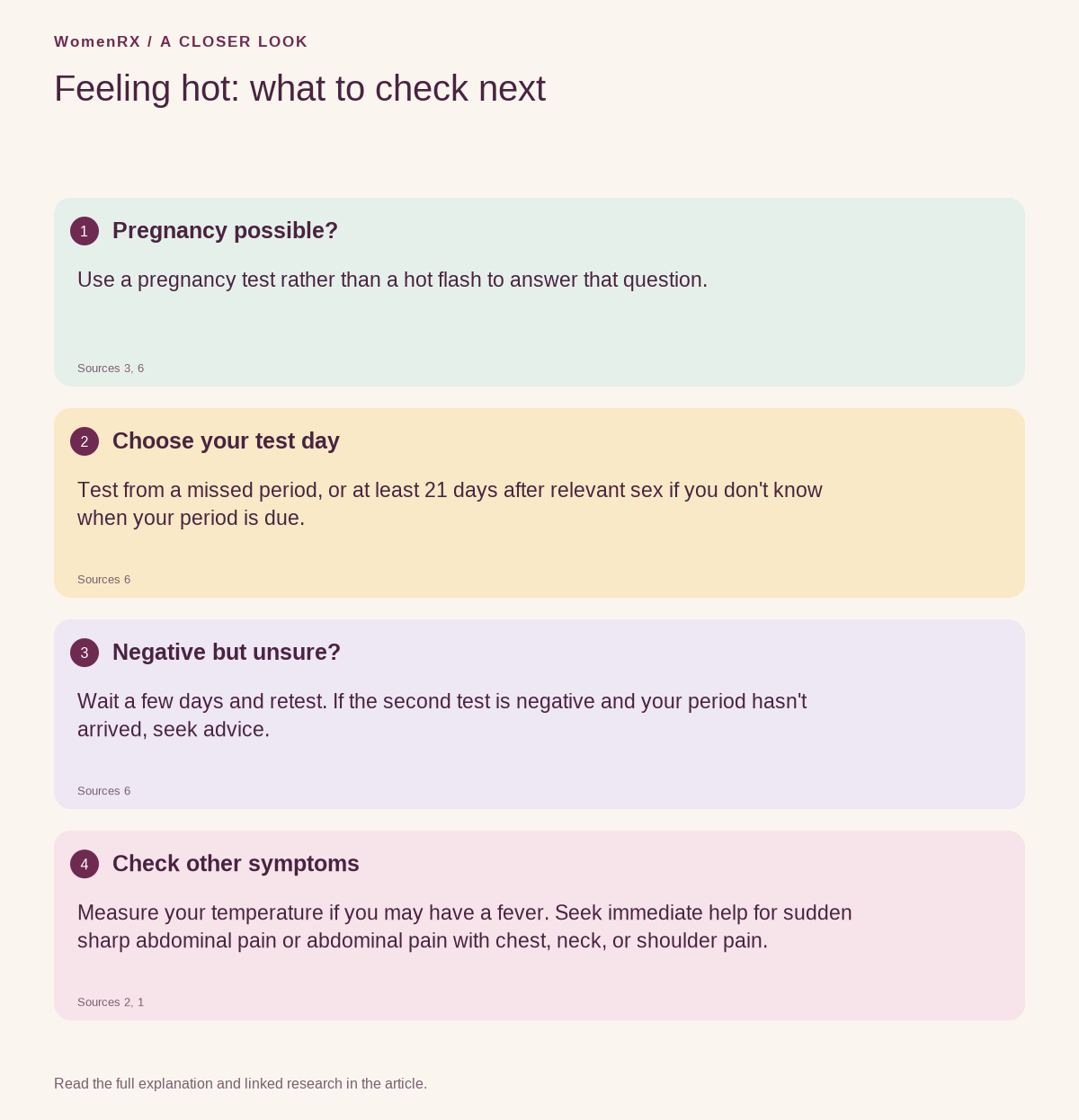
Feeling hot: what to check next
Pregnancy possible?: Use a pregnancy test rather than a hot flash to answer that question.36
Choose your test day: Test from a missed period, or at least 21 days after relevant sex if you don't know when your period is due.6
Negative but unsure?: Wait a few days and retest. If the second test is negative and your period hasn't arrived, seek advice.6
Check other symptoms: Measure your temperature if you may have a fever. Seek immediate help for sudden sharp abdominal pain or abdominal pain with chest, neck, or shoulder pain.21
Read the figure as text
A hot flash doesn't answer the pregnancy question. These steps separate test timing from symptoms that need their own attention.- Pregnancy possible?: Use a pregnancy test rather than a hot flash to answer that question.36
- Choose your test day: Test from a missed period, or at least 21 days after relevant sex if you don't know when your period is due.6
- Negative but unsure?: Wait a few days and retest. If the second test is negative and your period hasn't arrived, seek advice.6
- Check other symptoms: Measure your temperature if you may have a fever. Seek immediate help for sudden sharp abdominal pain or abdominal pain with chest, neck, or shoulder pain.21
More questions, answered
Can I take a pregnancy test before my period is due?
Some sensitive tests can be used that early, but a negative result may be less reliable if you test too soon. Most tests are most reliable from the first day of a missed period.6
Can I still take a pregnancy test if I'm using contraception?
Yes. Contraceptive hormones such as those in the pill don't stop a pregnancy test from working, and no contraceptive method is completely effective.6
Sources you can check
- Abdominal Pain | MedlinePlusAccessed 2026-09-25Return to first citation
- Fever: MedlinePlusAccessed 2026-09-25Return to first citation
- Prospective evaluation of nighttime hot flashes during pregnancy and postpartum.Thurston RC, Luther JF, Wisniewski SR, Eng H, Wisner KL. · Fertility and sterility · 2013Return to first citation
- Pregnancy | Pregnant | Prenatal Care | MedlinePlusAccessed 2026-09-25Return to first citation
- Things you can do to help menopause and perimenopause symptoms - NHSAccessed 2026-09-25Return to first citation
- Doing a pregnancy test - NHSAccessed 2026-09-25Return to first citation