Can Diet Support Skin Health? What Research Shows
Carotenoid-rich foods have been studied for modest support of skin’s response to sunlight and signs of photoaging, but that is not the same as treating acne or replacing sunscreen.
A varied diet with colorful fruits and vegetables can provide carotenoids and vitamin C, nutrients studied for different reasons. Human research on carotenoids suggests possible effects on UV-related redness and some measures of photoaging, including hydration and elasticity, but it doesn’t establish that a particular food clears acne or reverses skin aging. Dietary photoprotection is much weaker than sunscreen. 2 3 4
“Skin health” can mean several different things
A food might supply nutrients involved in normal body processes without being proven to change how your skin looks or feels. That distinction matters: vitamin C is needed to make collagen, for example, but this role alone doesn’t show that eating extra vitamin C reduces wrinkles. 2
The most directly relevant human evidence here concerns carotenoids, plant pigments found in foods such as carrots, sweet potatoes, spinach, tomatoes, and other fruits and vegetables. Some carotenoids, including beta-carotene and lycopene, have been studied for effects on skin exposed to ultraviolet (UV) light. 1 3 4
What carotenoid studies have measured
Reviews of human intervention studies report potential effects on UV-induced skin redness and measures associated with photoaging. The outcomes described include skin hydration, elasticity, texture, wrinkles, and age spots. These findings suggest a possible supporting role, not a guaranteed visible change, and they don’t establish that one food is best. 3 4
The distinction between dietary support and sun protection is especially useful. The review evidence describes dietary carotenoid effects as substantially less protective than topical sunscreen. Eating tomatoes or carrots should not be treated as a substitute for sunscreen or other sun-protective measures. 3 4
Photoaging findings also aren’t proof that food prevents skin cancer. The carotenoid review says available studies had not confirmed a protective role against skin cancers caused by UV exposure. 3
A food-first way to think about nutrients
You don’t need a “skin superfood” ranking to put these findings into practice. If you want to include foods that provide studied nutrients, examples include:
- Carotenoids: carrots, sweet potatoes, spinach, and tomato products provide provitamin A carotenoids or other carotenoids. 1
- Vitamin C: oranges, strawberries, red peppers, broccoli, and kiwifruit are food sources. Vitamin C supports collagen formation, but that fact is not evidence that extra servings will produce a particular cosmetic result. 2
These are examples, not a treatment plan. The research on photoaging includes both carotenoid-rich diets and supplements, and food is a mix of nutrients and other compounds. That makes it difficult to credit a reported effect to one ingredient alone. 4
Evidence on multi-ingredient supplements is harder to interpret still. A review found varied formulations, methods, and outcome measures across the studies, making the results difficult to combine; most products had been tested in only one study. So a positive result for one formulation doesn’t establish that other “skin” supplements will work. 5
Don’t confuse appearance research with acne treatment
The carotenoid and photoaging findings don’t show that eating particular foods reliably clears acne. The supplement review focused on photoaged skin, not on establishing a dietary treatment for acne. If acne is your concern, these findings aren’t a reason to replace an effective acne treatment with a food or supplement. 3 5
Likewise, vitamin C’s role in collagen production and carotenoids’ potential effects on UV-related redness are distinct from evidence that a nutrient treats a skin disease. The outcomes studied matter more than a broad claim that something is “good for skin.” 2 3
What about pregnancy, menopause, and aging?
The evidence summarized in these reviews doesn’t tell us whether carotenoid-related skin effects differ during pregnancy, menopause, or other stages of women’s lives. One review of oral multi-ingredient supplements says most studies primarily enrolled women, but it doesn’t establish results for those specific life stages. 5
Pregnancy also changes the safety context for supplements containing preformed vitamin A. High supplemental intakes are not a skin-care shortcut: NIH guidance advises women who are or might be pregnant not to take high doses of vitamin A supplements. Food sources of provitamin A carotenoids, such as carrots and spinach, are different from preformed vitamin A supplements. 1
A practical takeaway: include a range of fruits and vegetables if they fit your diet, but choose skin care and treatment based on the outcome you want. Diet may offer some support for UV-related skin responses; it hasn’t been shown here to replace sun protection or reliably treat a skin condition.
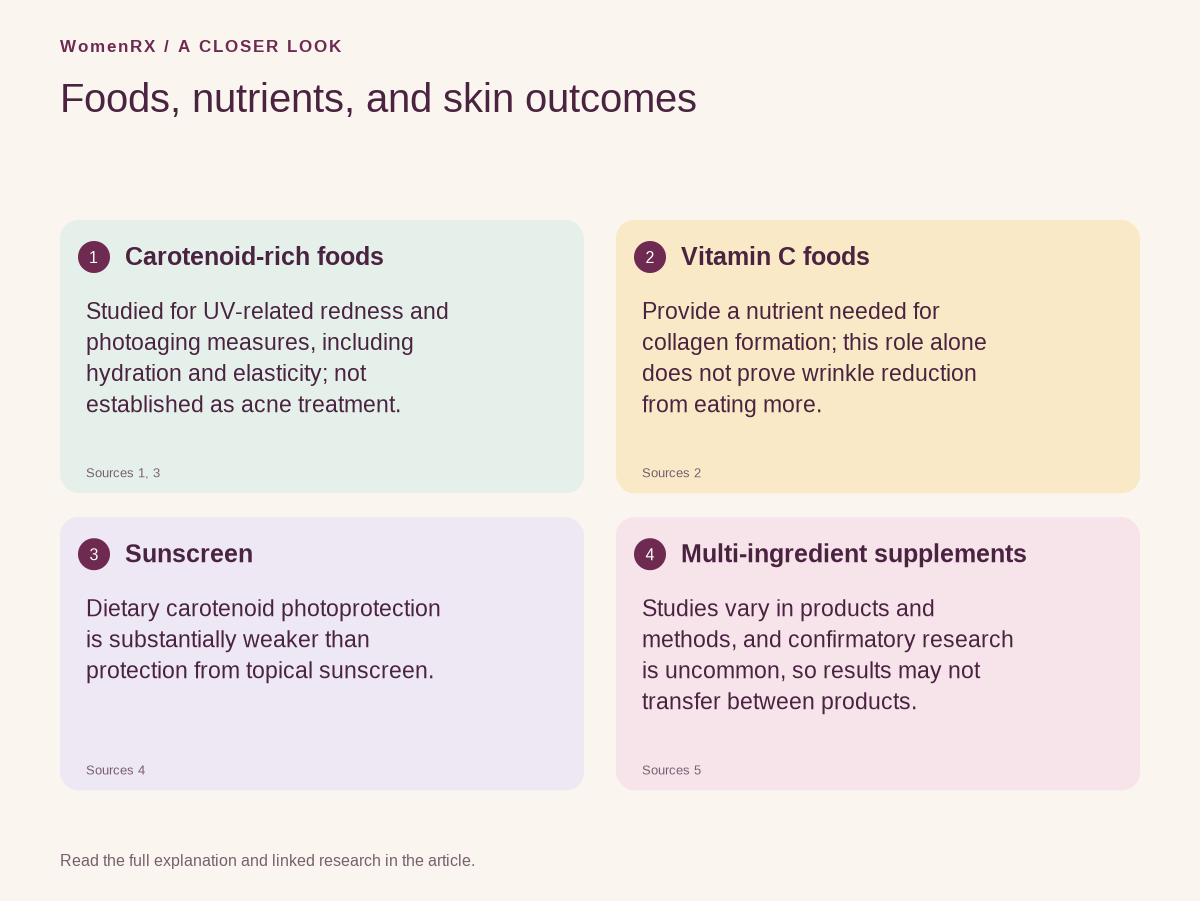
Foods, nutrients, and skin outcomes
Carotenoid-rich foods: Studied for UV-related redness and photoaging measures, including hydration and elasticity; not established as acne treatment.13
Vitamin C foods: Provide a nutrient needed for collagen formation; this role alone does not prove wrinkle reduction from eating more.2
Sunscreen: Dietary carotenoid photoprotection is substantially weaker than protection from topical sunscreen.4
Multi-ingredient supplements: Studies vary in products and methods, and confirmatory research is uncommon, so results may not transfer between products.5
Read the figure as text
These distinctions show which skin outcomes have been studied and where a nutrient’s biological role should not be mistaken for a proven treatment.- Carotenoid-rich foods: Studied for UV-related redness and photoaging measures, including hydration and elasticity; not established as acne treatment.13
- Vitamin C foods: Provide a nutrient needed for collagen formation; this role alone does not prove wrinkle reduction from eating more.2
- Sunscreen: Dietary carotenoid photoprotection is substantially weaker than protection from topical sunscreen.4
- Multi-ingredient supplements: Studies vary in products and methods, and confirmatory research is uncommon, so results may not transfer between products.5
More questions, answered
Can eating more vitamin C reduce wrinkles?
Vitamin C is needed for collagen production, but that biological role doesn’t establish that eating extra vitamin C reduces wrinkles. The skin findings discussed here are more directly about carotenoids and photoaging outcomes. 2 3
Can carotenoid-rich foods replace sunscreen?
No. Reviews describe dietary carotenoids as providing much less photoprotection than topical sunscreen. Foods should be viewed as possible support, not a replacement for sun protection. 3 4
Sources you can check
- Vitamin A and Carotenoids - Health Professional Fact SheetAccessed 2026-09-25Return to first citation
- Vitamin C - Health Professional Fact SheetAccessed 2026-09-25Return to first citation
- Do We Utilize Our Knowledge of the Skin Protective Effects of Carotenoids Enough?Balić A, Mokos M. · Antioxidants (Basel, Switzerland) · 2019Return to first citation
- β-Carotene and other carotenoids in protection from sunlight.Stahl W, Sies H. · The American journal of clinical nutrition · 2012Return to first citation
- A Review of Clinical Trials Conducted With Oral, Multicomponent Dietary Supplements for Improving Photoaged Skin.Birnbaum J, Le Moigne A, Dispensa L, Buchner L. · Journal of drugs in dermatology : JDD · 2015Return to first citation