Can Dehydration Trigger a Menopausal Hot Flash?
A sudden hot flash and feeling overheated can overlap, but fluid-loss clues help you decide what needs attention.
It’s not clear whether dehydration itself triggers menopausal hot flashes. A hot flash typically comes on suddenly in the face, neck, or chest and may bring sweating; being hot after exercise or time in a warm place has another possible explanation.53 If you’re peeing less than usual, your urine is dark yellow, or you feel dizzy when you stand, pay attention to fluid loss rather than assuming it’s menopause.3
Notice what happened first
A menopausal hot flash is a sudden wave of feeling very hot, or sometimes cold, in the face, neck, and chest. It can bring sweating, a racing heartbeat, anxiety, or dizziness, and may last several minutes.5 If you’re in perimenopause and also noticing changes to your periods, that context may make a hot flash more plausible, though it doesn’t identify the cause of every flushed feeling.5
Heat and sweating can also leave you uncomfortable and short of fluids. For example, feeling hot after working outdoors on a warm day, sweating heavily, and then noticing darker urine gives you a reason to consider dehydration. Time in a hot environment and heavy sweating are recognized dehydration risks.3 Timing and context are clues, not a test that can tell these experiences apart with certainty.
There’s a wrinkle: a hot flash itself can make you sweat.5 If you feel thirsty for a drink after a sweaty episode, that sequence wouldn’t show that a lack of fluids started it. The menopause guidance here describes hot flashes, and dehydration guidance describes fluid loss; neither resolves whether dehydration causes a menopausal hot flash.523 So it makes sense to address possible dehydration without counting on water to prevent the next flash.
Look for fluid-loss clues, not just warmth
Dehydration means losing more fluid than you take in. Not drinking enough, fever, vomiting or diarrhea, and sweating in hot weather can all contribute.23 Feeling hot alone doesn’t tell you whether you’re dehydrated. Dark yellow urine or peeing less than usual, unusual tiredness, and dizziness on standing that doesn’t go away are more useful clues to take seriously.3
If those clues appear after heat, exercise, or illness, drink fluids. If you’ve been vomiting and drinking feels difficult, small sips may be easier to manage.3 Get medical help promptly if you remain dizzy when you stand, are unusually tired, or are peeing less than normal. Difficulty breathing or being difficult to wake calls for emergency care.3
At night, consider the room as well as the episode
Waking up sweaty doesn’t automatically mean a menopausal night sweat. Bedding or a room that’s too warm can make anyone sweat. Night sweats can also soak nightclothes and bedding even when the sleeping space is cool; menopause symptoms are one possible cause, but not the only one.1
If it happens again, jot down just enough to spot context: Did a sudden wave of heat wake you, or did you wake already warm under heavy bedding? Was the room cool? Had you been ill, exercising in the heat, or losing fluids that day? This won’t diagnose a trigger. It can help you describe what’s happening without treating every sweaty night as either dehydration or menopause. Regular night sweats that wake or worry you deserve a medical assessment, especially if they occur with fever-like symptoms, a cough, diarrhea, or unexplained weight loss.1
If hot flashes keep returning
Hydration matters when you’re losing fluids, but drinking more water isn’t an established hot-flash treatment. The 2023 North American Menopause Society position statement identifies treatments with evidence for menopausal vasomotor symptoms, including cognitive behavioral therapy, clinical hypnosis, and several prescription options. It does not list increased water intake as an established treatment, and it does not recommend avoiding suspected triggers as a proven treatment strategy.4
That distinction can save you from an unhelpful experiment: drink when fluid loss needs attention, but don’t blame yourself for a hot flash that happens despite staying hydrated. If the episodes are disrupting sleep or daily life, there are evidence-based treatment options to discuss rather than relying on water alone.4
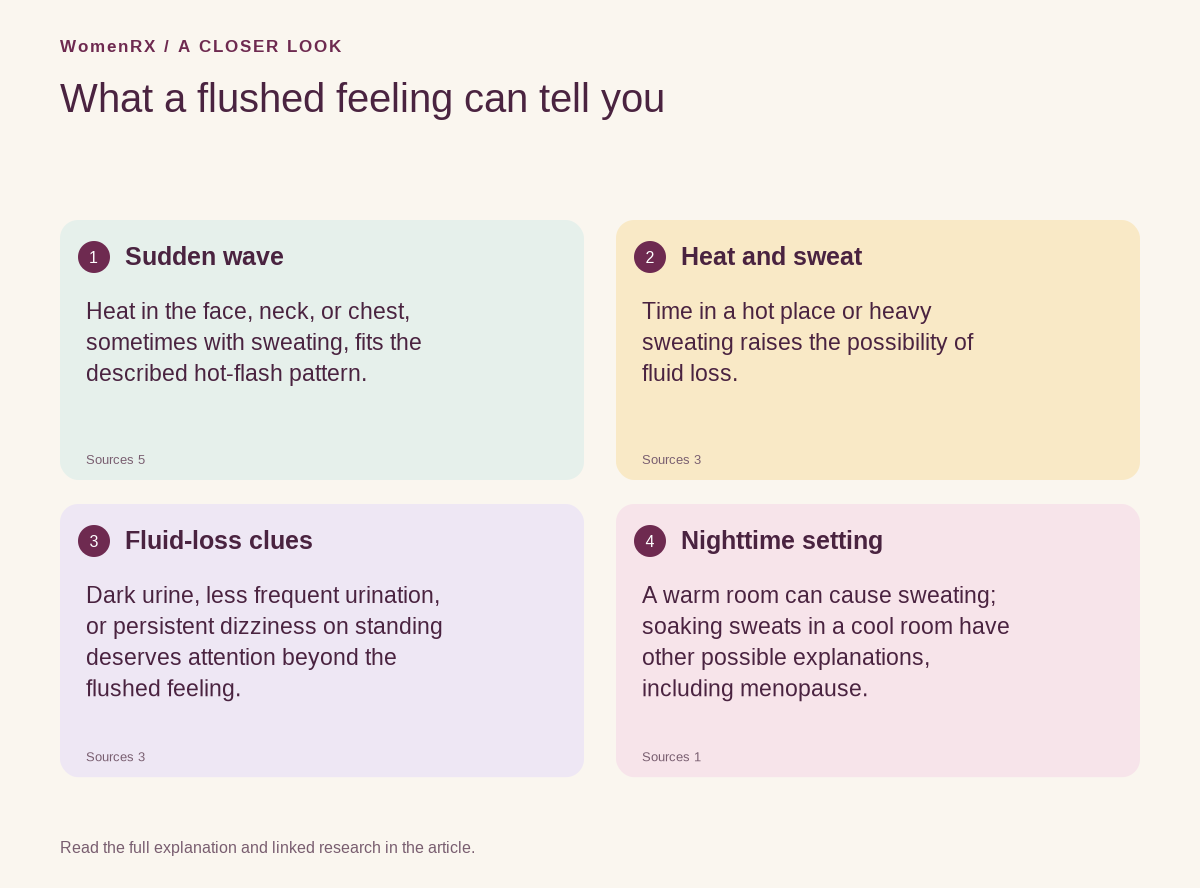
What a flushed feeling can tell you
Sudden wave: Heat in the face, neck, or chest, sometimes with sweating, fits the described hot-flash pattern.5
Heat and sweat: Time in a hot place or heavy sweating raises the possibility of fluid loss.3
Fluid-loss clues: Dark urine, less frequent urination, or persistent dizziness on standing deserves attention beyond the flushed feeling.3
Nighttime setting: A warm room can cause sweating; soaking sweats in a cool room have other possible explanations, including menopause.1
Read the figure as text
These clues point toward different questions; none proves what caused an individual episode.- Sudden wave: Heat in the face, neck, or chest, sometimes with sweating, fits the described hot-flash pattern.5
- Heat and sweat: Time in a hot place or heavy sweating raises the possibility of fluid loss.3
- Fluid-loss clues: Dark urine, less frequent urination, or persistent dizziness on standing deserves attention beyond the flushed feeling.3
- Nighttime setting: A warm room can cause sweating; soaking sweats in a cool room have other possible explanations, including menopause.1
Sources you can check
- Night sweats - NHSAccessed 2026-09-25Return to first citation
- Dehydration: MedlinePlusAccessed 2026-09-25Return to first citation
- Dehydration - NHSAccessed 2026-09-25Return to first citation
- The 2023 nonhormone therapy position statement of The North American Menopause Society.Menopause (New York, N.Y.) · 2023Return to first citation
- Symptoms of menopause and perimenopause - NHSAccessed 2026-09-25Return to first citation