Burnout or Something Else? Making Sense of Exhaustion
Where exhaustion shows up, what comes with it, and whether sleep restores you can help point toward the right kind of support.
Burnout may fit when exhaustion comes with growing distance from your work or a sense that you can’t do it effectively. But fatigue can also come from depression, anxiety, disrupted sleep, pregnancy, medications, or a physical condition, and more than one cause can be present. If it’s lasted weeks or is limiting daily life, a primary care visit is a useful next step. 43

You might call it burnout because work is relentless, or because you finish a day of caring for others with nothing left for yourself. That description can be useful, but it doesn’t tell you whether work stress is the whole explanation. Notice what else has changed: your interest in things outside work, your level of worry, the quality of your sleep, and how well you can manage ordinary tasks. Those differences can guide your next move without turning a symptom list into a diagnosis. 362
When burnout fits, and when the picture is wider
Burnout describes a pattern associated with chronic workplace stress: exhaustion, a more cynical or detached feeling about work, and a reduced sense of effectiveness. It isn’t classified as a mental disorder. Its symptoms can overlap with depression and anxiety, and the conditions can occur together. Workplace factors such as excessive demands, unclear roles, too few resources, and limited support may all matter. 4
That makes context useful, but not conclusive. For example, if you feel especially depleted or detached during work, it’s worth looking at what in the job could change. If you also feel unable to enjoy a weekend activity you usually like, or your mood and functioning have changed across the rest of your life, don’t assume a break from work is the only help you need. Depression can affect enjoyment, thinking, sleep, appetite, energy, and daily functioning. 46
If caring for others, at work or at home, is part of what leaves you depleted, you don’t need to decide whether the word “burnout” technically fits before asking for help with the load. Practical support from other people can be part of caring for your mental health. 10
Clues that point beyond work stress
Low mood or lost interest across your life. Depression is more than sadness. It can make it hard to think, work, sleep, eat, or enjoy life. If symptoms are present most of the day, nearly every day, for at least two weeks, talk with a health care provider. Depression can be treated with talk therapy, medication, or both. 6
Worry that keeps going. Anxiety deserves attention when fear or worry is excessive and interferes with life, even if work is one of its subjects. Generalized anxiety disorder involves excessive worry about everyday concerns, such as health, money, work, or family, on almost every day for at least six months. That description isn’t a reason to wait six months to seek help for distressing worry. Talk therapy, medication, or both are established treatment approaches for anxiety disorders. 8910
Sleep that isn’t restoring you. Too little sleep is one possibility, but interrupted or poor-quality sleep can also affect thinking, mood, and daytime functioning. Trouble falling or staying asleep, an uncomfortable urge to move your legs, and sleep schedules disrupted by shift work are different clues worth mentioning. Loud snoring with snorting or choking sounds, especially alongside daytime drowsiness, raises the possibility of sleep apnea. A clinician can assess whether a sleep study is needed. 21
Fatigue with no clear single explanation. Pregnancy, anemia, thyroid disease, infections, other health conditions, and some medicines can contribute to fatigue. So can depression, anxiety, and sleep disorders. If you’ve felt tired for weeks, or the fatigue isn’t improving, contact a primary care provider rather than assuming you need to push through or find a better self-care routine. An evaluation can start with your symptoms, sleep and medical history, and an exam; tests may be considered based on what those reveal. 35
Life stage can change what deserves attention
During pregnancy or after birth, perinatal depression can involve intense sadness, anxiety, and fatigue that make daily care difficult. Postpartum depression can begin anytime in the first year after childbirth. If your mood or ability to care for yourself or your baby is changing, tell your pregnancy or postpartum care team rather than writing it off as ordinary tiredness. 67
During perimenopause, sleep problems and hot flashes may be part of the picture. More intense sadness, anxiety, irritability, or loss of enjoyment may instead signal depression that merits attention. Neither life stage makes every episode of exhaustion hormonal, and neither rules out a sleep or physical health problem. 63
Match the next step to what’s happening
If work demands seem central, identify the part that needs to change. For example, is the workload consistently more than the available time, or is the problem that priorities keep shifting without support? Those are different conversations to have with a manager or someone who can share the load. Those conversations shouldn’t replace care for persistent mood symptoms, poor sleep, or unexplained fatigue. 623
For fatigue lasting weeks, arrange a routine primary care visit. You can describe whether you feel sleepy, physically worn out, low in mood, or all three, and whether rest changes anything. Mention snoring or choking sounds during sleep if you know about them, along with pregnancy or postpartum status and medicines you take. These details help direct an evaluation; they aren’t a test you have to pass before seeking care. 31
Seek mental health support when symptoms are severe or distressing and have lasted two weeks or more. You can start with primary care or a mental health professional. If you’re thinking about suicide or struggling in a crisis, call or text 988 for the Suicide & Crisis Lifeline. In a life-threatening situation, call 911. 109
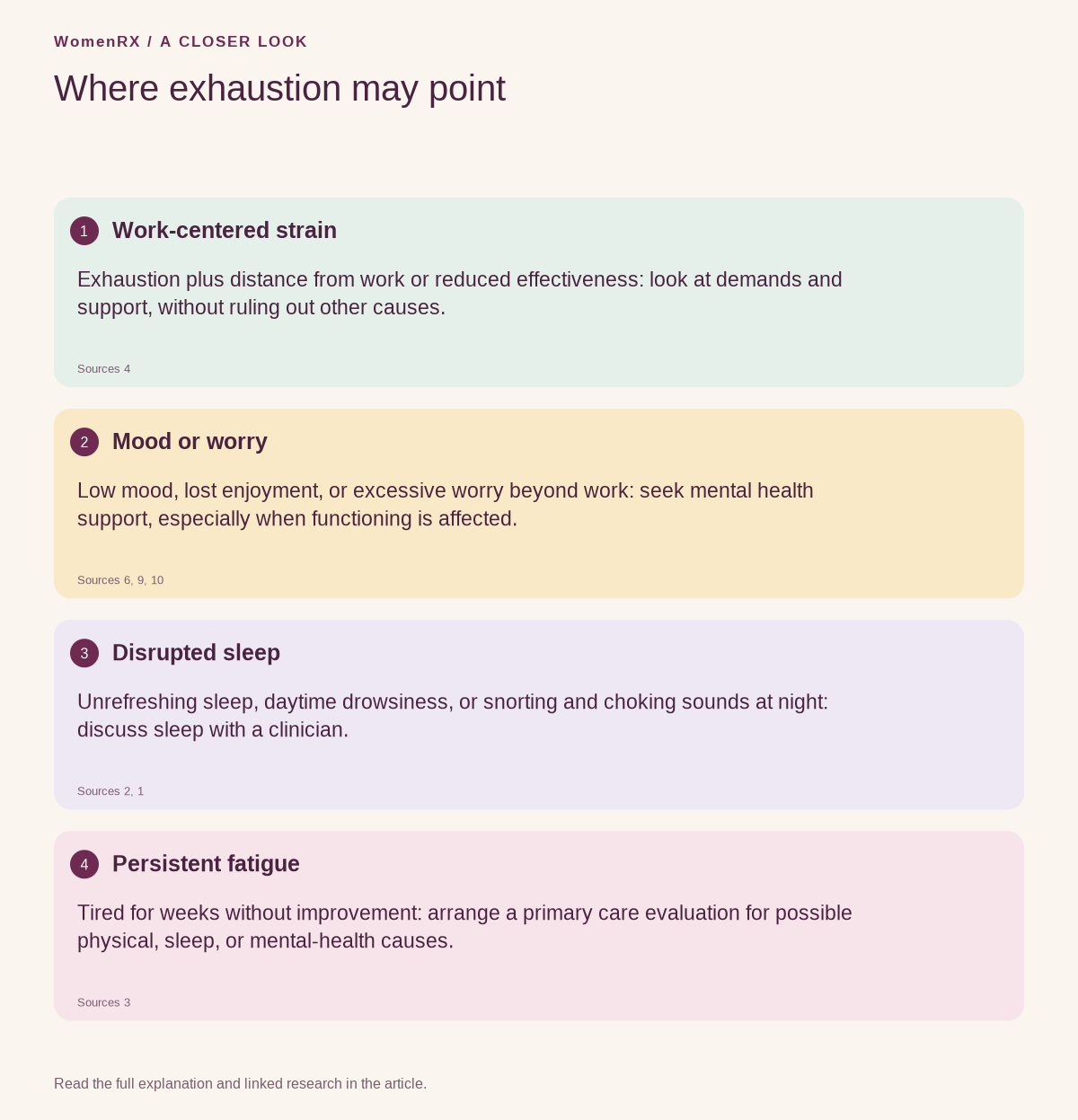
Where exhaustion may point
Work-centered strain: Exhaustion plus distance from work or reduced effectiveness: look at demands and support, without ruling out other causes.4
Mood or worry: Low mood, lost enjoyment, or excessive worry beyond work: seek mental health support, especially when functioning is affected.6910
Disrupted sleep: Unrefreshing sleep, daytime drowsiness, or snorting and choking sounds at night: discuss sleep with a clinician.21
Persistent fatigue: Tired for weeks without improvement: arrange a primary care evaluation for possible physical, sleep, or mental-health causes.3
Read the figure as text
These branches are conversation starters, not a diagnostic test. More than one may apply.- Work-centered strain: Exhaustion plus distance from work or reduced effectiveness: look at demands and support, without ruling out other causes.4
- Mood or worry: Low mood, lost enjoyment, or excessive worry beyond work: seek mental health support, especially when functioning is affected.6910
- Disrupted sleep: Unrefreshing sleep, daytime drowsiness, or snorting and choking sounds at night: discuss sleep with a clinician.21
- Persistent fatigue: Tired for weeks without improvement: arrange a primary care evaluation for possible physical, sleep, or mental-health causes.3
More questions, answered
Can burnout and depression happen at the same time?
Yes. Work-related burnout and depression are distinct descriptions, but their symptoms can overlap and they can coexist. Feeling burned out does not rule out depression, particularly when low mood or loss of enjoyment extends beyond work. 46
If I sleep enough hours, can sleep still be the problem?
Yes. Sleep quality matters as well as time in bed. Repeated interruptions or a sleep disorder can leave you drowsy and affect daily functioning, even when you’ve allowed enough time for sleep. 21
Sources you can check
- Sleep Apnea | MedlinePlusAccessed 2026-09-25Return to first citation
- Sleep Disorders | MedlinePlusAccessed 2026-09-25Return to first citation
- Fatigue: MedlinePlusAccessed 2026-09-25Return to first citation
- The Efficacy of Hypnotherapy in Reducing Burnout and Related Psychopathologies: Protocol for a Systematic Review and Meta-Analysis.Veeramachaneni S, Park E, Martin J, Ringor M, Brown G, Weisman A, Batra K. · JMIR research protocols · 2026Return to first citation
- Fatigue as the Chief Complaint-Epidemiology, Causes, Diagnosis, and Treatment.Maisel P, Baum E, Donner-Banzhoff N. · Deutsches Arzteblatt international · 2021Return to first citation
- Depression in Women: 4 Things to Know - National Institute of Mental Health (NIMH)Accessed 2026-09-25Return to first citation
- Postpartum Depression: MedlinePlusAccessed 2026-09-25Return to first citation
- Anxiety: MedlinePlusAccessed 2026-09-25Return to first citation
- NIMH: Women and mental healthAccessed 2026-09-25Return to first citation
- Caring for Your Mental Health - National Institute of Mental Health (NIMH)Accessed 2026-09-25Return to first citation