Burning Mouth Around Menopause: When Supplements Make Sense
Mouth burning can have treatable causes, so checking for an oral condition or confirmed deficiency is more useful than guessing at a supplement.
A burning or sore mouth is a symptom, not automatically burning mouth syndrome or a sign of menopause. Clinicians may consider oral conditions, medication effects, and deficiencies such as low iron or vitamin B12. Nutrient imbalances have been reported in secondary burning mouth, but that does not establish that supplements treat unexplained burning. A supplement is most relevant when evaluation identifies a deficiency. 5 6 7
Burning mouth is a symptom; BMS is a diagnosis
A burning tongue, sore mouth, or altered taste can have more than one explanation. Burning mouth syndrome (BMS) describes recurring burning or other unusual oral sensations, typically for more than two hours a day and more than three months, when no identifiable cause explains them. The mouth may have no visible lesions, and taste or touch sensations may also change. 5 6
If an oral condition, medication effect, or another identifiable cause explains the symptoms, the problem is different from primary BMS. That distinction matters because addressing a specific cause is not the same as taking supplements for unexplained burning. 5 6
Menopause is a possibility, not an explanation
Menopause appears among the proposed factors associated with burning-mouth symptoms, but the underlying causes of BMS remain unclear. That association does not show that lower estrogen is causing your symptoms, or that hormone treatment or a nutrient supplement will relieve them. 6
What an evaluation may consider
An oral examination can help identify local explanations such as candidiasis or irritation from dentures. A review of medicines and health history may also matter: medication side effects, diabetes, and Sjögren’s syndrome are among the possible contributors discussed in BMS literature. These are possibilities to assess, not a checklist of causes that applies to everyone. 6
Nutrient levels may be worth considering when symptoms or health history point in that direction. Reviews describe iron, zinc, B vitamins, and other nutrient imbalances in people with secondary BMS. Those reports show a possible association, not proof that a deficiency caused a particular person’s symptoms. 5 7
Some details can help guide that assessment. Vitamin B12 deficiency can cause glossitis, or inflammation of the tongue. It may occur because of problems absorbing B12, certain gastrointestinal conditions or surgeries, or prolonged use of medicines such as metformin or proton pump inhibitors. 4
Iron status is assessed using blood measures. Ferritin reflects iron stores, but inflammation can affect its level, so results may need to be considered alongside other information. 2
Zinc deficiency can affect taste, but a zinc blood level does not always correspond to dietary or supplemental intake and can vary with factors such as illness and the time of the blood draw. Symptoms alone, or one result in isolation, may not settle whether zinc is low. 1
Match supplements to a finding
A confirmed deficiency can call for its own treatment. But studies reporting nutrient imbalances in secondary BMS do not establish that supplements are a reliable treatment for primary BMS when no deficiency or other cause has been identified. A review of the literature calls for further studies, including clinical trials, to clarify the role of micronutrients. 7
Avoid starting high-dose iron or taking several nutrients “just in case.” Too much iron can harm the body, and iron supplements can cause constipation, nausea, vomiting, abdominal pain, or diarrhea. 3
A useful next step is to note when the burning began, whether it is continuous or recurring, and any changes in taste, oral products, dentures, or medicines. Bring that context to a dentist or clinician so the examination and any nutrient testing can be guided by your symptoms and health history, rather than by menopause timing alone.
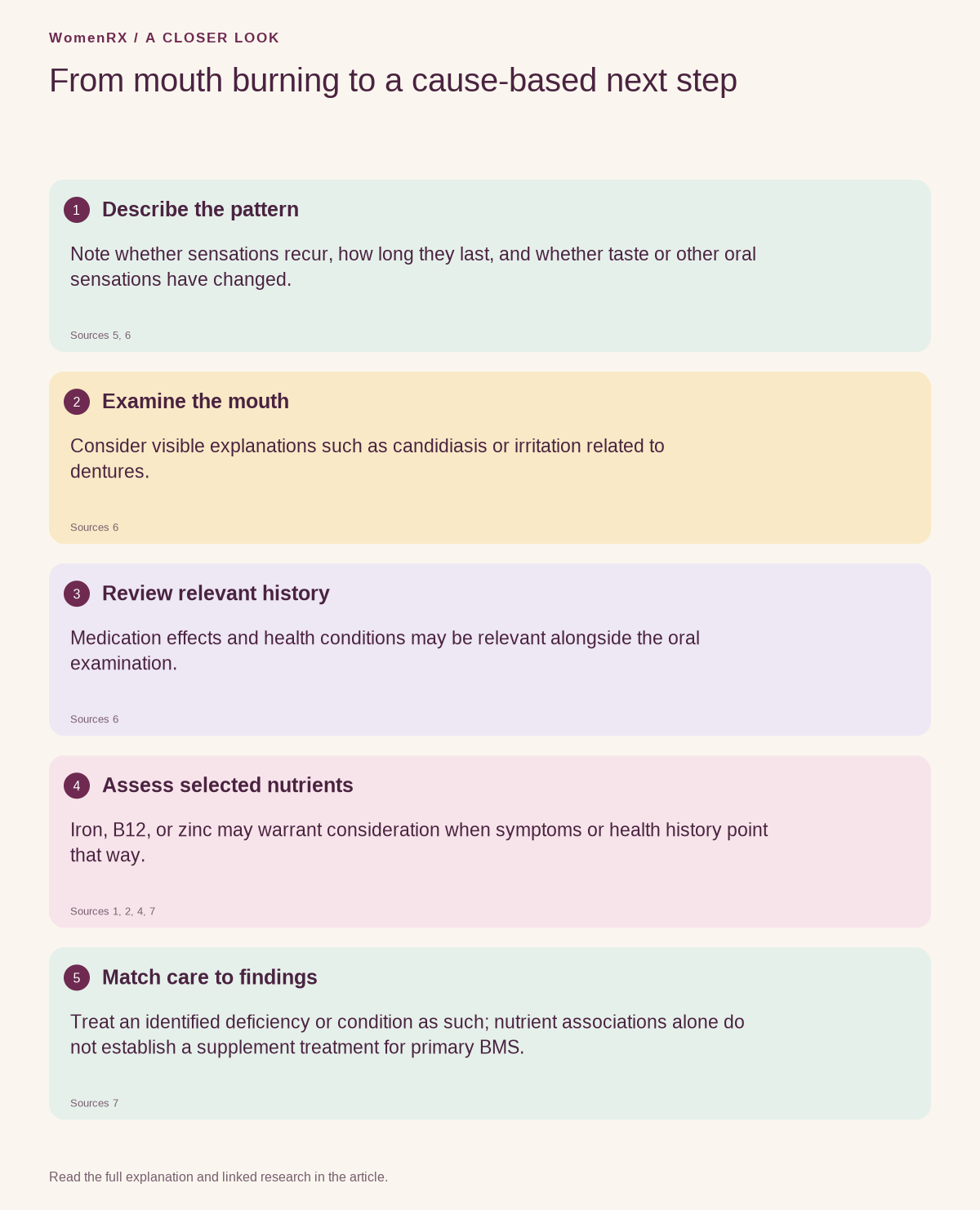
From mouth burning to a cause-based next step
Describe the pattern: Note whether sensations recur, how long they last, and whether taste or other oral sensations have changed.56
Examine the mouth: Consider visible explanations such as candidiasis or irritation related to dentures.6
Review relevant history: Medication effects and health conditions may be relevant alongside the oral examination.6
Assess selected nutrients: Iron, B12, or zinc may warrant consideration when symptoms or health history point that way.1247
Match care to findings: Treat an identified deficiency or condition as such; nutrient associations alone do not establish a supplement treatment for primary BMS.7
Read the figure as text
A simple path from noticing persistent symptoms to considering an oral examination, relevant health history, and targeted nutrient assessment.- Describe the pattern: Note whether sensations recur, how long they last, and whether taste or other oral sensations have changed.56
- Examine the mouth: Consider visible explanations such as candidiasis or irritation related to dentures.6
- Review relevant history: Medication effects and health conditions may be relevant alongside the oral examination.6
- Assess selected nutrients: Iron, B12, or zinc may warrant consideration when symptoms or health history point that way.1247
- Match care to findings: Treat an identified deficiency or condition as such; nutrient associations alone do not establish a supplement treatment for primary BMS.7
More questions, answered
Can BMS be present if my mouth looks normal?
Yes. BMS is characterized by recurring burning or altered sensations without identifiable causative lesions. A normal-looking mouth does not by itself confirm BMS; the diagnosis depends on whether another cause explains the symptoms. 5 6
Sources you can check
- Zinc - Health Professional Fact SheetAccessed 2026-09-25Return to first citation
- Iron - Health Professional Fact SheetAccessed 2026-09-25Return to first citation
- Iron: MedlinePlusAccessed 2026-09-25Return to first citation
- Vitamin B12 - Health Professional Fact SheetAccessed 2026-09-25Return to first citation
- Burning mouth syndrome and micronutrient deficiency: a systematic review protocol.Dutra R, Pauletto P, Guerra ENDS, Trevisani VFM, Maria Queiroz Araújo E, Fornias Sperandio F, De Luca Canto G, Batistella EA. · BMJ open · 2025Return to first citation
- Burning Mouth Syndrome and the Oral Microbiome: Unveiling Potential Links.Khorshidi Asl Z, Jafari F, Rezazadeh F, Kamyabi H. · Biomedicine hub · 2026Return to first citation
- Micronutrients status as a contributing factor in secondary burning mouth syndrome: A review of the literature.Gholizadeh N, Sheykhbahaei N. · Health science reports · 2024Return to first citation