Build a High-Fiber Salad That Works as a Meal
Start with vegetables, add a substantial source of fiber or protein, and count the dressing as part of the bowl.
For a salad that feels like a meal, use vegetables as the base, then add cooked lentils or another substantial ingredient, a grain if you like, and a measured dressing. In the examples below, swapping cooked lentils for chicken changes a bowl’s estimated fiber from 12.9 to 5.0 grams, while protein rises from 14.9 to 32.3 grams. Neither version is a universal meal portion.5
Start with what the greens can’t do alone
A large bowl of lettuce can look substantial without providing much fiber, protein, or energy. In the measured examples below, 40 grams of romaine contributes an estimated 0.8 gram of fiber and 0.5 gram of protein. The cooked lentils or chicken, cooked quinoa, and olive oil change the bowl much more.5
Fiber comes from plant foods, including vegetables, legumes, whole grains, nuts, and seeds. It adds bulk and can help you feel full sooner, but more fiber isn’t a promise that any particular salad will keep you satisfied until your next meal.1 In a systematic review of human pulse-meal studies, three of five studies measuring hunger found a significant reduction compared with their control meals. Results for other measures of satiety were less consistent. Those studies tested pulse-containing meals, not the salads below.4
Two bowls, one useful swap
These are one-bowl examples, not portions you have to follow. Use already cooked, cooled lentils, quinoa, and chicken. Wash and chop the vegetables, then toss each bowl with its measured olive oil. The ingredient weights below are edible weights; the lentils, quinoa, and chicken are weighed after cooking. Nothing else is included in the nutrition estimates.5
| Ingredient | Lentil bowl | Chicken bowl |
|---|---|---|
| Cooked lentils | 100 g | None |
| Cooked, roasted chicken breast | None | 85 g |
| Cooked quinoa | 92.5 g | 92.5 g |
| Raw romaine | 40 g | 40 g |
| Raw tomato | 100 g | 100 g |
| Raw cucumber with peel | 75 g | 75 g |
| Olive oil | 4.5 g | 4.5 g |
The totals use historical USDA reference values for these specific foods, rather than current labels for a particular brand or measurements of a finished salad.5
| Estimated nutrition per bowl | Lentil bowl | Chicken bowl |
|---|---|---|
| Energy | 303 calories | 327 calories |
| Protein | 14.9 g | 32.3 g |
| Carbohydrate | 47.7 g | 27.6 g |
| Fat | 7.1 g | 9.7 g |
| Fiber | 12.9 g | 5.0 g |
The tradeoff is clear: the lentil version supplies more fiber, while the chicken version supplies more protein. Chicken itself supplies no fiber in this calculation. Both bowls contain quinoa and the same vegetables, so the main difference comes from that swap.5 Protein needs vary with age, health, and activity; the higher-protein bowl isn’t automatically the better meal for you.3
See what each ingredient adds
These rounded, ingredient-level estimates show where the totals come from. The vegetables, quinoa, and oil appear in both bowls.5
| Ingredient and amount | Calories | Protein | Fiber |
|---|---|---|---|
| Cooked lentils, 100 g | 116 | 9.0 g | 7.9 g |
| Cooked chicken breast, 85 g | 140 | 26.4 g | 0 g |
| Cooked quinoa, 92.5 g | 111 | 4.1 g | 2.6 g |
| Romaine, 40 g | 7 | 0.5 g | 0.8 g |
| Tomato, 100 g | 18 | 0.9 g | 1.2 g |
| Cucumber, 75 g | 11 | 0.5 g | 0.4 g |
| Olive oil, 4.5 g | 40 | 0 g | 0 g |
This makes the dressing worth noticing without treating it as a problem. The measured oil adds about 40 calories and 4.5 grams of fat, but no fiber or protein. More oil, a different dressing, or toppings such as nuts will change the finished bowl’s totals; they aren’t counted in the tables. If you change ingredients and want a nutrition estimate, count what you actually add rather than carrying over the example total.5
Make the portion fit the meal
The lentil bowl is the fiber-forward choice here, but at about 303 estimated calories, it may not be enough food for every person or every occasion. A healthy eating plan needs to provide the energy and nutrients you need while fitting your preferences and circumstances.25 Needs can also change across life stages. For example, breastfeeding generally increases calorie needs, so neither sample bowl should be treated as a standard meal for someone who’s breastfeeding.8
If you’re new to a bigger serving of legumes, you can build up gradually rather than jumping straight to the lentil bowl every day. Increasing fiber too quickly can cause gas, bloating, or cramps.1 When making a bowl ahead, chill the cooked ingredients in the refrigerator and keep the finished perishable salad cold until you eat it.7 If you’re pregnant and choose an egg-based dressing, avoid homemade versions made with raw egg; commercially prepared dressings made with pasteurized eggs are an alternative.6
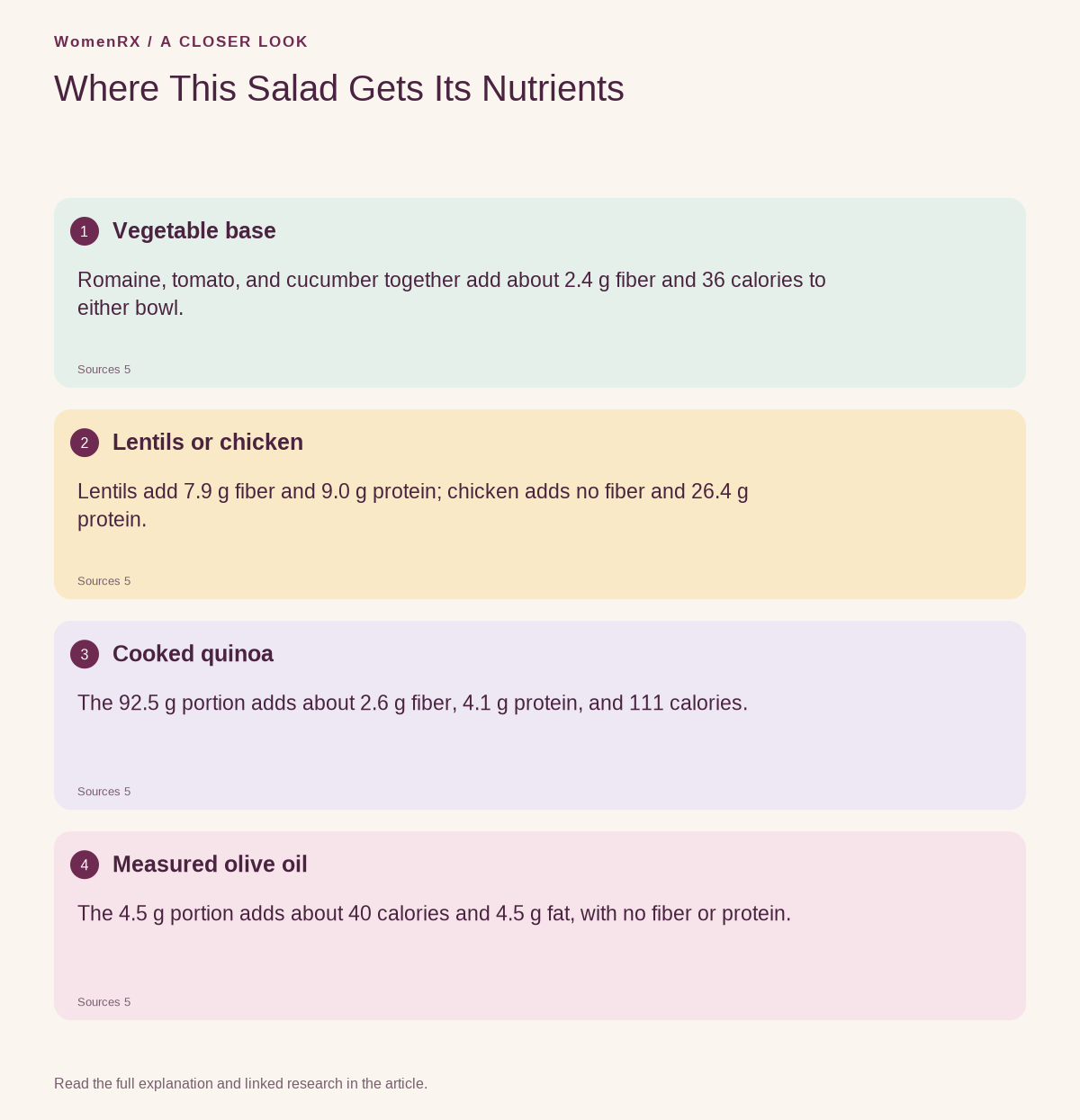
Where This Salad Gets Its Nutrients
Vegetable base: Romaine, tomato, and cucumber together add about 2.4 g fiber and 36 calories to either bowl.5
Lentils or chicken: Lentils add 7.9 g fiber and 9.0 g protein; chicken adds no fiber and 26.4 g protein.5
Cooked quinoa: The 92.5 g portion adds about 2.6 g fiber, 4.1 g protein, and 111 calories.5
Measured olive oil: The 4.5 g portion adds about 40 calories and 4.5 g fat, with no fiber or protein.5
Read the figure as text
Use the measured ingredients to see which parts of the two example bowls supply fiber, protein, and energy.- Vegetable base: Romaine, tomato, and cucumber together add about 2.4 g fiber and 36 calories to either bowl.5
- Lentils or chicken: Lentils add 7.9 g fiber and 9.0 g protein; chicken adds no fiber and 26.4 g protein.5
- Cooked quinoa: The 92.5 g portion adds about 2.6 g fiber, 4.1 g protein, and 111 calories.5
- Measured olive oil: The 4.5 g portion adds about 40 calories and 4.5 g fat, with no fiber or protein.5
Sources you can check
- Dietary Fiber: MedlinePlusAccessed 2026-09-25Return to first citation
- Nutrition: MedlinePlusAccessed 2026-09-25Return to first citation
- Dietary Proteins: MedlinePlusAccessed 2026-09-25Return to first citation
- Acute Effects of Non-Oil-Seed Pulses on Parameters of Cardiometabolic Health: A Systematic Review of Human Intervention Studies.Schiemann TB, Diekmann C, Egert S. · Nutrition reviews · 2026Return to first citation
- USDA SRLegacy ingredient values: calculated Lentil quinoa salad, Chicken quinoa saladAccessed 2026-09-25Return to first citation
- Dairy and Eggs (Food Safety for Moms-to-Be) | FDAAccessed 2026-09-25Return to first citation
- Keeping "Bag" Lunches Safe | Food Safety and Inspection ServiceAccessed 2026-09-25Return to first citation
- Maternal Diet and Breastfeeding | Breastfeeding special circumstances | CDCAccessed 2026-09-25Return to first citation