Three Packable Lunch Bowls, With Protein and Fiber Compared
Two chicken bowls and a lentil bowl show how a change in ingredients affects protein, fiber, and the rest of lunch.
For a packable lunch, start with a protein food, add vegetables, and plan how you’ll keep perishable ingredients cold.128 The measured chicken quinoa bowl below has an estimated 32.3 grams of protein per serving. Swapping its quinoa for lentils brings the chicken bowl to an estimated 37.2 grams of protein and adds fiber; the lentil-only bowl offers a plant-based option.6 None comes with a promise of weight loss.
Build the lunch before you pick the recipe
Think in parts: a protein food, something from plants, and a way to serve it that suits your day. Protein helps your body build and maintain muscle, bones, and skin. Beans, dairy, and fish can all play a part; you don’t need one special ingredient at every lunch.13 Whole grains, fruit, and vegetables add fiber, which helps with digestion and fullness.2
The first two bowls keep the grain, vegetables, and oil the same. One uses lentils; the other uses chicken. That makes the tradeoff easier to see: the chicken quinoa bowl has more protein, while the lentil quinoa bowl has more fiber. A third bowl swaps the chicken bowl’s quinoa for lentils, combining its chicken with a fiber-rich ingredient. The figures are estimates for these exact ingredient weights, not targets every lunch needs to meet.6
Desk-friendly: lentil quinoa salad
For one bowl: 100 g cooked lentils, 92.5 g cooked quinoa, 40 g raw romaine lettuce, 100 g raw tomato, 75 g raw cucumber with peel, and 4.5 g olive oil. Start with lentils and quinoa that have already been cooked and safely cooled. Wash and chop the vegetables, then toss all the measured ingredients with the oil. Pack the bowl cold.56
| Estimated per bowl | Amount |
|---|---|
| Energy | 303 calories |
| Protein | 14.9 g |
| Carbohydrate | 47.7 g |
| Fat | 7.1 g |
| Fiber | 12.9 g |
The lentils contribute both protein and fiber. This is a protein-containing lunch, but it has less than half the estimated protein of the chicken quinoa bowl below. If more protein is your priority, that difference matters more than calling either bowl “high-protein.”6
Reheatable: chicken quinoa bowl
For one bowl: 85 g cooked, roasted chicken breast meat, 92.5 g cooked quinoa, 40 g raw romaine lettuce, 100 g raw tomato, 75 g raw cucumber with peel, and 4.5 g olive oil. Start with safely cooked and cooled chicken and quinoa. Wash and chop the vegetables. Pack the chicken and quinoa separately from the raw vegetables so you can reheat the cooked portion, then combine everything with the measured oil when you’re ready to eat. Separating the components is a serving choice; all the listed ingredients are included in the estimate.56
| Estimated per bowl | Amount |
|---|---|
| Energy | 327 calories |
| Protein | 32.3 g |
| Carbohydrate | 27.6 g |
| Fat | 9.7 g |
| Fiber | 5.0 g |
Choose this version when you want a higher-protein option and have a way to keep it cold until lunch. Choose the lentil quinoa version when its greater fiber content or plant-based format suits you better. The numbers describe these bowls, not what either one will do to your weight.6
Eat cold: chicken and lentil salad
For one bowl: 85 g cooked, roasted chicken breast meat, 100 g cooked lentils, 40 g raw romaine lettuce, 100 g raw tomato, 75 g raw cucumber with peel, and 4.5 g olive oil. Start with chicken and lentils that have been safely cooked and cooled. Wash and chop the vegetables, then combine everything with the measured oil. Pack it cold. This keeps the chicken quinoa bowl’s other ingredients and replaces its cooked quinoa with cooked lentils.56
| Estimated per bowl | Amount |
|---|---|
| Energy | 332 calories |
| Protein | 37.2 g |
| Carbohydrate | 28.0 g |
| Fat | 8.3 g |
| Fiber | 10.3 g |
These estimates add the historical USDA values for the listed weights. Compared with the measured chicken quinoa bowl, this swap raises estimated protein and fiber while leaving carbohydrate close to the original amount. It’s a way to get a higher-protein lunch without giving up the lentils’ fiber.6
No microwave? Keep the format, not an assumed macro total
The lentil quinoa salad and chicken and lentil salad need no reheating once their cooked ingredients have been safely cooled. Another no-cook assembly idea is canned fish with beans, washed vegetables, and a whole-grain pita. It may fit a short lunch break, but its macros depend on the particular can, pita, portions, and any dressing you use. Don’t borrow a bowl’s totals for it. During pregnancy, salmon and sardines are among the lower-mercury seafood choices identified in pregnancy guidance.3
No-cook also doesn’t mean no refrigeration. Keep perishable packed food cold; if you won’t have a refrigerator, plan how you’ll keep it chilled rather than leaving a prepared bowl in a desk drawer. USDA guidance says to discard perishable food left at room temperature for more than two hours, or more than one hour when the temperature is above 90°F.78
Use the estimates without getting trapped by them
The tables add the nutrient values for each measured ingredient. They use historical USDA generic food-composition entries, with cooked weights for the lentils, quinoa, and chicken and raw weights for the vegetables. They’re calculated examples, not kitchen-tested meals or measurements of your finished lunch. The chicken and lentil salad uses those same ingredient entries to calculate a new combination.6
For a different version, write down what you actually use and add each ingredient’s values for that amount. For example, if you replace the 4.5 g olive oil with a measured amount of dressing, subtract the oil’s values and add the dressing’s values for the amount used. Check current labels for packaged foods. A branded product may differ from a generic reference entry, and changing the oil, adding cheese, or using a different portion changes the whole meal total. Count those additions rather than presenting the original table as the new lunch’s macros. Protein needs also vary with age, health, and activity; most Americans get enough overall.16
Pregnancy changes a few ingredient decisions
Pregnancy doesn’t call for one universal lunch formula. It does make the handling of certain ready-to-eat foods more consequential. Listeria can persist in refrigerated conditions, so keeping food cold does not make every chilled ingredient risk-free. For a sandwich, consider what’s inside it: cold deli meat and refrigerated smoked fish carry specific pregnancy cautions.4 Perishable fillings, including prepared beans, still need safe handling and cold storage.58 During pregnancy, avoid deli meat unless it’s reheated to steaming hot, and avoid refrigerated smoked seafood unless it’s properly cooked. Choose pasteurized dairy, and wash raw produce before eating it.4
For a fish lunch during pregnancy, also think about the kind of fish, not just its protein. Pregnancy guidance favors seafood lower in mercury, including salmon and sardines.3 Those distinctions are more useful than treating all packed lunches, or all women’s lunches, as if they need the same rules.
What changes between the bowls
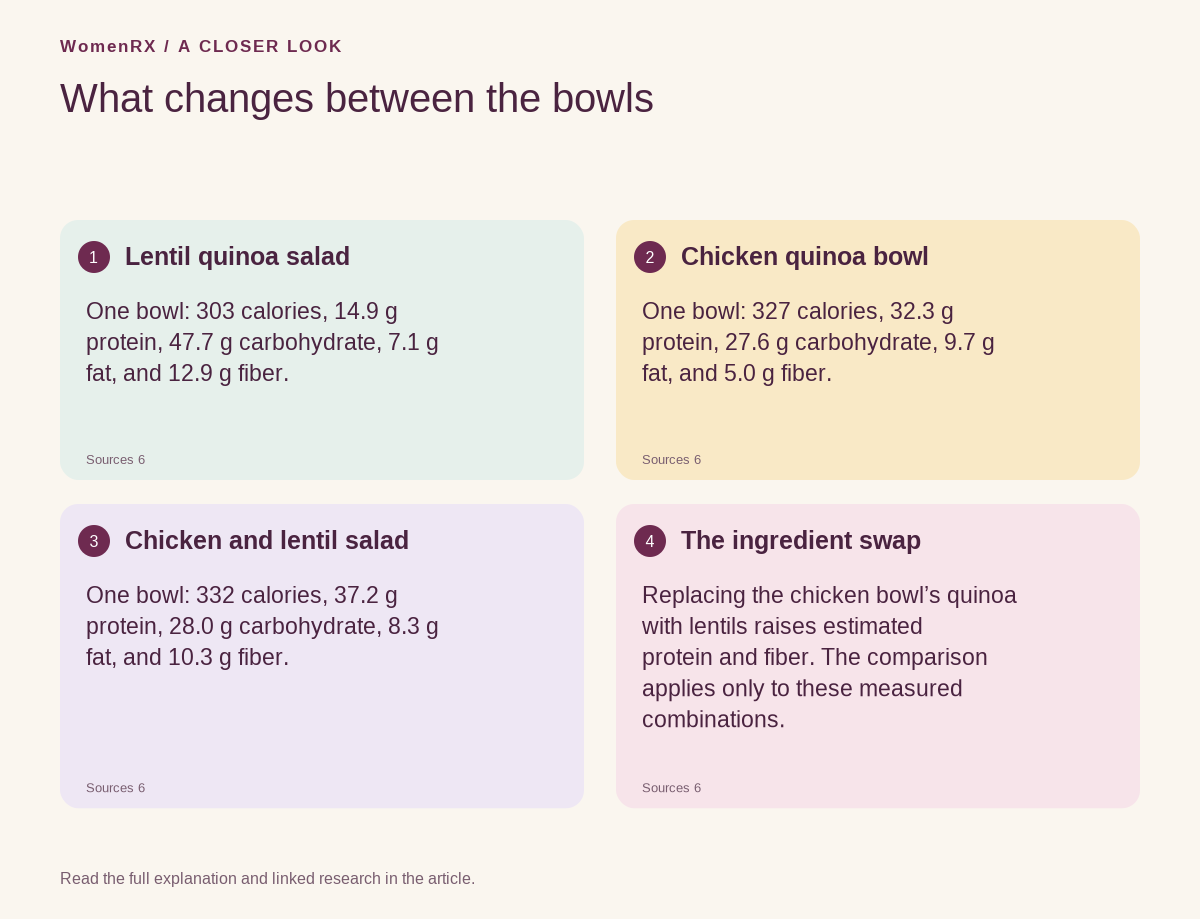
Lentil quinoa salad: One bowl: 303 calories, 14.9 g protein, 47.7 g carbohydrate, 7.1 g fat, and 12.9 g fiber.6
Chicken quinoa bowl: One bowl: 327 calories, 32.3 g protein, 27.6 g carbohydrate, 9.7 g fat, and 5.0 g fiber.6
Chicken and lentil salad: One bowl: 332 calories, 37.2 g protein, 28.0 g carbohydrate, 8.3 g fat, and 10.3 g fiber.6
The ingredient swap: Replacing the chicken bowl’s quinoa with lentils raises estimated protein and fiber. The comparison applies only to these measured combinations.6
Read the figure as text
All three estimates use the same measured vegetables and olive oil. Comparing the bowls shows what changes when you choose chicken, lentils, or both.- Lentil quinoa salad: One bowl: 303 calories, 14.9 g protein, 47.7 g carbohydrate, 7.1 g fat, and 12.9 g fiber.6
- Chicken quinoa bowl: One bowl: 327 calories, 32.3 g protein, 27.6 g carbohydrate, 9.7 g fat, and 5.0 g fiber.6
- Chicken and lentil salad: One bowl: 332 calories, 37.2 g protein, 28.0 g carbohydrate, 8.3 g fat, and 10.3 g fiber.6
- The ingredient swap: Replacing the chicken bowl’s quinoa with lentils raises estimated protein and fiber. The comparison applies only to these measured combinations.6
More questions, answered
Do I need meat to include protein at lunch?
No. Beans and dairy foods can contribute protein. If you rely mainly on plant proteins, eat a variety of plant protein foods across the day rather than expecting one ingredient to do everything.1
Should I choose protein or fiber if my lunch needs to be filling?
You don’t have to choose. Start with a protein food, then add whole grains, vegetables, or fruit. Fiber adds bulk and can help you feel full sooner, while also supporting digestion.12
Sources you can check
- Dietary Proteins: MedlinePlusAccessed 2026-09-25Return to first citation
- Dietary Fiber: MedlinePlusAccessed 2026-09-25Return to first citation
- Dietary Supplements and Life Stages: Pregnancy - Health Professional Fact SheetAccessed 2026-09-25Return to first citation
- Listeria in Pregnancy-The Forgotten Culprit.Kraus V, Čižmárová B, Birková A. · Microorganisms · 2024Return to first citation
- Food Safety: MedlinePlusAccessed 2026-09-25Return to first citation
- USDA SRLegacy ingredient values: calculated Lentil quinoa salad, Chicken quinoa saladAccessed 2026-09-25Return to first citation
- Leftovers and Food Safety | Food Safety and Inspection ServiceAccessed 2026-09-25Return to first citation
- Keeping "Bag" Lunches Safe | Food Safety and Inspection ServiceAccessed 2026-09-25Return to first citation