Breast Pain in Perimenopause: Track the Pattern
A short diary can show whether aching tends to follow your period, but it can’t rule out a breast problem.
Breast pain that affects both breasts, starts in the two weeks before a period, worsens, and eases when bleeding ends often follows a cyclical pattern. In perimenopause, record pain alongside bleeding dates rather than relying on a predictable cycle. If pain doesn’t improve, or you notice a new breast change, get it assessed; a pattern alone can’t rule out a problem. 1
What a cycle-linked pattern can look like
Pain related to periods often begins up to two weeks before bleeding, gets worse, then eases when the period ends. It commonly affects both breasts and may extend toward the armpit. That pattern can be a helpful clue, not a diagnosis: breast pain has other possible causes, including hormone changes during menopause, pregnancy, some medicines, and injuries or strains involving the neck, shoulder, or back. 1
Perimenopause can make it harder to use the calendar to predict when pain should start. So record what happens rather than trying to fit it to a regular cycle. A few entries across different points in your cycle may make a pattern easier to describe, but don’t wait for a pattern to emerge if you have a concerning change.
Keep a simple diary
A useful note is brief. When pain starts, record:
- Timing: the date, when bleeding starts or ends, and whether the pain comes before, during, or after bleeding. If a period doesn’t come, note that too.
- Location: one breast or both, and whether the pain is in one spot, spread across the breast, or reaches the armpit.
- What it feels like: for example, aching, tenderness, burning, or sharp pain; note whether it comes and goes or stays.
- What else changed: a lump, nipple discharge, skin or nipple changes, recent strain or injury, pregnancy possibility, or a new medicine or hormone treatment.
- Effect: whether it disrupts sleep or usual activities, and what seems to ease or worsen it.
These details reflect the basic questions used to describe pain: where it is, how it feels, how often it occurs, when it happens, and what affects it. 2 A diary is a communication aid, not a test that can identify the cause.
Use the pattern as a guide, not a rule-out
Pain in both breasts that rises before a period and settles afterward is more suggestive of a cycle-linked pattern than pain that stays in one place. But pain by itself is unlikely to be a sign of cancer, and that does not mean a diary can rule out cancer or another breast condition. 1
Arrange an assessment if the pain doesn’t improve, keeps returning in the same spot, or is changing your daily life. A persistent, localized pattern is worth describing clearly, even if you don’t notice a lump. You don’t need to wait until you have several cycles of notes before seeking care.
Get a breast change checked promptly
Seek urgent medical assessment for breast pain with a very high temperature or feeling feverish and shivery, or if part of the breast is red, hot, or swollen. Also get prompt assessment for a hard lump that doesn’t move, nipple discharge that may be streaked with blood, a change in breast shape, dimpling of the skin, or a rash on or around the nipple or a nipple that has sunk inward. 1
Keep routine breast screening separate from symptom assessment. A pain diary can help explain what you’re experiencing, but it doesn’t determine whether you’re due for screening. Follow the screening plan recommended for you, and report a new or persistent change even if your screening is up to date.
Map the pain before deciding what to do
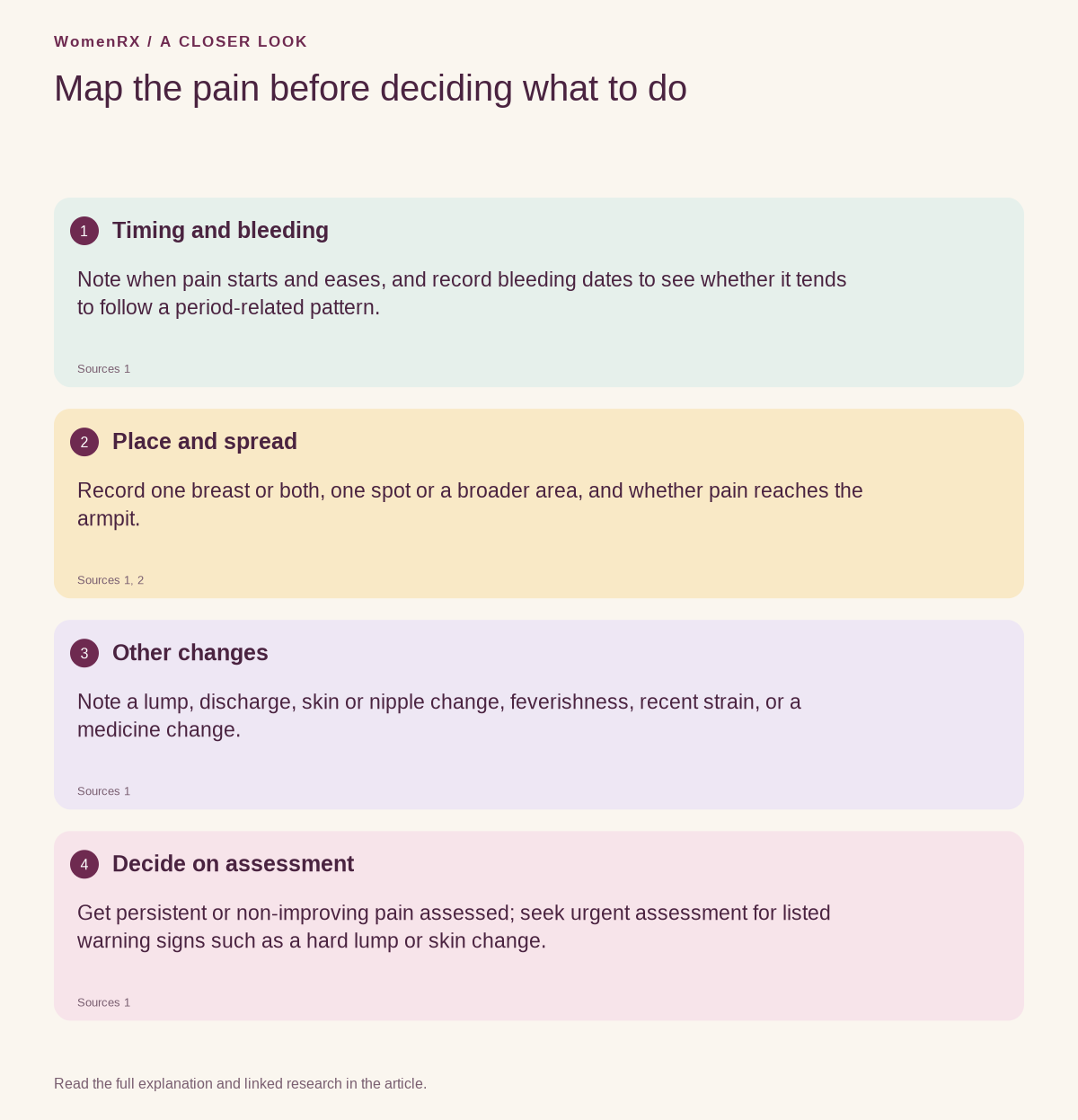
Timing and bleeding: Note when pain starts and eases, and record bleeding dates to see whether it tends to follow a period-related pattern.1
Place and spread: Record one breast or both, one spot or a broader area, and whether pain reaches the armpit.12
Other changes: Note a lump, discharge, skin or nipple change, feverishness, recent strain, or a medicine change.1
Decide on assessment: Get persistent or non-improving pain assessed; seek urgent assessment for listed warning signs such as a hard lump or skin change.1
Read the figure as text
Use these notes to describe timing and location, while treating new breast changes as a reason for assessment rather than waiting for a pattern.- Timing and bleeding: Note when pain starts and eases, and record bleeding dates to see whether it tends to follow a period-related pattern.1
- Place and spread: Record one breast or both, one spot or a broader area, and whether pain reaches the armpit.12
- Other changes: Note a lump, discharge, skin or nipple change, feverishness, recent strain, or a medicine change.1
- Decide on assessment: Get persistent or non-improving pain assessed; seek urgent assessment for listed warning signs such as a hard lump or skin change.1
More questions, answered
Does breast pain usually mean cancer?
Breast pain by itself is unlikely to be a sign of cancer, but pain patterns can’t rule out a breast condition. Get persistent pain or a new breast change assessed. 1
Sources you can check
- Breast pain - NHSAccessed 2026-09-25Return to first citation
- Pain | MedlinePlusAccessed 2026-09-25Return to first citation